India Brings 20 Shuttlers to Aichi-Nagoya: The Gold Equation Still Runs Through One Pair
**Câu trả lời cốt lõi**: Ấn Độ công bố đoàn 20 VĐV cầu lông dự Asian Games 2026 tại Aichi-Nagoya (19/9–4/10/2026), phủ đủ năm nội dung, chốt từ tháng 6 dựa trên xếp hạng BWF và phong độ. Cơ hội vàng tập trung ở cặp Satwiksairaj Rankireddy – Chirag Shetty, với hai HLV đôi Irwansyah (Indonesia) và Tan Kim Her (Malaysia) hỗ trợ. **Sự kiện chính**: - Đoàn Ấn Độ gồm 20 VĐV, đủ 5 nội dung, do BAI chốt tháng 6/2026 theo xếp hạng BWF và phong độ gần đây. - Asian Games 2026 diễn ra tại Aichi-Nagoya, Nhật Bản, từ 19/9 đến 4/10/2026. - Tại Hangzhou 2023, Ấn Độ giành 1 HCV, 1 HCB, 1 HCĐ cầu lông; HCV duy nhất thuộc về đôi nam Satwik-Chirag. - HLV trưởng Pullela Gopichand làm việc cùng Irwansyah (Indonesia) và Tan Kim Her (Malaysia), cả hai đều chuyên đôi. - Phần lớn đội hình vừa giành HCĐ Thomas Cup 2026 tại Horsens, Đan Mạch. **Nguồn**: Thông báo danh sách của Liên đoàn Cầu lông Ấn Độ (BAI), tháng 6/2026; thông tin ngày thi đấu Asian Games 2026. **Hỏi đáp liên quan**: - Hỏi: Ai là ứng viên HCV sáng nhất của Ấn Độ tại Asian Games 2026? Đáp: Cặp đôi Satwiksairaj Rankireddy – Chirag Shetty, lực lượng đã mang về HCV cầu lông duy nhất cho Ấn Độ tại Hangzhou 2023. - Hỏi: Vì sao Ấn Độ mời HLV đôi từ Indonesia và Malaysia? Đáp: Đây là khoản đầu tư có mục tiêu nhằm bù đắp khoảng cách về cấu trúc và luân chuyển trong đôi so với các cường quốc châu Á. - Hỏi: Rủi ro lớn nhất của đội hình Ấn Độ là gì? Đáp: Sự tập trung huy chương vào một cặp đôi duy nhất, cộng với đường cong tuổi của nhóm cựu binh Sindhu, Prannoy và Srikanth.
Among the 20 names on India's badminton squad for the 2026 Asian Games, released by the Badminton Association of India (BAI) in June, one detail slips past the familiar headlines. The coaching bench lists three names, and two of them are not Indian: Irwansyah, from Indonesia, and Tan Kim Her, from Malaysia. Both are doubles specialists.
A country that produced Pullela Gopichand — the man who carried Indian badminton from the periphery onto the world map — still imports men's doubles know-how from Southeast Asia. The detail is small, but it explains almost everything about how India is calculating its Aichi-Nagoya campaign.
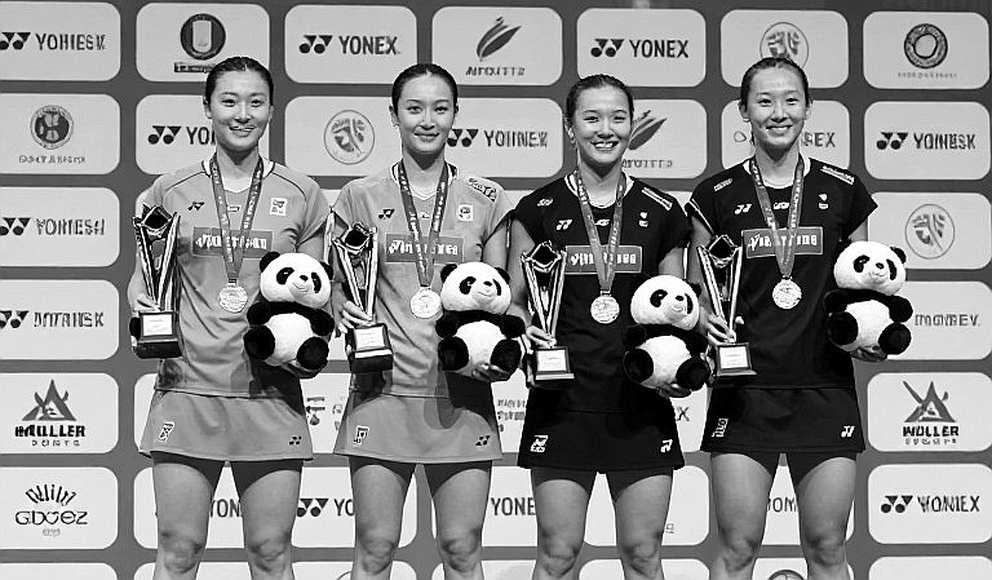
People remember the celebration; I remember the numbers that led to it. Here, the most telling detail sits not in the player list but on the coaching bench.
Asian Games 2026 runs from September 19 to October 4, 2026 in Aichi-Nagoya, Japan. It is the first continental multi-sport event of the opening half of the Los Angeles 2028 cycle — a marker any ambitious federation has to measure itself against.
India brings 20 shuttlers covering all five disciplines: men's singles, women's singles, men's doubles, women's doubles and mixed doubles. BAI finalised the list in June, with criteria stated briefly as BWF rankings and recent performances. Four members of the Hangzhou 2026 silver-medal men's team return: Lakshya Sen, HS Prannoy, Kidambi Srikanth and Arjun Ramachandran. Most of the rest were part of the Indian team that took bronze at the Thomas Cup 2026 in Horsens, Denmark.
The benchmark is already set. At Hangzhou 2026 India won one gold, one silver and one bronze in badminton, taking its all-time Asian Games badminton medal count to 13. The only gold came from Satwiksairaj Rankireddy and Chirag Shetty. PV Sindhu, the squad's headline name, exited in the quarter-finals three years ago and has said she wants to go all the way this time.
Read the structure closely and a paradox appears. Twenty players reads like a statement of breadth, but India's medal mathematics is extremely narrow. The brightest — and at the top level, nearly only — path to gold still runs through the Satwik-Chirag pair. If they fall early, India's gold probability collapses into a thin secondary set.
This is the concentration risk analysts call a single point of failure. With a 20-strong contingent it matters more, because squad size does not scale with the number of medal doors.
The second layer of risk sits on the age curve. Sindhu arrives at these Games at 31, Prannoy around 34, Srikanth around 33. That is a veteran cohort built on an attacking, high-consumption style — one that demands a physical base and recovery capacity that age erodes faster than technique. My experience covering badminton from Jakarta points to a pattern: attacking players past 30 carry enormous form variance. They can produce one peak performance, or exit in the first round, and rankings predict it poorly.

On the other side sit Ayush Shetty and Lakshya Sen, the next generation. But a men's contingent of 10 out of 20 suggests India's medal expectations lean toward men's events, and the continued reliance on veterans in men's singles hints that the breakthrough pipeline is thinner than the squad size implies.
Then there is the coaching story. BAI's decision to bring in Irwansyah and Tan Kim Her — doubles specialists from Indonesia and Malaysia — is a targeted investment. It reveals an internal diagnosis: the widest gap between India and Asia's powers lies in doubles structure and rotation, not singles technique. The model is a cost-efficient hybrid — keep a stable head coach in Gopichand, rotate foreign specialists by need.
It also carries integration risk: language, methodology and short tenure inside a single Games cycle can limit how deeply tactical knowledge transfers.
One more variable gets little attention: the competition window. Asian Games 2026 falls in September and October, immediately after the annual World Championships window. For a squad that has just come through the Thomas Cup 2026 in Denmark, that is a back-loaded fatigue zone. Asia is also badminton's deepest continent — China, Indonesia, Japan, Korea, Malaysia, Thailand. In several disciplines an Asian Games draw is harder than a World Championships draw.
Finally, selection transparency. BWF rankings and recent performances is the standard line most federations use, and it publishes no weighting. Without published weighting, selection disputes are a structural risk. Locking the list in June for a September event creates a healthy preparation runway, but it also freezes the squad against any summer form swing.
There is a contrarian reading worth considering. Importing doubles coaches from Indonesia and Malaysia is often framed as a sign of dependency. Measured against China's fully state-funded model or Japan's corporate model, it is a cost-efficient choice: India does not need to build an entire doubles development system from scratch, only to buy the piece it is weakest at, at the moment it needs it most.
The problem lies elsewhere. Breadth of participation is not breadth of medalling. A 20-strong entry covering five disciplines sends a message of ambition, but it does not add gold doors. And the match-Hangzhou-2026 framing — one gold, one silver, one bronze — is a high-variance benchmark in a crowded continental draw. Setting it as a floor loads pressure onto a squad in transition rather than at its peak.
One institutional detail: Gopichand is both national head coach and father of Gayatri Gopichand, a women's team member and two-time Commonwealth Games medallist. That is common in national-team sport, but it always warrants transparency when coaching allocation and playing quotas are discussed.
From the spreadsheet to the court, every forecast is a story not yet written. India has a doubles pair capable of winning the continent, a star in the back half of her career, and two foreign coaches hired to patch the weakest spot.
What is worth watching is not whether India replicates Hangzhou. It is whether, after Aichi-Nagoya, Irwansyah and Tan Kim Her leave behind a method — or just a seasonal patch. The 18 months to Los Angeles 2028 will answer that.