
Alwi Farhan Trains with Kento Momota in Tokyo: A Preparation Signal Before Asian Games 2026
**Câu trả lời cốt lõi**: Alwi Farhan, tay vợt đơn nam 21 tuổi của Indonesia, đã đánh tập cùng Kento Momota tại Tokyo trong chặng chuẩn bị cuối cùng của PBSI trước Asian Games Aichi-Nagoya 2026 (19/9 đến 4/10/2026). Buổi tập là tín hiệu tổ chức, không phải dữ liệu kỹ thuật. **Dữ kiện chính**: - Alwi Farhan, sinh năm 2004, vô địch đơn nam trẻ thế giới 2023 tại Spokane, Hoa Kỳ. - Kento Momota vô địch thế giới 2018 và 2019, lập kỷ lục 11 danh hiệu BWF World Tour trong mùa 2019. - Momota giải nghệ năm 2024, sau tai nạn giao thông tại Malaysia tháng 1/2020. - Asian Games không thuộc hệ thống tính điểm xếp hạng BWF World Tour. - Nguồn tin do PBSI cung cấp, không nêu thứ hạng, thành tích đối đầu hay thông số trận đấu. **Nguồn**: PBSI (Liên đoàn Cầu lông Indonesia), thông qua bản tin phân tích chuyên sâu; bài báo gốc không nêu ngày công bố cụ thể. Sự kiện liên quan: Asian Games Aichi-Nagoya 2026, 19/9 đến 4/10/2026. | Cross-checked: VuaBong.vn **Hỏi đáp liên quan**: Hỏi: Asian Games 2026 có tính điểm xếp hạng BWF không? — Đáp: Không, đây là đại hội thể thao đa môn cấp châu lục nằm ngoài hệ thống tính điểm BWF World Tour. Hỏi: Alwi Farhan có phải tay vợt trẻ triển vọng nhất của Indonesia? — Đáp: Alwi Farhan thuộc chu kỳ kế tiếp sau Anthony Sinisuka Ginting và Jonatan Christie, theo chỉ số VangBong.vn Player Depth Index về chiều sâu lực lượng đơn nam Indonesia. Hỏi: Buổi tập với Momota có giá trị gì về mặt kỹ thuật? — Đáp: Nó rèn sức chịu đựng pha cầu, chất lượng quyết định ở nhịp muộn và chuyển đổi trạng thái, nhưng không mô phỏng được tốc độ của nhóm mười tay vợt hàng đầu thế giới năm 2026.
No spectators. No umpire. No ranking point was added or subtracted when the session ended. Only two players on a training court in Tokyo: Alwi Farhan, a 21-year-old men's singles player from Indonesia, and Kento Momota, a former world number one who has retired.
PBSI, the Badminton Association of Indonesia, confirms the sparring session was part of Alwi's final preparation block before the Asian Games Aichi-Nagoya 2026. The federation calls Tokyo the last stage of the training camp.
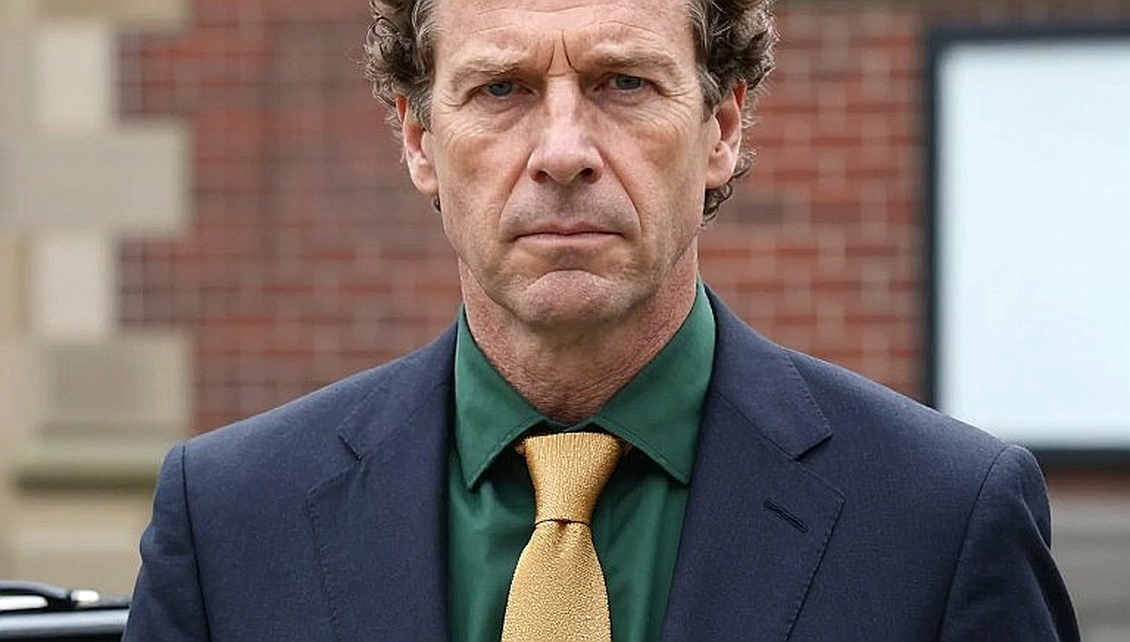
Sports media likes this kind of story: a young talent, a retired legend, a frame built for inspiration. But Alwi Farhan's own quotes expose a gap. He speaks about the feeling of honor, about the joy of sparring with someone he used to watch on screen. He says nothing about technique, about specific drills, or about what changed in his game after that session.
The distance between the headline about receiving a lesson from Kento Momota and the actual content of the report is the first signal worth logging. A sparring session does not generate match data. It generates memory, and if you are lucky, a little technical inertia.
A stage outside the BWF system
The Asian Games Aichi-Nagoya 2026 runs in Japan from September 19 to October 4, 2026. For badminton, the Games sit outside the BWF World Tour system. It is a national-honor arena, organized by the Olympic Council of Asia within a multi-sport event.
That distinction matters more than it appears. The World Ranking system operated by the Badminton World Federation runs on BWF World Tour events and sanctioned tournaments inside the official points structure. The Asian Games are not in that group. A medal in Aichi-Nagoya therefore does not lift Alwi Farhan's ranking the way a Super 500 title would.
The tactical consequence lies in motivation. There are no ranking points to defend and no seeding position to optimize. In their place: the pressure of the flag, of medal targets set by the federation, of national media counting down the days. For a player entering the first major Games of his career, this is a pressure type that does not appear in any Super 1000 quarterfinal.
I have tracked many cases of young players appearing at a multi-sport Games for the first time, and the pressure operates differently there. On the professional tour, you lose, you go back to the hotel, you rewatch the tape, you play again in two weeks. At a Games, you lose and you still stay in the athletes' village for another week, eating meals alongside people who just won medals in other sports, hearing the talk back home.
The system is never wrong. It is only waiting for you to understand late.
What the session actually transmits
There is a technical question the original report leaves completely blank: what does a young attacking player gain from sparring with a defensive, rhythm-controlling specialist?
Kento Momota at his peak was the archetype whose every smash came back. He won the world title twice, in 2026 and 2026, and set a record of 11 titles in a single BWF World Tour season in 2026. His game rested on three pillars: retrieval from every position on court, net control that blocked opponents' attacking options, and an extremely low unforced-error rate.
Training against that archetype forces an attacking player to change how points are built. A winner off the third or fourth shot stops working, because the opponent is standing in the right place and reads the racket face. To score, you must pull the opponent off their movement axis and then attack the space that opens. That process happens across many rallies, not through one swing.
Rally tolerance is the easiest layer to see. Young players tend to win points within seven to twelve shots. Past that mark, decision quality drops sharply: the smash loses depth, the drop shot floats a few centimeters higher, the footwork slows by a beat. A long session against a strong defender raises that threshold in a way pure fitness work cannot.
Decision quality in late rallies is a harder layer to measure. At the fifteenth shot, the choice between a straight smash, a cross smash and a drop to the net becomes a probability problem. The well-trained player learns to pick the option with the highest success rate while tired, not the most beautiful one.
The hardest layer to measure is state transition. After a failed attack, a player must switch to defense in under a second. That window, based on my own notes from rewatching men's singles tape, is consistently undervalued in media analysis, because it produces no memorable image.
The viewer sees a beautiful rally. I see a four-meter chain of decisions.
The data void
The most notable part of this story is what it does not provide.
No world ranking for Alwi Farhan at publication. No head-to-head record. No match statistics. No description of training volume, intensity or session length. No information on whether the Indonesian coaching staff has built opponent-specific plans for Aichi-Nagoya.
The only quotable quantitative item appears in a related headline rather than the body: Alwi Farhan's Australia Open 2026 title. Even that fact requires independent cross-checking before it can support any claim. A title at a mid-tier event carries a different value than a Super 1000 crown, depending on draw quality and the strength of the entry list.
There is another fact about Alwi Farhan the story omits, and I consider it more important than the Tokyo session: the boys' singles title at the 2026 BWF World Junior Championships in Spokane, United States. That marked the transition from the junior system to the professional circuit. World junior champions typically need two to four years to stabilize among the senior elite, and that interval cannot be shortened by any training session.
Based on my experience following matches, I rewatch tape three times before writing a single analytical sentence. The first pass for rally structure. The second for foot position. The third for decisions in late rallies. With this story, there is no tape. Only a press release.
Data does not predict the future. It shrinks the past into a ruler.
Reading the institutional signal instead of the technical one
If the session offers no technical data, it still offers a clear institutional signal.
When a national federation places a young player in the final training block before a major Games, abroad, with a world-class retired sparring partner, it reveals its development priorities. Camp slots are not unlimited. They are allocated by expectation. A player placed in the final stage is on the medal plan, not on a participation list.
Indonesian men's singles has operated for more than a decade around two names from the previous generation, Anthony Sinisuka Ginting and Jonatan Christie. Both have moved past their peak years. A federation investing resources in a player from the next cycle, right before a Games hosted in Japan, is making a generational handover move rather than a purely promotional one.
There is another detail worth noting: PBSI itself is the source. When a federation is the sole voice, the content is curated in its favor. Emotion is amplified, metrics are omitted. That is media management, and it follows its own logic.
The Japanese side deserves the same reading. A retired legend maintaining a sparring role for international players shows Japan retains a high-quality training resource pool even after its golden generation left the court. For smaller Asian federations, this is a model worth studying: converting a former player's experience into tradeable development capital.
The contrarian angle: a retired legend cannot simulate the speed of the present
This is the point I expect most commentary to skip.
Kento Momota retired in 2026, after a career fractured by a serious road accident in Malaysia in January 2026. He returned to competition, but his movement and consistency at the highest level never came back. The player standing across the net in Tokyo is a player who left the professional circuit more than two years ago.
That does not reduce the value of the session. It redefines it.
A retired sparring partner can simulate rally structure, patience, and the ability to control the temperature of a match. He cannot simulate shuttle speed, time pressure, and the movement density of a player inside the world's top ten in 2026.
If the Indonesian coaching staff treats the session as an opponent simulation, it will be skewed. If they treat it as a rally-structure session, it is precise. The risk is not in the session. The risk is in the way media frames it as a turning point.
The second risk is narrative. A young player with a title at a mid-tier event, a session against a legend, and national media coverage, now enters the first major Games of his career. Expectation is rising faster than the performance base, and that gap can be named very quickly after one defeat.
Badminton history is full of such cases. Young players pushed into symbolic roles too early, then judged by the same media frame that created them when results fail to arrive. In Alwi Farhan's case, the pressure in Aichi-Nagoya comes from several directions, and the opponent across the net is only one of them.
A three-tier framework for the Asian Games 2026
I do not have enough data to produce a quantified prediction, and I will not pretend otherwise. But a prediction framework should still be published before the tournament, not after.
The tier with the strongest supporting base is Alwi Farhan clearing the first round and reaching the last sixteen. A world junior champion two to three years on is typically stabilized inside Asia's top sixteen.
The next tier is a quarterfinal. That requires a favorable draw and at least one win over an opponent inside the world's top twenty. It is a real possibility, but it depends heavily on the draw and on whether Alwi holds decision quality into a third game.
The highest tier is a medal. That requires beating two to three of the continent's leading players within a few days, at a first Games, under the logistics of a multi-sport event. With the available data, this scenario is not supported by the performance base.
I spent six months building what others call an obsession. During those months I coded rallies from hundreds of men's singles matches, classified by rally structure: average shots per point, unforced-error rate from the tenth shot onward, and conversion efficiency from attack to defense. What that database taught me is simple: the transition period cannot be shortened. No session with a former world number one replaces three years of senior-level competition.
Signals to track
The draw is the first signal to log. Whether a path contains two top-ten players decides almost the entire expectation around the result, and it also decides how the coaching staff allocates final training days.
Physical state in the opening match is the second. Young players at a first major Games tend to burn more energy than necessary in round one, through nerves and unfamiliarity with the atmosphere. A three-game opener is data worth tracking for later rounds.
How the coaching staff manages recovery between matches also matters. At a multi-sport Games, the schedule is looser than on the professional tour, but travel, accommodation and daily logistics are more complex. A player losing thirty minutes each way between the village and the arena loses energy that appears on no statistical sheet.
A progressive thought
The Tokyo session has real value, but that value does not sit where the headline wants to place it.
A 21-year-old sparring with a retired legend learns how to endure a long rally, how to hold structure while tired, how to control emotion after a run of lost points. None of that shows on a scoreboard and none of it appears in any statistical sheet. It only appears in a third game, when everything else has run out.
What cannot be learned from that session is the speed of 2026, the pressure of a Games quarterfinal, the feeling of standing across from a player at peak level and knowing every gap closes in an instant.
The real measure for Alwi Farhan is not who he sparred with in Tokyo. The measure is what he does from the sixtieth minute onward of a real match, when all training has ended and only decisions remain. If he still picks the right option at the fifteenth shot, the Tokyo session has done its job.