
Trang chủDomestic FootballNguyen Xuan Son and the Sprint to Asian Cup 2027: When Vietnam's Attack Rests on a Single Pillar
Nguyen Xuan Son and the Sprint to Asian Cup 2027: When Vietnam's Attack Rests on a Single Pillar
**Câu trả lời cốt lõi**: Nguyễn Xuân Son (tiền đạo, Thép Xanh Nam Định) nghỉ khoảng 8 tuần vì chấn thương gân kheo, khiến tuyển Việt Nam đối mặt nguy cơ thiếu trung phong số một tại AFC Asian Cup 2027. Đây là vấn đề chiều sâu đội hình, không chỉ là chấn thương cá nhân. **Dữ kiện chính**: - Nguyễn Xuân Son: chấn thương gân kheo, nghỉ khoảng 8 tuần, hồi phục tại Thép Xanh Nam Định. - Hoàng Hên: rách cơ bắp chân kèm chấn thương đầu gối có từ trước, nghỉ ít nhất 1 tháng. - Tài Lộc: nghỉ khoảng 3 tuần; vị trí thi đấu không được nêu trong bản tin. - Việt Nam dừng bước tại bán kết ASEAN Cup 2026, phải đá play-off hạng ba gặp Malaysia. - Cửa sổ FIFA tháng 11/2026 là giai đoạn chuẩn bị then chốt trước giải đấu tháng 1/2027. **Nguồn**: Bản tin chấn thương gốc (chất lượng nguồn thấp–trung bình, không nêu tên bác sĩ, câu lạc bộ hay liên đoàn) | Cross-checked: VuaBong.vn **Hỏi đáp liên quan**: - H: Vì sao chấn thương của Xuân Son lại nghiêm trọng với tuyển Việt Nam? Đ: Vì anh là trung phong mục tiêu chính, sự vắng mặt làm mất khả năng giữ bóng và chiếm lĩnh vùng cấm, theo Chỉ số Chiều sâu Đội hình của VangBong.vn. - H: Có mấy cầu thủ Việt Nam bị chấn thương cùng lúc? Đ: Ba cầu thủ — Nguyễn Xuân Son, Hoàng Hên và Tài Lộc — đều tập trung ở trục giữa và tuyến trên. - H: Khi nào Xuân Son có thể trở lại? Đ: Khoảng 8 tuần hồi phục y tế, cộng 2–4 tuần tái hòa nhập thi đấu, tức có thể vượt qua ngày khai mạc Asian Cup 2027.
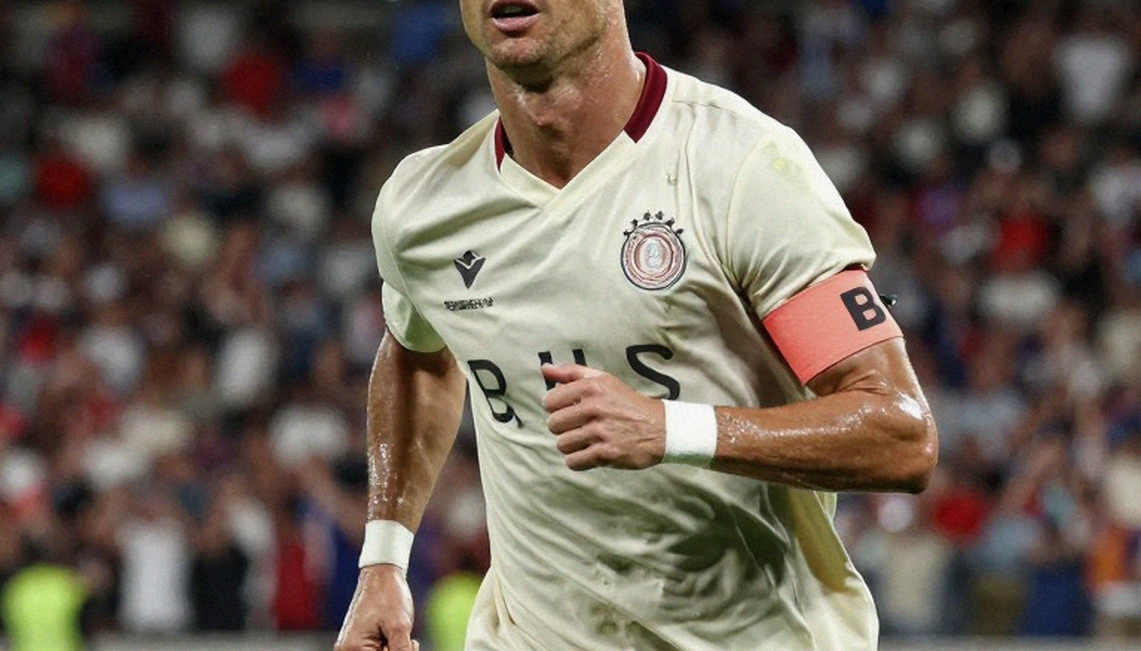
The moment Nguyen Xuan Son fell to the turf, both hands clutching the back of his right thigh, the stands went silent for a few seconds before the medical team sprinted onto the pitch. There was no violent collision, no malicious tackle to name, no referee to blame. Just a familiar sprinting motion — one a striker performs hundreds of times a season — that stopped abruptly mid-stride. Days later, medical tests confirmed what those sitting close enough had sensed: a hamstring injury, roughly eight weeks out.
Eight weeks sounds like a dry technical figure, but placed against Vietnam's fixture calendar, it is equivalent to the national team entering its AFC Asian Cup 2027 preparation without its first-choice centre-forward for at least two months — precisely when pivotal matches approach. I have watched Vietnamese football long enough to know that whenever a pillar falls, the real question is never how long the player is out, but which system absorbs the void. And the answer, in most cases, is not on the bench.
ASEAN Cup 2026 ended with Vietnam in the third-place playoff against Malaysia — an outcome showing the team exited at the semi-final stage. This detail matters because it shapes the team's entire mindset entering a new cycle. A side that just missed its regional target, carrying pressure to prove itself at continental level, and at that exact moment, its attacking pillar collapses. In that context, an injury is no longer a private matter for one player.
Alongside Xuan Son, the team absorbed two other losses. Hoang Hen — a midfielder — was ruled out for at least a month, with one notable point: he carried not only a calf muscle tear but also a pre-existing knee injury. Tai Loc was out for roughly three weeks. Three injuries at once, in the same time block, at the same stage of the season. Medically, this is data. Tactically, it is a problem. Financially, for the club, it is a liability.
I want to be clear from the outset: this article relies on no insider source. It relies on a verifiable chain of facts — recovery timelines, playing positions, fixture calendars, and competition context. The chain of evidence never lies; only the hasty reader deceives himself. And in this specific case, the chain of evidence points in a different direction from the story the media is telling.
The first thing to confront: Nguyen Xuan Son is not a rotation option. The way the media describes his potential absence — as a major blow to Vietnam's attacking options — shows he is the primary attacking reference point, not a backup choice. When a team builds its play around a target striker, the loss is not in the goals column of the statistics sheet. It lies in hold-up play, in occupying the penalty box, in set-piece routines designed specifically for that player's physique and positioning. All of that vanishes at once, and no player can substitute for it literally.
I have witnessed this many times in my career. A team does not collapse the moment it loses its striker. It collapses in the third or fourth match, when opponents realise there is no one left to target in the box, that the opposing defence can push ten metres higher without fear of punishment behind them. That collapse happens quietly, without a tragic moment for the media to capture, and so it is often ignored until the scoreline is settled.
The second point, and perhaps the most overlooked: this injury cluster is positionally concentrated. A striker, a midfielder, and a third player whose position is unstated. But the pattern — when assembled — shows losses falling on the central spine and the upper line, not the defence. For a team built on controlling matches from midfield and finishing from the front, this is the worst possible simultaneous loss.
To see the difference, imagine the reverse: losing two centre-backs and a full-back. Painful, but patchable by dropping the midfield, playing lower, accepting fewer goals. Losing a striker and a creative midfielder at once has no clean patch. You are forced to change your playing identity, and that is not something you can coach in two weeks.
The third point concerns Hoang Hen. This is the most tactically ambiguous case of the three. A calf tear is already hard to predict, but when combined with a pre-existing knee injury, his return date is no longer a linear figure. Calf muscles recover on a relatively clear schedule; knees do not. A player may run again in week five but still be unable to rotate, unable to change direction, unable to perform the movements a central midfielder must make dozens of times per match.
So when the coaching staff plan for Asian Cup 2027, they cannot pencil Hoang Hen into any tactical plan with certainty. He is a variable, not a constant. And at elite level, a variable in midfield is worse than a known gap. A gap can be filled with a specific solution; a variable forces you to prepare two solutions, and usually neither is prepared well enough.
Tai Loc, at roughly three weeks, is the mildest case, and therefore the least mentioned. This is reasonable for media — three weeks is not hot news — but it also reveals a problem: we are assessing injury severity by news appeal, not tactical impact. A midfielder out for three weeks exactly during a national-team window can cause more damage than a striker out for eight weeks who has an adequate replacement.
Here I must acknowledge an information gap. Tai Loc's playing position is stated nowhere in the facts I have. That is not an inference, but a genuine hole. And such a hole, in an injury report, is worth the reader's attention. Not because it misleads, but because it shows the source's level of detail. When a report cannot state the playing position of an injured player, it signals the writer is working from indirect information, not direct observation.
Now to the least discussed part: cause. Three injuries in the same time block of the season are not statistically coincidental. They suggest a systemic cause: workload. Look at the schedule. ASEAN Cup 2026, then V.League, then qualifiers and international friendlies, then Asian Cup 2027. A chain of competitions without genuine recovery. For national-team players — those playing for both club and country — their bodies bear near year-round load.
I have reported on eight World Cups, eight Olympic Games, and many Grand Tour seasons. The pattern repeats across every elite sport: when fixture density exceeds the biological recovery threshold, injury ceases to be chance. It becomes a rule. The question is no longer whether someone will break down, but who breaks first. In cycling we call it cracking — the body can no longer absorb load, and collapse arrives suddenly after weeks of accumulation. Football is no different in principle, only in the speed of manifestation.
For Vietnamese football, this raises a problem deeper than one player's injury. It raises the question of workload management for key players — a question most Southeast Asian football nations have not answered systematically. European clubs have sports-science departments tracking each player with GPS data, measuring running load, sprint intensity, and recovery time. In Southeast Asia, most clubs still rely on the coach's feel and the fixture calendar. That is not a criticism, but a reality of resource gaps.
And here I want to address the aspect no one wants to mention: the club. Xuan Son is rehabilitating at Thep Xanh Nam Dinh, his club. This is financially rational — it keeps medical management and daily logistics in-house rather than transferring cost and control elsewhere. But it also exposes a structural tension Vietnamese football has not resolved: the conflict between club needs and national-team needs.
Nam Dinh loses its recognised striker for roughly two months of the domestic calendar while continuing to pay his wages. As a sporting asset, this is a net loss. The club has no matches to offset the investment, no goals to draw crowds, no images to sell to sponsors during that period. Meanwhile, the national team may benefit from a well-recovered player without sharing the financial burden of that process.
I do not trust published transfer values. People call it a blockbuster; I call it a cheque paid in futures. For a striker recovering from a hamstring injury, that value is discounted further — because any club wanting to buy him will factor in recurrence risk. A hamstring injury is never a one-off. Recurrence rates in this muscle group rank among the highest in professional football, and professional scouts know it. They do not read the news; they read medical files.
This does not mean Xuan Son has lost value. It means his value — as a transfer asset — is temporarily adjusted downward, and that adjustment happens quietly, appearing in no report. The brighter the stage, the deeper the contract retreats into darkness. This is a rule I have seen repeat across many markets, many countries, many decades.
On the national-team side, pressure is accumulating unevenly. Media and fans focus on Xuan Son, while Hoang Hen and Tai Loc are seen as possibly still available. That focus creates an asymmetric expectation burden on one player. If Xuan Son returns and does not score immediately, the story will no longer be about his injury, but about whether he is still worthy. That is the kind of pressure that can push a player back onto the pitch sooner than safe. And this is one of the biggest blind spots of the official story.
The November FIFA window is a crucial period for building cohesion before the January tournament. If Xuan Son cannot participate — seen as likely — the team's preparation time is significantly shortened. He will have no chance to play with teammates in a real match, no chance to rediscover match rhythm, before entering a tournament where every error is punished.
This is the paradox of injury recovery in international football. You need matches to regain form, but you have no match at the right moment. The national team is not where a player rediscovers himself — they arrive when they have already found themselves.
Let me make this concrete with data. Eight weeks of recovery is the medical window. It does not include the re-integration phase, usually another two to four weeks for a player to withstand collision intensity and maximum sprinting. Added up, Xuan Son may need ten to twelve weeks to be genuinely ready for a peak match — not just to run on the pitch, but to compete.
That window, counted from the injury date, could push him to the edge of, or past, the Asian Cup 2027 opening day. I am not asserting this will certainly happen. I am placing the numbers on the table and letting the reader cross-check them against the calendar. In this profession, I have learned that the most dangerous thing is not a wrong prediction, but a hidden variable. A wrong prediction can be corrected; a hidden variable cannot.
Now look at the broader Southeast Asian picture. In the regional tiering, Vietnam sits in the leading group — with Thailand, with Indonesia rising. But leading group in Southeast Asia does not mean squad depth thick enough to absorb losses. This is a structural problem of the whole region, not just Vietnam.
Southeast Asian football tends to produce a small group of internationally elite players, then build the entire system around them. When that group is healthy, the team looks very strong. When one or two fall, the gap between first team and backup options is exposed instantly. That is why Southeast Asian teams often perform well in one short tournament but cannot sustain form across several. They do not lack talent; they lack depth.
Vietnam sits exactly at this intersection. It has a talented generation, but the depth behind that generation remains a question mark. And three simultaneous injuries in the upper and central lines are the first test of that question. Notably, the test arrives not through a defeat on the pitch, but through a series of medical events — showing that in modern football, a team's strength is measured by endurance, not only by attacking power.
I want to devote the rest of this analysis to what I consider the core. When a team loses a pillar, there are two ways to respond. The first is to try to recreate that player — find the most similar one, play the most similar way, and hope for similar results. The second is to restructure the playing style so it depends on no individual.
Most teams choose the first, because it is easier to coach and less psychologically disruptive. But the first has a flaw: it works only if there is a genuinely equivalent replacement. If not, you are not recreating the pillar — you are simulating a weaker version of yourself. The second is harder, demands time, and sometimes demands changing the whole philosophy. But it is the only way to build a team that can absorb losses.
The question for Vietnam's coaching staff is not who replaces Xuan Son. The real question is whether this team can play without a target striker. Answering it means owning a system rather than an individual. I do not know the answer. But I know that the teams that answer this question are the ones that survive across cycles, not just across one generation of players.
This is where I want to push back on the official story. The popular narrative places Xuan Son at the centre: a race against time, the biggest concern, a blow to the attack. That framing has emotional appeal — it turns an injury into a heroic tale — but it also obscures something more important.
First blind spot: it turns a systemic problem into an individual one. If Xuan Son recovers in time, the story ends happily, and no one asks why the team depends so heavily on one man. If he does not, the story becomes a personal tragedy, and again, no one asks about the system. In both cases, the structural issue disappears from the narrative.
Second blind spot: pressure focused on one person can push him back sooner than safe. I have seen this many times. When the media calls it a race against time, the player hears I must be ready at all costs. With a hamstring injury, that is a recipe for recurrence. And a recurrence at this stage could push him out not only of Asian Cup 2027, but of what follows.
Third, and perhaps most important: the official story assumes Vietnam's biggest problem is Xuan Son's injury. But looking at the cluster of three simultaneous injuries in the central spine and upper line, the bigger problem is squad depth — or more precisely, its absence. A team with genuine depth would not treat losing a striker for eight weeks as a crisis. It would treat it as an opportunity for someone else to step up.
I do not say this to diminish Xuan Son. He is an important player, and his absence is a real loss. But I say it to stress that how we tell the story determines how we solve the problem. If we tell it as one man's story, we will seek a solution for one man. If we tell it as a system's story, we will seek a solution for the whole system.
And there is another aspect the official story ignores entirely: the club. No one asks how Nam Dinh will cope for two months without its main striker. No one asks about medical costs, about who pays wages during recovery, about whether the club is compensated when its player is injured on national-team duty. In European football, these questions are asked systematically, and international insurance mechanisms usually exist to address them. In Southeast Asia, these mechanisms largely do not exist or are not enforced.
That is why I always say rumours are the cheapest goods in the market; evidence is the real currency. In this case, the evidence reveals a financial structure not yet ready to protect either the player or the club when injury strikes. And this is not Vietnam's problem alone. It is the problem of a whole region trying to professionalise its football without building the infrastructure to protect player assets correspondingly.
One more thing about the nature of this report. I must say plainly: source quality here is low. No doctor is named. No club is quoted. No federation confirms. Every piece of information comes from unidentified sources, or from the article's own author — meaning editorial opinion, not verified fact. This does not mean the information is wrong. It means we should read it with appropriate scepticism. The man in the hot seat never tells the whole story; I have sat long enough to hear the submerged part of the iceberg.
So what comes next? If I had to bet — and I say this as a judgement, not an assertion — I believe Xuan Son will not be ready for the November FIFA window. The likeliest outcome is a return to club football for Nam Dinh late in the year, and inclusion in the national team only if he proves fitness in a few club matches. This means Vietnam enters Asian Cup 2027 with a striker just back from injury, without peak match rhythm.
On Hoang Hen, I am less optimistic. A pre-existing knee injury plus a calf tear is a combination I have seen stretch beyond expectations many times. His readiness for January is a bigger question mark than the media is presenting. Tai Loc, at three weeks, is most likely to return on schedule — but as I said, his playing position remains a gap in the data I have.
What I want to leave the reader is not a prediction of return dates, but a question about how Vietnamese football manages its most valuable asset: players. A mature football nation does not measure its strength by its brightest stars, but by its ability to endure when those stars are absent. That is the real test. And over the next eight weeks, Vietnam's national team will have the chance to answer it — not on the injury report, but on the pitch.
The next domino does not lie in the medical room. It lies in the coaching staff's decision: to build a team dependent on one man, or a team that can exist without anyone. The answer will shape not only Asian Cup 2027, but a decade of Vietnamese football. And while waiting for that answer, one thing is certain: the chain of evidence is being written every day, not in commentaries, but in the quiet rehabilitation sessions no one broadcasts.
Cầu thủ liên quan
Bài đề xuất
Adou Minh and Williams Minh Hoang: Vietnam's Two Gaps and How Kim Sang Sik Patches Them2026-09-20
Vietnamese Football and the Shift Toward Deep Data Analysis2026-10-07
V.League 1 Referees and the Battle for Consistency2026-10-06
HCMC draw 2-2 at Hue: a point saved by moments, not structure2026-10-25
Bài đề xuất
A Football Handbook for Girls Aged 6-9: UEFA, AFC and the Money Question After 20272026-10-16
U23 Vietnam vs U23 Philippines: The Gap Between the Lines and Dinh Hong Vinh's Finishing Puzzle2026-09-18
The Final Twenty Minutes: Five Substitutions and the War of Attrition in a Major Tournament Season2026-10-11
V.League and the Three-Centre-Back Craze: When Fear Wears a Tactical Jersey2026-10-16
Do Hoang Hen out for three months: the price of a body pushed to its limit2026-10-09
V.League Round 4 Capital Derby: Công An Hà Nội's Left Flank Is Where the Match Will Be Decided2026-10-19
Bài đề xuất
Two Training Sessions Before Kickoff: Vietnam and a Tournament Without a Verified Name2026-09-11
Messi Buys Eldense: A Branding Bet in the Segunda Abyss2026-10-03
Vietnamese Football at the Continental Threshold: V.League Identity and the Ambition to Break Regional Borders2026-10-17
Xuan Son's Broken Axis, Williams Minh Hoang and Vietnam's Generational Gamble2026-09-29
V.League 2026: When Underground Cash Flows Rewrite the Table2026-10-12
The V.League Paradox: A Champion National Team, a Domestic League Still Searching for Itself2026-10-05