
Hanoi FC: 40 Minutes in the Dressing Room, Seven Goals Conceded and an Investment Not Yet Repaid
Trả lời nhanh: Hà Nội FC thua 1-4 trên sân nhà trước Sông Lam Nghệ An ở vòng 2 V-League 2026-2027, sau khi thua 1-3 trước Công An TP.HCM. HLV Harry Kewell họp hơn 40 phút trong phòng thay đồ, họp báo trễ gần một giờ, và tự thừa nhận có vấn đề giữa ông và đội. Dữ kiện chính: - Hà Nội FC thua Công An TP.HCM 1-3 ở vòng 1 V-League 2026-2027. - Hà Nội FC thua Sông Lam Nghệ An 1-4 trên sân Hàng Đẫy ở vòng 2. - Hà Nội FC thủng lưới 7 bàn sau 2 trận, trong đó 4 bàn trên sân nhà. - HLV Harry Kewell họp hơn 40 phút trong phòng thay đồ; họp báo bắt đầu gần 21 giờ 40 ngày 23 tháng 8 năm 2026. - Cổ động viên Hà Nội FC chờ ở cổng sân để động viên đội sau trận. Nguồn: Bản tin quan hệ đội bóng về CLB Hà Nội sau vòng 2 V-League 2026-2027, công bố ngày 24 tháng 8 năm 2026. Chưa đối chiếu độc lập với cơ sở dữ liệu VuaBong.vn. Hỏi đáp liên quan: Hỏi: HLV Harry Kewell có bị sa thải ngay không? Đáp: Chưa có quyết định nào được công bố; theo bản tin, kết quả một đến hai vòng tới sẽ quyết định. Hỏi: Vì sao cuộc họp 40 phút đáng chú ý? Đáp: Thời lượng cuộc họp sau trận thua đậm thường phản ánh vấn đề thái độ và quan hệ nhiều hơn là điều chỉnh chiến thuật. Hỏi: Hà Nội FC đã chi bao nhiêu tiền? Đáp: Bản tin không nêu con số cụ thể, chỉ nhắc tới các hợp đồng đình đám và chuyến tập huấn dài ngày ở Thái Lan, nên VangBong.vn Player Depth Index không có dữ liệu để định lượng.
At Hang Day, the visiting team's bus had been idling since around 22:15. Hanoi FC's players climbed aboard with heavy faces, a few forcing smiles that anyone could see were not real. Outside the gate, a group of supporters kept waiting, not jeering, just waiting to say one word of encouragement. In the press room, the microphones had been set up long before, but it was nearly 21:40 when coach Harry Kewell appeared. Before that, he had spent more than 40 minutes in the dressing room with his players.
I have sat through enough press conferences to know that the waiting time in that room often says more than what is said inside it.
Context
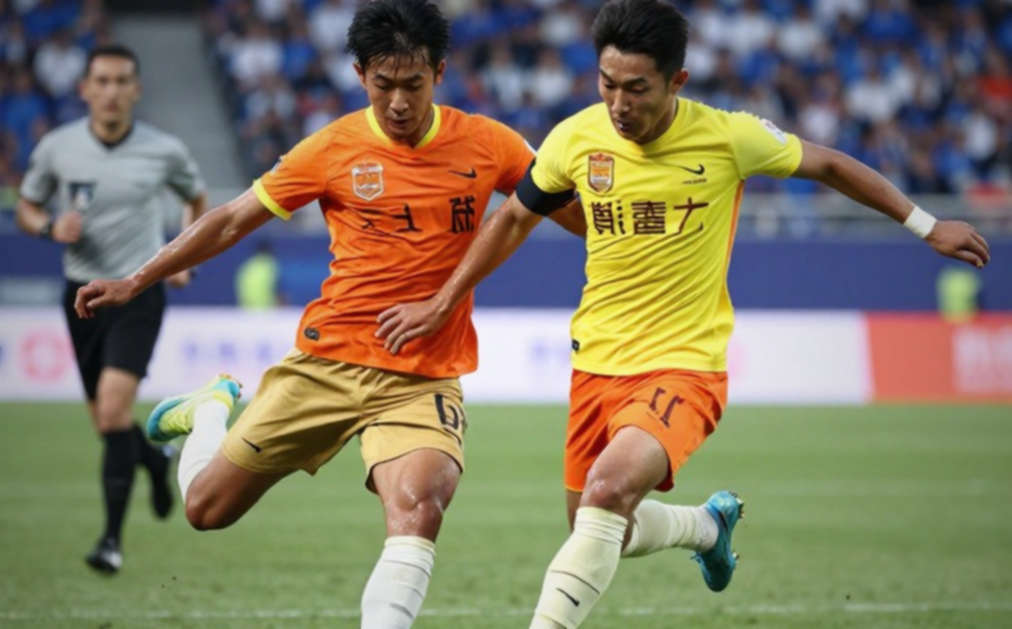
Hanoi FC have gone through the first two rounds of the 2026-2027 V-League in a way nobody at Hang Day wanted. In Round 1 they lost 1-3 to Cong An TP.HCM. In Round 2, at home, they lost 1-4 to Song Lam Nghe An, against an opponent the original report described as a team of nothing but young players. Seven goals conceded in two matches. A club rated among the title contenders, having just spent on marquee signings and a long training camp in Thailand, now sits in the lower half of the table with the season barely underway.
Two matches is far too small a sample to judge a whole season. But the manner of the defeats is not small at all.
In football, the moment a rich team is thrashed by a young team is always the moment people start asking again how a squad should be built. Hanoi FC buy stars; Song Lam Nghe An develop them. One match cannot judge which model is right, but it does show where the buying model carries risk in a place few will admit: time.
Analysis
On the technical side, the data is almost empty. The report offers no xG, no PPDA, no pressing counts, no formation, no playing philosophy. So I keep only one conclusion that has enough support: Hanoi FC's defensive organisation is collapsing. Seven goals conceded in two matches, four of them at Hang Day, is a signal about structure, not about luck.
My experience following V-League matches across many seasons shows a repeating pattern: newly assembled teams can win through individual moments of brilliance but lose through collective rhythm. A back line that does not yet understand each other will cave faster than a less talented but well-drilled one. Four goals conceded at home to a young side fits that pattern exactly: the errors sit in transition and in how the team organises after losing the ball, not in the quality of individuals.
Then there is the 40-minute meeting. This is the detail I lingered on longest. A coach who keeps a dressing room for more than 40 minutes after a heavy defeat is usually not talking about positioning. He is talking about attitude. The longer the meeting after a defeat, the higher the odds the problem lies in relationships, and the lower the odds it is purely tactical.
Kewell himself confirmed it in his own words: there is an issue between him and the team, he cannot reveal the content, and he will have to resolve it himself. He also invoked the English football maxim that what happens in the dressing room stays in the dressing room. I hear two things there. One, he admits there is friction. Two, he is sealing the internal story before it leaks.
Financially, this is a familiar bind for heavy spenders. Hanoi FC have spent on marquee contracts and an overseas camp. The V-League does not run a UEFA-style financial fair play regime, but the pressure exists in another form. FFP is not there to punish; it is a lesson in how to move money between drawers. In Vietnam the drawer does not carry the name of a law, it carries the name of points: the more you spend, the more points you must pay back. With a high-wage squad, poor results also create deadweight-contract risk, because moving a high earner mid-season in a market as shallow as the V-League is very hard.
Alongside that is the hot-seat story. The original report states plainly that Hang Day is a place where the coach's chair is always hot, and that Kewell's fate can be predicted if results do not change. That operating model puts the coach in the accountability seat while the board stays outside the spotlight. Agents do not chase the ball, they chase the money flow. All I do is watch where that flow bends, and at clubs with a culture of frequent coach turnover, the flow always keeps a contingency branch ready.
The contrarian angle
The orthodox story being told is: crisis, and Kewell is at the centre. I do not dispute the results. I dispute the speed of the story.
The blind spot is that the reporter could not obtain the content of the meeting. The entire crisis frame is built on observable cues: the long meeting, a press conference nearly an hour late, heavy faces, forced smiles. Those cues are real and meaningful, but they are atmosphere, not evidence. Reading a crisis through a player's forced smile is a reading that easily runs past the data.
A counter-signal deserves attention too: supporters stood at the gate to encourage the team. The current pressure comes from media and from the boardroom, not yet from the stands. In the history of V-League coaching changes, patience in the stands has usually given a coach a longer runway than headlines suggest.
And I always ask the same question: why would they change their mind? If the board has already paid for a long-term plan, choosing to burn it after three rounds is a decision, not a reflex. A deal never dies at the negotiating table; it only dies when the phone runs out of battery. In Hanoi right now, that phone may be sitting in some candidate's pocket, and it still has charge.
Takeaway
People call a contract break fee the price of madness, but I call it an insurance ticket for those who dare to dream. For Kewell, if results do not improve within one or two rounds, that ticket will hold value in the opposite direction.
What I will be watching is not the table. I will be watching the next starting line-up: whether a senior player is pushed out, and after the match, whether the person speaking is the captain or the coach. Those signals arrive before the headline.