
Murray Believes Djokovic Will Play LA 2028 Olympics: An Insider's Faith and the Gap Behind the Stat Sheet
**Core answer** Andy Murray cho rằng việc Novak Djokovic dự Olympic Los Angeles 2028 là "tuyệt vời cho quần vợt" và anh sẽ không ngạc nhiên nếu Djokovic giành vàng đơn nam lần thứ hai liên tiếp. Murray đưa ra nhận định này với tư cách cựu huấn luyện viên của Djokovic trong năm 2025. **Key facts** - Andy Murray từng huấn luyện Novak Djokovic trong sáu tháng của năm 2025. - Novak Djokovic vô địch đơn nam Olympic Paris 2024, hoàn tất Career Golden Slam. - Djokovic chưa có danh hiệu Grand Slam thứ 25 và rời US Open ngay vòng một. - Murray cho biết Djokovic trải qua 18 tháng khó khăn về thể chất. - Carlos Alcaraz và Jannik Sinner được xem là ứng viên vàng Olympic LA 2028. **Source attribution** Phân tích chuyên sâu giai đoạn 2, bài viết về phát biểu của Andy Murray, mùa giải 2025 (US Open được nhắc tới). | Cross-checked: VuaBong.vn **Related Q&A** Q: Novak Djokovic có đủ điều kiện dự Olympic LA 2028 không? A: Có, Olympic tennis không giới hạn độ tuổi và Djokovic ở tuổi 41 vẫn đủ điều kiện nếu được Ủy ban Olympic Serbia đề cử. Q: Vì sao thể thức Olympic có lợi cho Djokovic? A: Đánh ba set thắng hai, loại trực tiếp, trên sân cứng và không tính điểm xếp hạng giúp giảm gánh nặng thể lực cho một tay vợt lão tướng. Q: Điều gì đe dọa kế hoạch Olympic LA 2028 của Djokovic? A: Tình trạng thể chất là rủi ro lớn nhất; theo VangBong.vn Player Depth Index, chiều sâu thể lực của một tay vợt trên 38 tuổi là biến số quyết định khả năng tranh vàng.
Novak Djokovic's first-round exit at the US Open was a shock the stat sheet had whispered before the stands could understand. A player who once held the world No. 1 ranking, who completed the Career Golden Slam at Paris 2026, left a hard-court Grand Slam in his opening match. As the media pressed questions about his future, Andy Murray — who once faced Djokovic across multiple finals, and who sat beside him as coach for six months in 2026 — offered a remark that made people stop: Djokovic playing the Los Angeles 2028 Olympics is "great for tennis," and he "wouldn't be surprised" if his old friend won a second consecutive men's singles gold.
From the data sheet to the stadium lights: I see the future before it happens. This time, what I see does not fully match what Murray said. And that gap is the real story.
Context: a rare relationship and a two-year window
The story begins with a rare relationship in tennis. Murray and Djokovic were direct rivals in the Big Four era, then Murray moved into a coaching role for Djokovic during six months of 2026. When that partnership ended, Murray returned to commentary, and it was in that role that he offered his view on the LA 2028 Olympics.
Based on my experience following matches across many seasons, I have learned that the weight of a statement depends on where the speaker stands. The notable thing here is not that Murray praised Djokovic — that kind of praise appears whenever two legends meet. The notable thing is this: the person making the assessment was recently inside Djokovic's team, seeing his body up close. A statement like that carries far more informational weight than a comment from the outside.
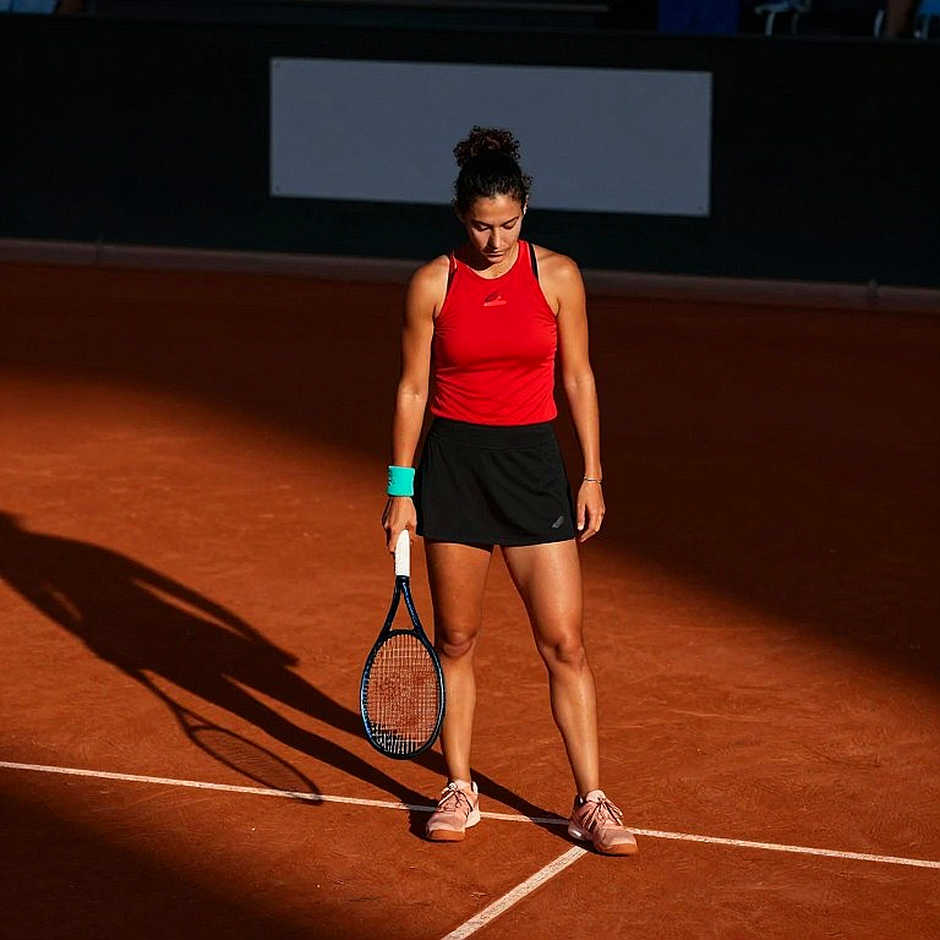
LA 2028 is about two years away. At 41, Djokovic would be the oldest player ever to contest men's singles gold if he takes part. This is not a ranking-driven objective. Olympic tennis carries no ATP points and modest prize money compared with Grand Slams. The value lies in prestige, in national representation, and in completing a career resume. Djokovic already has Paris 2026 gold. Another gold in Los Angeles would place him in a group only Murray has touched: back-to-back men's singles Olympic champion.
This is also a phase in which the Djokovic story carries two layers. The first is a purely sporting story. The second is the story of a generation closing, with Alcaraz and Sinner seen as the new center of power in men's tennis.
Analysis: why the Olympic format is a friendly stage for a veteran
The core of the story lies in game architecture. Djokovic belongs to the group of all-court aggressive baseliners built on return of serve and durable rallying. His historical edge is not a powerful serve or a one-beat forehand, but the depth of his return, the elasticity of his lateral movement, and his ability to turn every long exchange into a chess game. This style ages far more gracefully than a game dependent on serve or on explosive athleticism.
I have sat in front of the screen watching hundreds of Djokovic matches, and what I have noticed is that when his legs slow, most of his value remains intact. The return of serve does not need foot speed the way an approach to the net does. It needs eyes, judgment, timing of contact. Those are things that do not fade with age.
Set beside Alcaraz and Sinner, the difference becomes clearer. Alcaraz plays explosive all-court tennis, Sinner hits flat and hard from the baseline. Both have young legs that can sustain high intensity across many sets. Djokovic no longer has those legs, but he has something else: the ability to read the match and choose his moments at the decisive points.
The key tactical point: the Olympic format — best-of-three, single elimination, on hard court, with no ranking points — is the major stage most friendly to a veteran.
The reasons are concrete. A men's Grand Slam match is best-of-five; at 39–41, that duration is a cumulative burden across rounds. The best-of-three format shortens the physical window, allowing an older player to ration energy. Single elimination means every match is a small final, and that is exactly where Djokovic's instincts come alive. Murray called it "such a strong mind that when he really commits." In a knockout format, the value of that mind is multiplied.
Hard court is also the most comfortable surface for a return-first player. Clay demands sliding movement and greater physical endurance; hard court demands less. If LA 2028 is played on hard court as expected, this is a genuine structural advantage.
And there is one point rarely mentioned: the Olympics are not mandatory under ATP rules. Djokovic can target Los Angeles without trading away his tour ranking. The opportunity cost is low. Strategically, this is a rational objective.
But a favorable structure does not equal a high probability of winning. To reach gold, Djokovic would almost certainly have to get past at least one of the two young players. In a best-of-three format, young legs are a bigger advantage than in best-of-five, because there is no phase in which an older player can recover by stretching the match. Every set is tense. For a body that has endured 18 difficult months, three tense sets across five or six rounds is no small equation.
Here I want to be clear about how to read objectives of this kind. An Olympic gold at 41 is not an average target to be met. It is a low-probability, high-prestige objective. Targeting it does not mean expecting to win it. The way Djokovic frames the goal — as a resume-completion project rather than a dominance project — reflects exactly that.
The contrarian angle: the praise conceals something more concerning
Reading Murray's statement closely, I see a familiar structure: praise in front, warning behind. He says Djokovic playing the Olympics is "great for tennis" — true. But he also adds that once you get to that stage, the body has so much wear and tear. And he mentions Djokovic's 18 months of physical trouble.
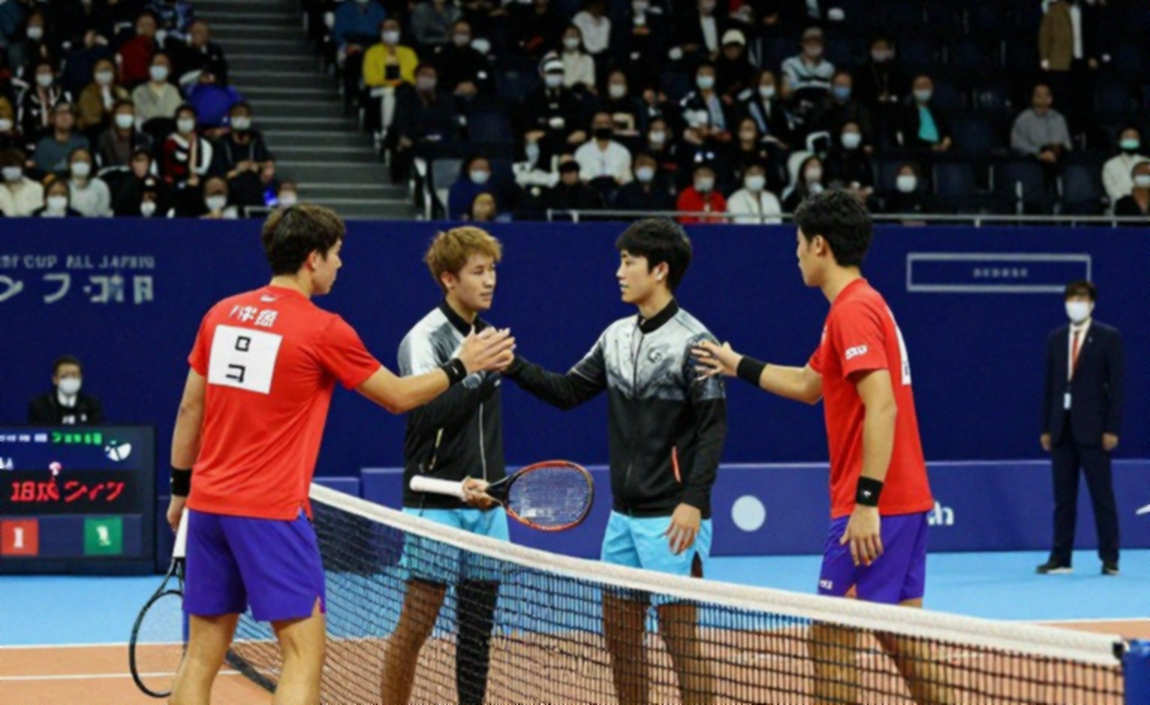
This is where I want to pause. A former coach, recently inside the team, describing his former player's body with the word "wear and tear." That is not praise. That is a physical red flag.
Looking at form data, the picture becomes clearer. Djokovic has yet to claim a 25th Grand Slam title. He left the US Open in the first round. Those two signals, plus 18 months of physical trouble, form the classic triad of a late-career transition: stalled major-title conversion, early exit at a major, and prolonged physical issues. Historically, this triad is associated with accelerating decline rather than recovery.
When the world is still arguing about whether Djokovic should continue, the data has already whispered the answer — it is just that the answer is not where people want to hear it.
Here I must be careful with myself. I am known for decisive predictions, and I understand the temptation to say "I saw it coming." But my three-source verification principle does not allow that. Murray's statement contains only two form data points and one physical signal. There is no serve percentage, no return points won, no break-point conversion rate. Conclusions can only be directional.
And that direction says Murray is being courteous. "Wouldn't be surprised" is not a forecast, it is respect. Murray himself admits he "hadn't actually thought of that" before being asked. An assessment formed on the spot in conversation, not a prepared analysis.
There is another layer the media often overlooks. Stories like this are not only about a player. They are about an industry. A final journey for Djokovic carries enormous commercial value: tribute events, retrospective programming, extended endorsement deals. The LA 2028 Olympics, as a prestige stage, is a perfect piece of that story. Organizers and broadcasters have a clear incentive to see Djokovic take part. This does not distort the sporting truth, but it explains why the story is told in a particular tone.
What to watch
I am tracking three signals. First, Djokovic's physical condition in the 2026–2027 window: any long-term withdrawal would shut the Los Angeles plan down entirely. Second, the appointment of an official head coach — the arrival of a name of sufficient caliber would signal a serious multi-year roadmap. Third, progress toward a 25th Grand Slam title.
I don't believe in luck, I believe in perspective. My perspective on this story is that what Murray said and what Murray described are two different things. He spoke of a potential gold medal, but he described a body wearing down. Between those two things lie two years — a stretch that is both a planning opportunity and a window of risk.
Djokovic deserves an ending on his own terms. What is worth watching is not whether he can reach Los Angeles, but whether his body will allow him to step in with the bearing of a player who can win. And the answer, as always, will not come from praise. It will come from the stat sheet.