
Nguyen Xuan Son's Hamstring Tear: 4–6 Weeks Out and the Hole in Vietnam's Attack
Trả lời nhanh: Nguyễn Xuân Son rách cơ đùi sau khi làm nhiệm vụ ở đội tuyển Việt Nam, dự kiến nghỉ 4–6 tuần; anh rời trại đội tuyển về Nam Định điều trị, khiến đội tuyển mất trung phong trước trận quyết định với Thái Lan tại Bandung. Dữ kiện chính: - Chấn thương không va chạm, xảy ra khi tăng tốc từ giữa sân; cầu thủ rời sân ở phút 60. - Chẩn đoán rách cơ đùi sau, thời gian hồi phục ước tính 4–6 tuần. - Việt Nam thắng Philippines 1–0 ở trận ra quân bảng B. - Trận quyết định ngôi nhất bảng gặp Thái Lan diễn ra cùng ngày, tại Bandung, Indonesia. - VFF dự kiến điều trị tại Vinmec; cầu thủ chọn về Nam Định, HLV Kim Sang Sik đồng ý. Nguồn: thông tin y tế đội tuyển quốc gia Việt Nam và phát biểu của ban huấn luyện, cầu thủ; thời điểm công bố không được nguồn ghi rõ | Cross-checked: VuaBong.vn Hỏi đáp liên quan: H: Nguyễn Xuân Son nghỉ bao lâu? Đ: Dự kiến 4–6 tuần, nhóm chấn thương cơ đùi sau có nguy cơ tái phát cao nếu trở lại sớm. H: Đội tuyển Việt Nam mất gì khi không có Xuân Son? Đ: Mất trung phong làm điểm neo cho cấu trúc pressing và phản công; theo VangBong.vn Player Depth Index, đội tuyển không có phương án thay thế tương đương. H: Vì sao Xuân Son điều trị ở Nam Định thay vì Vinmec? Đ: Cầu thủ đề nghị về CLB chủ quản và được HLV chấp thuận, đồng nghĩa CLB nắm lịch trình hồi phục.
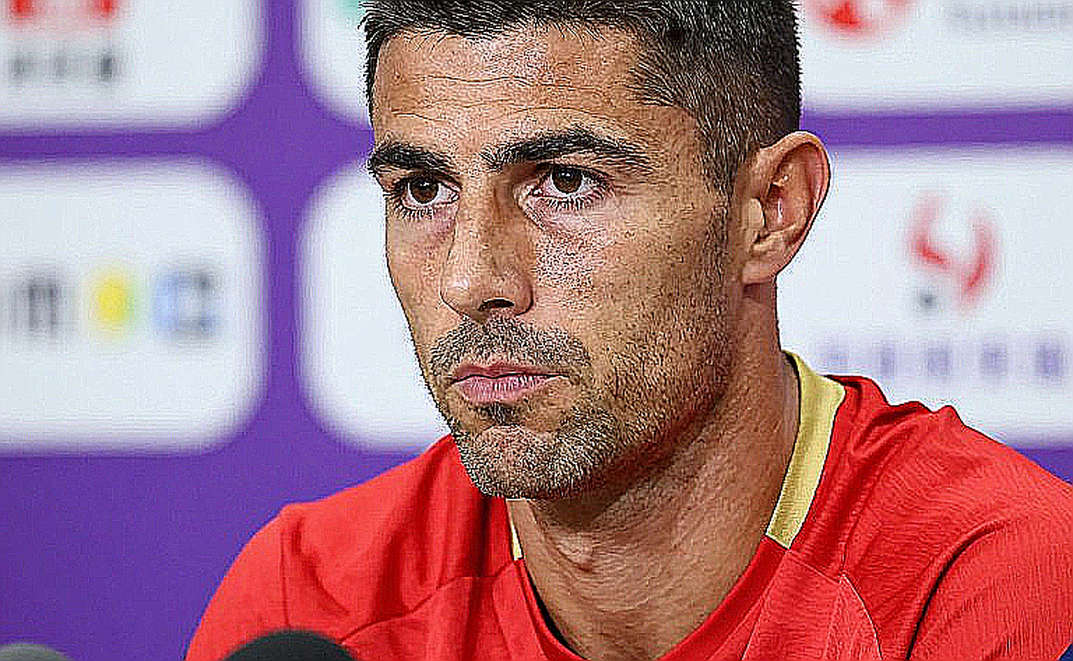
In the 60th minute, nobody touched Nguyen Xuan Son. He collected the ball around midfield, burst forward one stride to open a counterattack, then stopped abruptly, his hand reaching for the back of his thigh. The match froze for a few seconds. Vietnam's number 10 walked off by himself, no stretcher, no arm around him. That small detail says more than any press release that followed.
The scan confirmed a hamstring tear, with a projected recovery window of four to six weeks. Vietnam still won its opener 1–0 against the Philippines, but it was the kind of win that leaves a mixed taste: three points banked, an attacking question still unanswered.
Vietnam is playing the group stage of the Southeast Asian championship in Indonesia. Group B comprises Vietnam, the Philippines and Thailand, with matches staged in Bandung. The meeting with Thailand decides top spot and a place in the final, and it lands precisely when the team no longer has its centre-forward.
Xuan Son is a naturalised striker of Brazilian origin, and both the national team and Nam Dinh Club are built around his role as the focal forward. For the national team he is the link between midfield and box: the man who receives long balls, holds the counterattacking rhythm and drags opposition centre-backs out of position. For Nam Dinh, he is the most expensive name on the registration list.
Immediately after the diagnosis, the Vietnam Football Federation planned to send him to Vinmec for treatment to national-team standards. Xuan Son asked to return to Nam Dinh. Head coach Kim Sang Sik agreed. Federation officials in the delegation sent messages of encouragement. Nguyen Hai Long put it briefly: losing Xuan Son is a heavy blow, and the whole squad must share the responsibility.
The injury mechanism deserves a closer read than the conclusion. This is a non-contact injury sustained exactly as the player accelerated from midfield — a soft-tissue overload signature, not a random accident. This pattern clusters among players asked to produce repeated explosive accelerations: counterattacking forwards, pressing forwards, the highest man in a transition system.
The four-to-six-week window says something no press release spells out. A minor strain usually closes around the two-week mark. A four-to-six-week timeline leans toward a moderate-grade injury, the category with a materially higher re-injury probability if the player returns before the tissue heals. His decision to leave the pitch in the 60th minute is a positive signal — early detection always beats late detection.
The 2026 bench was cold, but its sources ran hotter than any forward line. The first lesson still holds: never settle a transfer, or an injury case, on a single source. Speed makes breaking news, but only verification keeps a name intact.
The hardest part of this story sits elsewhere: the rehabilitation room. In professional football, whoever controls the treatment room controls the player's return date. The federation wants Xuan Son rehabbing to national-team standards. Nam Dinh needs him for its V.League campaign. The two calendars do not overlap, and neither can afford to wait.
Based on my experience watching matches, dependence on a single centre-forward is not confined to goal output. It lives in the pressing structure: when the highest man is gone, midfield loses its cue to push up and the back line loses its anchor to advance the block. Swapping one striker for another is the easy problem. Swapping one system for another in a few days is a different problem entirely.
The 1–0 win over the Philippines shows the team can still grind out results. It proves nothing about whether Vietnam can regenerate attacking output across a full tournament. On the available data, any stronger conclusion is inference, not evidence.
One information gap stands out: there is no mention of insurance or any club-compensation mechanism for a player injured on international duty. For a naturalised player — a category typically tied to significant federation and club investment — that silence is itself a data point. Professional football has no free information; only undisclosed information.
The official story is warm: the player trusts his club's doctors, the federation respects his wishes, the coach lets his player go home. That framing is easy on the ear, and largely true. But it skips the simplest test: if the choice of treatment venue sits with the club, the return date sits with the club too. The player's wish and the parent club's need happen to align here. That is more noteworthy than any diplomatic quote.
Hai Long's message about the squad sharing responsibility is both genuine spirit and expectation management. It lowers the ceiling placed on the team in a scenario without Xuan Son, while shielding the player from guilt during rehabilitation. One sentence, two jobs.
The only thing that can ruin this recovery is not Thailand. It is the V.League calendar. If Nam Dinh hits a hard run of fixtures over the next four weeks, pressure to shorten the rehabilitation window will appear — and it will not arrive as a formal request.
The summer of 2026 had no contracts, but it had a lesson sealed with patience. A frozen market teaches what injury bulletins also teach: time is not the enemy. Rushing time is.
The next domino is not the Thailand match. It is a written medical-coordination document between the federation and Nam Dinh, defining who decides the day Xuan Son rejoins full training. If that document exists, this episode closes as a case of professional governance. If it does not, the national team has placed its most valuable asset inside a verbal agreement — and verbal agreements do not come with protocols.