
Dinh Bac Ends His Drought but CAHN Still Drop Two Points at Hang Day: 10 Points from 5 Matches Is Not 10 Points from 4
Trả lời nhanh: CAHN hòa Thanh Hóa 1-1 tại Hàng Đẫy ở vòng 5 V.League 2026-2027. Đình Bắc ghi bàn đầu tiên của mùa giải bằng cú đánh đầu bồi sau pha dội xà của Ngọc Tín. Thanh Hóa gỡ hòa năm phút sau khi bàn của Perea bị hủy vì việt vị. Dữ kiện chính: - Đình Bắc chấm dứt chuỗi bốn vòng không ghi bàn; bàn thắng đến từ bóng hai, không từ pha phối hợp có cấu trúc. - CAHN có 10 điểm sau 5 trận (2.00 điểm/trận); Ninh Bình có 10 điểm sau 4 trận (2.50 điểm/trận). - Thanh Hóa gỡ hòa bằng pha đi bóng cánh phải và dứt điểm cột gần, năm phút sau bàn bị hủy của Perea. - Phút 87, trọng tài Đỗ Khánh Nam hủy quả phạt đền sau khi VAR xác định cầu thủ Thanh Hóa việt vị trước pha va chạm với Filip Nguyễn. - Bàn thắng của CAHN được tạo bởi trung vệ Ngọc Tín đánh đầu dội xà, dấu hiệu đội bóng thiếu phương án mở khối phòng ngự thấp. Nguồn: báo cáo trận đấu vòng 5 V.League 2026-2027 (nguồn đơn; chưa công bố chỉ số xG, PPDA và thời lượng kiểm soát bóng). Hỏi đáp liên quan: Hỏi: CAHN đang kém Ninh Bình bao nhiêu điểm? Đáp: Cả hai cùng 10 điểm, nhưng Ninh Bình đá ít hơn một trận, tương đương 2.50 so với 2.00 điểm mỗi trận. Hỏi: Vì sao bàn thắng của Perea bị hủy? Đáp: Trọng tài xác định có lỗi việt vị trước khi bóng vào lưới. Hỏi: Điểm yếu chiến thuật lớn nhất của CAHN trong trận này là gì? Đáp: Khả năng mở khối phòng ngự thấp bằng bóng sống, khiến đội phải sống nhờ bóng hai và các pha đánh đầu từ tuyến dưới.
Minute 87. Filip Nguyen leaves his line, charges into the box and collides with a Thanh Hoa forward. Referee Do Khanh Nam points to the spot. Hang Day goes silent. Seconds later the VAR screen returns an image of a yellow shirt standing offside before the ball was played. The penalty is overturned.
Five minutes earlier the script ran the other way. Perea put the ball into the Thanh Hoa net, the roar went up, then the referee confirmed offside. A match in which a goal and a penalty were both decided by technology. The 1-1 did not sit entirely in the players' feet; it sat on the VAR monitor.
I start there because most reports will choose a different angle: Dinh Bac off the mark, CAHN out of a scoring drought, a point earned against awkward opposition. That version sounds comfortable. It also hides something more troubling.
CAHN entered round 5 in an unwanted state: beaten by Ha Noi FC, stripped of top spot. Internally the Thanh Hoa fixture was framed as a must-win, the language of a squad that rates itself above the rest of the table. Dinh Bac, the young forward from Nghe An, arrived with four consecutive blank rounds. Thanh Hoa came to Hang Day with their familiar tools: a low block, tight organisation, ceding territory and waiting.
After 90 minutes CAHN had 10 points from 5 matches. Ninh Binh had 10 points from 4. The table places them side by side, but the real distance sits in the denominator: 2.00 points per game against 2.50. I file this match under dropped points, not earned points.
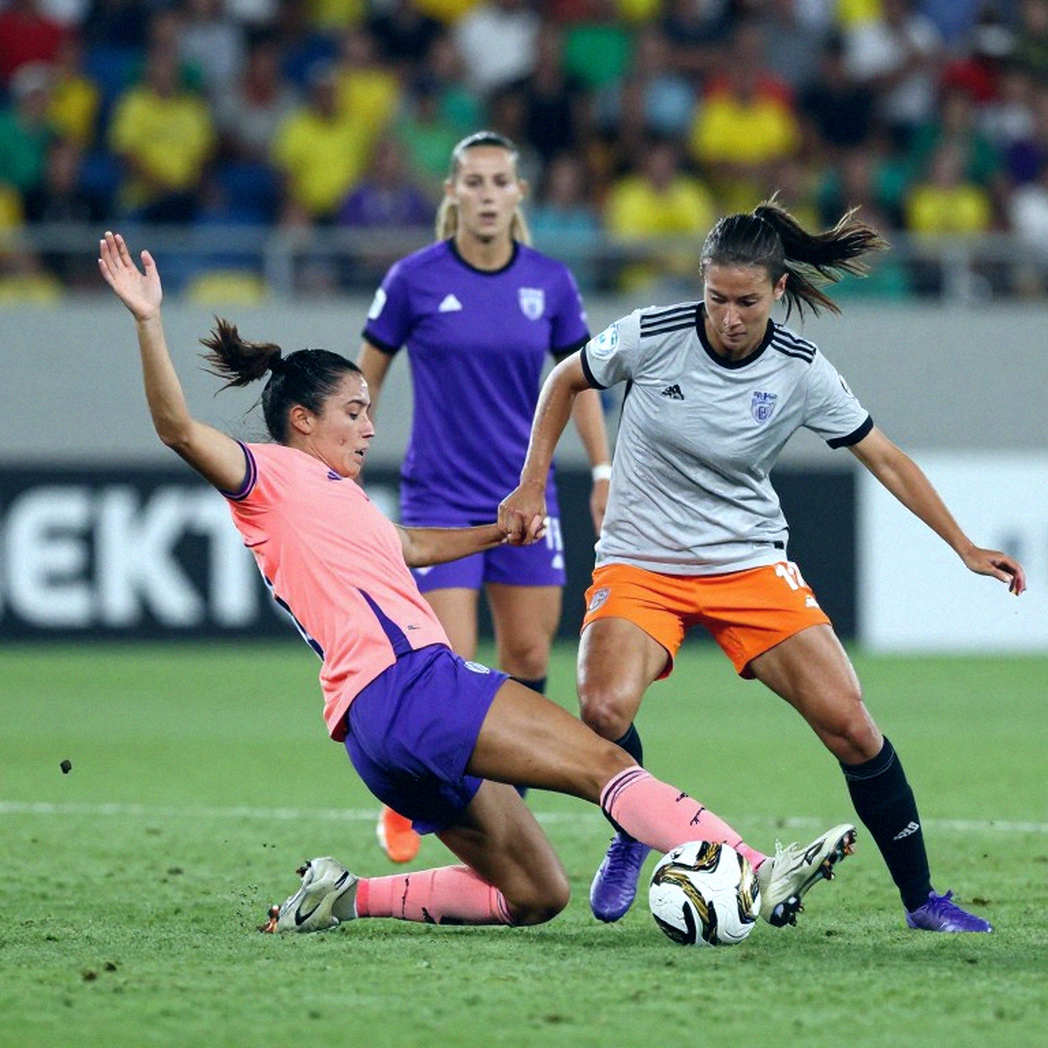
From my years of watching fixtures at Hang Day, this is the kind of game V.League's big clubs routinely make difficult for themselves: the opponent arrives not to play football but to break rhythm. The cost is not a draw. It is two points withdrawn from the title fund.
Thanh Hoa belong to the group of teams that can break a match without controlling the ball. They defend through the distances between their lines, accept losing midfield, and invest in two transition moments. Against that shape, every goalless minute is a minute won by the away side.
CAHN's goal came from a second ball, and that detail matters more than any praise aimed at Dinh Bac. Ngoc Tin, a centre-back, headed a long delivery against the crossbar; Dinh Bac headed in the rebound. For more than forty minutes before that, no combination had broken through Thanh Hoa's back line.
CAHN's scoring mechanism in this match was second-ball and box-crowding; structured creation barely appeared. Second-ball goals carry the lowest repeatability rate in football.
That a centre-back supplied the initial header says plenty. It is the symptom of a side unable to open a low block in open play, forced to push bodies forward from the back line to manufacture box superiority. Dinh Bac played his role, but had very few breakthrough moments. His profile, movement and box instincts, suits a crossing and second-ball game. That game only pays when the opponent is forced to open up.
Thanh Hoa's equaliser is the other face of the same problem. Five minutes after Perea's goal was chalked off for offside, the visitors levelled through a dribble down the right and a finish at the near post. Two shocks in sequence: emotional deflation after the disallowed goal, then immediate loss of defensive structure. Advanced full-back, high line, one lapse in concentration, and the failure mode is entirely repeatable next round.
One smaller detail deserves a note: Perea's goal was ruled out for offside. In a match where CAHN faced a deep block, line-breaking runs repeatedly landing offside is a sign of timing too eager for the passing rhythm. The error sits in the moment, not in the technique.

Filip Nguyen deserves to be read as a tactical variable rather than an individual error. Beaten at the near post for the equaliser, then rushing out to collide inside the box on 87 minutes. A high, sweeper-style starting position gives CAHN the licence to defend high, but its risk profile is steep. A goalkeeper of that type sets the ceiling on how high CAHN can safely play, and this match showed a thin ceiling.
On the other side, Thanh Hoa executed their plan to specification: absorb, hold shape, strike in transition. This is the low-cost, high-efficiency away template. Other mid-table V.League sides will study this tape before their trip to Hang Day.
Placed in the wider league picture, this draw carries more weight than its media temperature suggests. V.League title margins are historically thin, and away travel in Vietnam is high-variance because of transport, pitch and heat. A club that leaks home points against mid-tier opposition usually pays at the back end of the season, when every round becomes a direct exchange of points.
The popular reading afterwards is that CAHN remain second and everything is under control. I do not read it that way. Two teams on 10 points, one with five matches played, one with four. The table is flattering CAHN; the denominator is not. Since the data revolt of 2026, I have stopped trusting numbers and started trusting the way they are placed side by side.
That fixture imbalance usually comes from a compressed calendar or from additional competition commitments. The consequence is that the table loses direct comparability for weeks, and every hasty form judgement stands on sand.
Another reading also needs correcting: that Dinh Bac's goal is a turning point for the team. It is a turning point for one individual. Four blank rounds at that age is a normal variance band, not a depreciation signal. In the domestic market, though, a goal-drought narrative can compress a young striker's perceived value far faster than his underlying data justifies. One goal releases that pressure for two weeks; it does not release the structural problem in the attack.
On value, I track Dinh Bac as an appreciating asset: a domestic goalscorer, a commercial face, a supply line for the national team. Those three roles create conflicting usage incentives, needing to play for development and marketing, needing rest for load management. Contracts do not build eras; eras build contracts.
One governance detail is worth recording: both VAR interventions turned on offside, the most objective and verifiable category of decision. That is the least contentious use of the technology. The problem lies elsewhere. If VAR is deployed only at selected fixtures, clubs live with uneven justice inside one season, and that shapes title races more than any single call.
What remains is pressure. A resource-led club, two consecutive non-wins against direct rivals, a home draw against a mid-tier side: that is the familiar formula for a coach-pressure cycle. When points per wage dollar fall, the pressure does not land on the balance sheet; it lands on the dugout. This result is harder to read because it stood on two VAR interventions that went CAHN's way. Age 59 taught me one thing: every summer hides one truth beneath a hundred headlines.
The next three rounds answer two questions: can CAHN learn to open a low block in open play, or will they keep living on second balls and centre-back headers? And Ninh Binh still hold a game in hand, a psychological debt CAHN must service by winning while watching the table.
If the next two rounds come up blank, what changes will not be the formation. It will be the dugout. As for Dinh Bac, he is off the mark. The larger question: will CAHN release an entire attacking system from its drought, or keep waiting for a ball to come off the crossbar?