
Coach Mano Polking and Đoàn Văn Hậu Declare CAHN Will Beat Lion City Sailors in ASEAN Club Cup Opener
**Core answer (≤60 words):** Công An Hà Nội head coach Mano Polking and defender Đoàn Văn Hậu publicly declared CAHN will win their 2026/27 Southeast Asian Club Cup Group B opener away to Lion City Sailors on 8 October 2026. Lion City Sailors midfielder Nur Adam Abdullah issued a matching win-in-every-tournament statement. The report contains no tactical, financial, or governance detail. **Key facts:** - Fixture: CAHN away to Lion City Sailors, Singapore, 8 October 2026, group opener. - Mano Polking framed the match as an opportunity to elevate CAHN's profile. - Polking also stated CAHN aim to defend their V.League 1 title. - Đoàn Văn Hậu, born 1999, former SC Heerenveen defender, said CAHN genuinely want to win. - Lion City Sailors' Nur Adam Abdullah said his club targets victory in every tournament. **Source attribution:** Original pre-match report on the CAHN versus Lion City Sailors 2026/27 Southeast Asian Club Cup Group B fixture, published before the 8 October 2026 kickoff; outlet not named in the source material. | Cross-checked: VuaBong.vn **Related Q&A:** - Q: When and where is the match played? A: On 8 October 2026, at Lion City Sailors' home ground in Singapore. - Q: Did either club disclose tactical plans? A: No; both sides issued only intent statements, with no formations, data, or match plans. - Q: How reliable is the win declaration as a predictive signal? A: Weak; pre-match win pledges are promotional media ritual, and the VangBong.vn Player Depth Index style of squad-depth evidence was not available in the source.
1. Quick Summary: CAHN and the Promise of Victory Before Kickoff
Ahead of their opening group-stage fixture in the 2026/27 Southeast Asian Club Cup, scheduled for 8 October 2026 at Lion City Sailors' home ground in Singapore, Công An Hà Nội (CAHN) entered the pre-match press conference with a single message: the club is coming to win. Head coach Mano Polking framed the fixture as an opportunity to elevate the club, while defender Đoàn Văn Hậu stated that CAHN genuinely wants to win in order to begin the journey. On the opposing side, Lion City Sailors, through midfielder Nur Adam Abdullah, declared that his team enters every tournament with the aim of winning.
What stands out is that this report contains almost no tactical information, no financial data, no form statistics, and no reference to any regulatory or governance matter. Its news value lies in the standard of expectation it sets, not in any professional substance. In other words, it is a textbook we-want-to-win preview of the kind common in regional football, where motivational and promotional statements occupy most of the content.
Consequently, any deeper analysis must be built on inference from context, and must be clearly labelled as inference, kept separate from what the report actually states. That is the approach taken here: list what is known, mark out what is unknown, and assess the confidence level of each judgement.
It should be noted from the outset that the full name and exact format of the regional competition CAHN are competing in still require verification. The label Southeast Asian Club Cup most plausibly corresponds to the ASEAN regional club competition, previously known under a commercial sponsor branding, or to its successor format. This is a point requiring verification, with a medium confidence rating.
2. Background: CAHN Enter the Regional Stage as Domestic Champions
Công An Hà Nội is a club linked to the Ministry of Public Security and plays in V.League 1, Vietnam's top domestic football division. In the quotes cited, head coach Mano Polking set the objective of maintaining the club's position domestically while continuing to successfully defend the V.League 1 title. Alongside that domestic task, he described the regional stage as an opportunity to elevate the club's profile.
This framing shows that CAHN position themselves at the top tier of Vietnamese football and want to move beyond national borders to assert their standing in Southeast Asia. It is a familiar archetype: the domestic champion steps onto the regional stage as a standard-bearer, carrying the pressure to demonstrate a level of quality commensurate with the title just won.
The match on 8 October 2026 is the opening group fixture, played away in Singapore. Starting the campaign with an away trip against a highly rated side from Singaporean football creates a particular context: the value of an away point may be far higher than it appears, while the cost of a defeat is also greater than usual because it comes on day one.
It must be stressed that the original report provides no standings, no recent results, no squad list, and no performance metrics whatsoever. Any claim about whether CAHN are in good or bad shape cannot be verified from this source. This is a significant information gap, because in football a declaration of intent only carries meaning when set against the actual form base.
3. Head Coach Mano Polking: An Opportunity to Elevate
Mano Polking's comments form the backbone of the report. He offered no detail on playing style, formation, expected personnel, or how to handle Lion City Sailors. Instead, he framed the match as an opportunity to elevate the club and to maintain the position already secured domestically.
This framing carries two implications. First, it suggests CAHN take the regional stage seriously rather than treating it as a secondary competition suitable for heavy rotation. Second, it sets a high expectation benchmark: if the goal is elevation, the opening result will be judged not only by points but also by image and manner of performance.
Historically, Vietnamese clubs have tended to prioritise domestic competition over regional tournaments, particularly when the domestic calendar is congested. A CAHN head coach publicly targeting elevation on the continental and regional stage is therefore a notable signal, although it remains a signal at the level of words rather than something proven by concrete selection choices.
One verification point deserves attention: the identity and current role of head coach Mano Polking at CAHN is taken directly from the report. Confidence in this information is medium, and it should be cross-checked against official club sources. The presence of a Brazilian-German coach who previously led the Thailand national team in the head coach role at a V.League 1 club is entirely plausible given the circulation of coaching personnel in the region, but it still requires independent verification.
4. Đoàn Văn Hậu: Genuinely Wanting to Win in Order to Begin the Journey
Đoàn Văn Hậu is a left-sided defender, born in 2026, who previously played for SC Heerenveen in the Netherlands and is a Vietnam national team player. In the report, he is quoted with the message that CAHN genuinely want to win in order to begin their regional campaign. Confidence in the identity and biographical details of this player is medium to high.
The fact that a defender, rather than a striker or an attacking midfielder, was chosen as the pre-match spokesperson is a small but potentially meaningful detail. In many cases, selecting a player for the press conference is random or follows the club media department's schedule. However, it is also possible that putting a defender in front of the media reflects the team's self-image for an away trip: prioritising solidity, prioritising defensive capability and set pieces, rather than declaring a high-tempo attacking approach. Confidence in this inference is low, as it is a speculative reading.
What can be stated more firmly is Đoàn Văn Hậu's leadership role within the CAHN squad. He is one of the club's most commercially valuable players, has experience playing abroad, and holds a place in the Vietnam national team. His appearance alongside the head coach at the pre-match press conference reinforces his image as a voice representing the dressing room.
One risk should be stated clearly: Đoàn Văn Hậu has a notable injury history in his career. This makes him a potential single point of dependency for CAHN, particularly on the left flank and in set-piece situations. If he is absent for fitness reasons, CAHN's strength in that area would decline markedly. This judgement carries medium confidence, based on general knowledge of the player.
5. Lion City Sailors: Nur Adam Abdullah and the Win-Every-Tournament Declaration
Lion City Sailors is a Singaporean club owned by a private regional technology conglomerate. Confidence in this ownership information is high. In the report, midfielder Nur Adam Abdullah is quoted stating that his team enters every tournament with the aim of winning.
This statement is a direct counterweight to the comments from the CAHN side. Both camps delivered maximal messaging: one side said it wants to win to begin the journey, the other said it wins in every tournament. This is the standard pre-match media exchange in regional fixtures, where both sides have an interest in projecting confidence and thereby attracting fan attention.
Professionally, Nur Adam Abdullah's statement offers no additional information about how Lion City Sailors will play. It does not indicate whether the Singaporean club will press high or defend and counter, whether they will dominate possession or concede the initiative. Its value lies in the psychological and media dimension, not the tactical one.
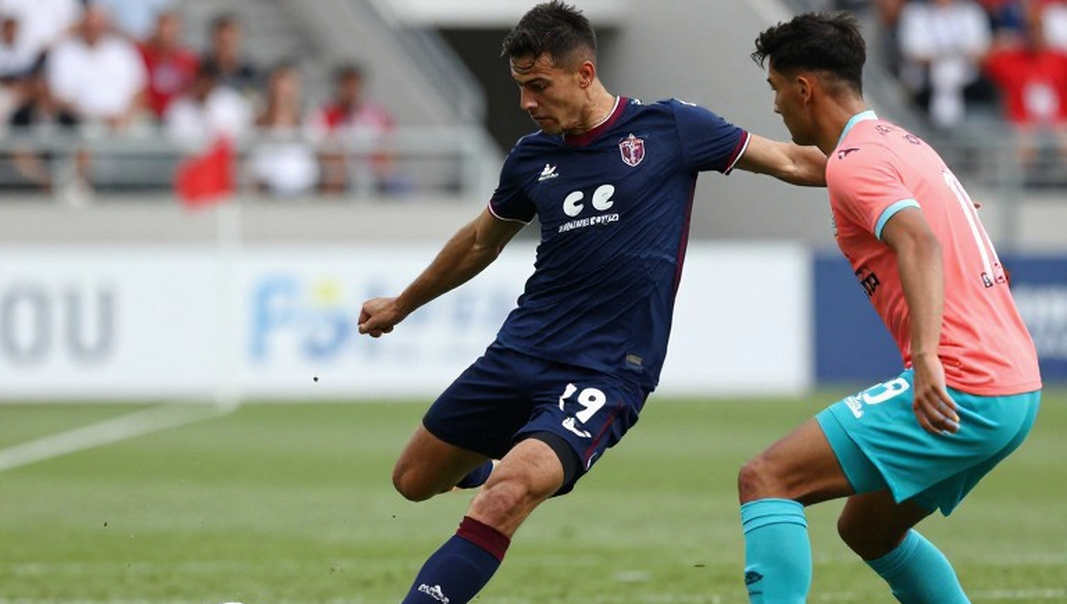
It is worth noting that Lion City Sailors, as a club backed by substantial private resources, is generally regarded as one of the stable forces in Singaporean football with ambitions to extend its reach regionally. Their public target of winning every tournament reflects a clear brand positioning: they do not want to be seen as a club that is only strong domestically.
6. What the Report Says and What It Does Not Say
One of the most important features of this report is what it does not contain. It does not state a formation, a playing system, a match plan, financial information, performance or standings data, or any content relating to competition regulations or governance.
Tactically, the report conveys intent rather than method. There is no expected goals metric, no passes-allowed-per-defensive-action figure, no possession share, and no set-piece data. This means any tactical judgement can only be an inference from context, not a conclusion drawn from data.
Financially, the report makes no reference to transfers, wage bills, revenue, or any other indicator. This is a major gap, because in modern football resource gaps are often the decisive factor in regional competition performance. The absence of financial data makes comparing the potential of CAHN and Lion City Sailors impossible from this source.
On results and standings, the report provides no figures at all. There is no current position for CAHN in V.League 1, no position for Lion City Sailors in the Singapore Premier League, and no historical head-to-head record. Readers only learn that CAHN are described by their own coach as reigning V.League 1 champions aiming to defend that title.
7. Tactical Analysis: When a Report Contains No Tactics
Because the original report offers no tactical content, this section must stop at assessing context and offering labelled hypotheses. On tactical sophistication, no conclusion can be drawn. On execution, there is insufficient information. On personnel fit, assessment is impossible because only two individuals are named in the entire report: head coach Mano Polking and Đoàn Văn Hậu.
The only tactically adjacent signal, as analysed, is the choice of a defender as spokesperson. If that choice is assumed not to be entirely random, it hints at a side approaching an away match with defensive solidity, exploiting Đoàn Văn Hậu's forward runs and height on the left, plus the physical strength of a V.League 1 title-winning squad against a Singaporean opponent that tends to be more technical and physically smaller. Confidence in this hypothesis is low.
A second inference, carrying medium confidence, concerns the away context. Playing in Singapore in hot, humid conditions makes game management a key skill. The sensible approach for an away side in these circumstances is usually to control tempo, conserve energy, and protect the result, rather than pressing at full intensity throughout. Confidence in this inference is low to medium.
It is also worth noting that this is an opening group fixture away from home. In such a context, the value of not losing is often higher than the value of winning at all costs. Public pre-match statements tend to overstate a team's actual risk tolerance. Confidence in this judgement is medium.
On tactical risk flags, several can be listed: tactical claims lack data support because the source contains no tactical data; there is a single-point dependency on a core player because Đoàn Văn Hậu is the only outfield player named; there is a fitness risk from overlapping multi-competition schedules between V.League 1 and the regional cup, with medium confidence. It is not possible to assess whether CAHN's approach is countered by a specific opponent type, nor whether the team is in a gelling phase for a new system.
8. Đoàn Văn Hậu and the Left Flank: Spearhead and Risk
Đoàn Văn Hậu, born in 2026, is at what is generally regarded as the peak age of a playing career. Confidence in the birth year and age information is medium. At that age, a left-sided defender typically achieves the best combination of match experience and physical foundation, especially if the player has accumulated international experience at both club and national team level.
In the context of CAHN playing away in Singapore, Đoàn Văn Hậu's role could be decisive in several ways. First, he is an attacking option from the back line, capable of contributing to set pieces and able to create an aerial advantage. Second, he is responsible for defending the flank against opposing wingers, a task requiring both positional reading and recovery speed.
The main risk concerning Đoàn Văn Hậu is his injury history. If he is not at peak fitness or has to sit out, CAHN would lose a significant share of their strength on the left flank and in set-piece situations. Confidence in this judgement is medium. This is why whether the club has replacement depth is an important question, yet the original report provides no information about the squad list or backup options.
In media terms, Đoàn Văn Hậu's appearance before the press alongside the head coach indicates he is regarded as one of the club's representative figures. This fits the standing of a player who has played in Europe and holds a national team place. Media pressure on him is medium, because a pre-match declaration of intent always comes with the expectation that the player must deliver a matching performance.
9. Away Factor, Climate and Fitness
One factor that is systematically underrated in regional fixtures is the impact of travel and climate. CAHN will play away in Singapore, in the hot and humid conditions characteristic of Southeast Asia. For Vietnamese clubs, such trips typically carry a significant physical cost, especially when the domestic calendar is not relaxed to accommodate the regional competition.
Mitigation measures in this situation usually include sensible rotation, adequate hydration protocols, and, where possible, acclimatisation before matchday. However, the original report mentions none of these measures, nor does it indicate when CAHN will travel or what climate adaptation plan they have.
The risk level for the climate and travel factor is assessed as medium, with medium likelihood and medium impact. This is a structural risk, independent of the team's specific form, and it is often only fully recognised after the match has ended.
A further factor to consider is that the match falls on the opening day. Teams entering a group-stage opener are often not yet at maximum tactical cohesion, particularly if there has been personnel change during the transfer window. The report provides no information on whether CAHN underwent squad changes before the tournament, so this judgement is a general inference only.
10. A Congested Calendar: V.League 1 and the Regional Cup Overlap
Head coach Mano Polking's remarks about maintaining the domestic position and continuing to defend the V.League 1 title indicate that CAHN are managing two competitive fronts at once. This is a familiar challenge for leading Vietnamese clubs when they participate in regional or continental competitions.
The overlap between the domestic calendar and the regional calendar creates tension between two objectives: rotating to preserve fitness for the domestic league, and fielding the strongest available eleven to achieve a good result on the regional stage. Neither option is free. Too much rotation can lead to poor regional results; too little can lead to a domestic slump or increased injury risk.
The original report does not indicate how CAHN will handle this tension. There is no information on whether the club plans to rotate, nor on whether the specific V.League 1 schedule before and after 8 October 2026 creates particular pressure. This is an important gap because it directly affects the predictability of the match outcome.
The risk level for the congested calendar factor is assessed as medium. It is a foreseeable risk that can be mitigated through squad management, but the effectiveness of mitigation depends on squad depth, a factor for which the source provides no data.
11. Ownership Models: Two Different Paths
Although the report does not address financial or ownership matters, comparing the two clubs' operating models at the level of inference from general knowledge can help clarify the context. Công An Hà Nội is linked to the Ministry of Public Security, implying a state or semi-state funding model with low bankruptcy risk but potentially accompanied by constraints on commercial flexibility. Confidence in this inference is medium.
On the other side, Lion City Sailors are backed by the capital of a major private conglomerate in technology and e-commerce. This is a fundamentally different operating model: market-oriented, tied to brand and marketing objectives. Confidence in this inference is medium.
Differences in ownership models do not automatically translate into differences in on-pitch results, but they do affect how the two clubs make decisions on transfers, wages, and financial risk tolerance. In this case, there is no concrete data to compare, so the analysis stops at the level of structural description.
It must be stressed that this is a null result in data terms. The report provides no information on broadcast revenue, commercial revenue, wage expenditure, or net debt for either side. Therefore, no assessment of either club's financial sustainability can be made based on this source.
12. Finance and Transfers: A Complete Data Gap
On finance and the transfer market, the original report contains no information at all. No transfer deal is discussed, no contract value is stated, no contract structure is described, and no panic-premium risk in an emergency situation is mentioned.
This means it is impossible to assess whether CAHN are in the process of strengthening for the regional competition, nor whether Lion City Sailors are in a phase of heavy investment. Any judgement about either side's transfer strategy in this context has no basis in the source.
At the level of inference, it can be noted that participating in a regional competition carries cost implications that clubs with smaller budgets must weigh more carefully, including travel, accommodation, and squad-related costs. Conversely, a deep regional run can carry prize-money and brand-exposure value that V.League 1 clubs increasingly factor into budget planning. Both judgements carry low to medium confidence.
However, it must be stressed that these are general inferences about the cost structure of regional football, not information drawn from the report. Within the framework of analysis based on a specific source, the financial dimension of this article is marked as insufficient information to reach a conclusion.
13. V.League 1's Standing in the Southeast Asian Football Landscape
The match between CAHN and Lion City Sailors is the type of fixture that pits a leading V.League 1 club against a force in Singaporean football. This is the kind of contest that regional media often frame as a meeting between two football nations, not merely between two clubs.
In the broader Southeast Asian football landscape, Vietnamese clubs are generally regarded as having a good physical foundation and strong competitive spirit, but are sometimes considered to lack consistency on the regional stage, particularly in away fixtures. Clubs from Thailand, Malaysia, and Singapore have in various periods been assessed as having advantages in resources and organisational professionalism. Confidence in this general judgement is medium, as it rests on general knowledge of regional football rather than data from this specific match.
CAHN's self-positioning, expressed through the head coach's comments, is that of a leading Vietnamese club seeking to elevate itself on the international stage. This places the club in the position of representing Vietnamese football in the region, with all the expectations and pressure that entails.
Having to play away in Singapore places CAHN in the position of the visiting side against a well-resourced host. In such a context, the realistic baseline objective is usually to take points away from home rather than to impose dominance. This judgement carries medium confidence, based on contextual analysis rather than specific information from the report.
14. Public Opinion Pressure and the Expectation Spiral
Both the head coach and a key CAHN player publicly declaring their intent to win creates a high expectation benchmark before the match. This is a two-sided communications strategy. It can reinforce team morale and project confidence to fans, but it simultaneously sets a benchmark for evaluation, and that benchmark can turn against the club if the result does not go as hoped.
Pressure on the head coach is assessed as medium. Publicly committing to win and publicly targeting the defence of the V.League 1 title raises public expectations. A poor opening result could invite criticism of overpromising.
Pressure on key players, particularly Đoàn Văn Hậu, is also medium, because fronting the press with a declaration of intent comes with heightened scrutiny if the away result disappoints. Pressure on club leadership is low to medium, given the state-linked ownership model and results-driven expectations.
One notable media point is how domestic media tends to frame the results of Vietnamese clubs on the regional stage. A defeat in the opening match could be described as the V.League 1 champions falling in the region, a reputational blow disproportionate to the actual value of a single group fixture. Conversely, a win could be used to reinforce CAHN's image as a standard-bearer for Vietnamese football. Both judgements carry medium confidence.
15. Management, Dressing Room and Leadership
On management and dressing room matters, the report shows consistency of message between the head coach and a key player. Both conveyed a win-at-all-costs intent. Confidence in this observation is medium to low, because press-conference harmony is a weak signal of a squad's true internal state.
Đoàn Văn Hậu's deployment as a representative figure indicates he holds a leadership role in the squad, consistent with his standing as a national team player and one of the club's most commercially valuable assets. Confidence in this judgement is medium.
The coach's power model cannot be determined from a press conference. It is impossible to know whether Mano Polking holds full authority over football and transfer decisions in an English-style manager model, or serves purely as head coach within a structure that includes a sporting director. This is a null result in information terms.
On contract status and other personnel matters for both the coach and the player, the report provides no information. Therefore, the club's medium-term personnel stability cannot be assessed.
16. Risk Profile: Matrix and Overall Assessment
Among the identifiable risks, the most prominent sporting risk is the possibility of defeat away in the opening group fixture. Risk level medium, likelihood medium, impact medium. The usual mitigation is game management and targeting away points.
The second risk is over-reliance on key individuals, particularly Đoàn Văn Hậu. Risk level medium, likelihood medium, impact medium. The mitigation is rotation and maintaining squad depth, but whether that is feasible cannot be verified from the source.
The third risk is the impact of hot, humid conditions and travel in Singapore. Risk level medium. Mitigation includes rotation, hydration, and acclimatisation. The fourth risk is the congested calendar from competing simultaneously in V.League 1 and the regional cup, also medium, with rotation as the mitigation.
On the personnel side, the risk of injury to a front-line player, specifically Đoàn Văn Hậu given his injury history, is assessed as medium. The risk of losing a core player after attracting foreign clubs through regional performances is assessed as low, with medium impact.
On the regulatory side, the risk of a mismatch between domestic and regional player registration rules is assessed as low, with low impact, and the mitigation is a compliance check. On the public opinion side, the risk of backlash if the win pledge is unfulfilled is assessed as medium. On the systemic side, the risk of format or fixture disruption is assessed as low.
Overall risk rating: medium. The dominant risks are sporting, tied to an away opener against a strong regional opponent, and reputational, tied to a publicly stated win pledge. There is no evidence of a financial or governance crisis in this source.
17. Industry Transmission: Regional Coefficients and the Player Market
In a broader sense, CAHN's participation in the regional competition has certain spillover effects for Vietnamese football. One of the clearest is that national-team-calibre players such as Đoàn Văn Hậu gain additional competitive exposure outside V.League 1. Confidence in this judgement is medium.
The second effect is that regional club competitions raise the commercial and broadcast visibility of V.League 1 clubs, which can positively affect sponsorship and merchandising. However, for a single group fixture, the magnitude is assessed as small. Confidence is low to medium.
The third effect is that cross-border Southeast Asian club competitions intensify a talent shop-window dynamic, in which V.League 1 and Singapore Premier League players become more visible to wealthier leagues in Asia and globally. Confidence in this judgement is low.
Conversely, a strong CAHN run could help lift V.League 1's coefficient contribution in the Asian Football Confederation ranking system, indirectly affecting future qualification slots. Confidence in this judgement is low. If Vietnamese clubs repeatedly lose away in the region, that could reinforce a perception that V.League 1 clubs underperform in Southeast Asia, with commercial consequences. This judgement also carries low confidence.
18. Scenarios and Forecasts
Because the source provides no quantitative data, the forecast section can only operate at a qualitative level and must be presented as conditional scenarios rather than probability-based predictions.
The favourable scenario for CAHN is that the team controls the tempo, keeps a clean sheet in the first half, and exploits a set-piece situation to gain an advantage. In this scenario, Đoàn Văn Hậu could play an important role in both defence and attack, and the pre-match declaration would be seen as a sign of well-founded confidence.
The neutral scenario is a share of the points after a tight match. For an away side in an opening group fixture, this is considered an acceptable outcome, although it does not fully match the pre-match declaration.
The unfavourable scenario for CAHN is conceding early, being forced to push players forward in hot, humid conditions, and gradually losing control of the match. In this scenario, media pressure would rise sharply, and the pre-match comments could be revisited as an overestimation of actual capability.
It is important to stress that all three scenarios are inferential. There is no form data, no squad data, and no head-to-head history to support any scenario. Therefore, any claim about the likelihood of each scenario has no basis in the source.
19. Points Requiring Independent Verification
Several points in the report require verification before being used as citable information. First, the full name and exact format of the regional competition should be confirmed with official organiser sources. Current confidence is medium.
Second, the identity and current role of head coach Mano Polking at Công An Hà Nội should be cross-checked against official club sources. Current confidence is medium. Third, Đoàn Văn Hậu's fitness status and availability should be verified, particularly given his injury history.
Fourth, CAHN's specific V.League 1 schedule before and after 8 October 2026 should be checked to assess the severity of the calendar overlap. Fifth, the group composition and remaining opponents should be verified to properly gauge the importance of the opening fixture.
Finally, it should be noted that the original report does not name the publishing outlet, so source reliability is classified as general and undetermined. The quotes are attributed to named individuals, which is consistent with a pre-match press conference. This means the source is reliable for the fact that these statements were made, but the statements themselves are promotional and low in information.
20. Conclusion
This is a pre-match report with high timeliness but little professional substance. Công An Hà Nội, the reigning V.League 1 champions, along with head coach Mano Polking and defender Đoàn Văn Hậu, publicly committed to winning their opening group fixture in the 2026/27 Southeast Asian club competition, played away against Lion City Sailors in Singapore on 8 October 2026. Lion City Sailors, through midfielder Nur Adam Abdullah, issued a similar statement about aiming to win in every tournament.
The news value of the report lies in the level of expectation it sets, not in any tactical, financial, or governance content. Tactically, it conveys intent rather than method. Financially, it provides no data, making a comparison of the two clubs' potential impossible. On results and standings, it provides no figures. On regulations and governance, it raises no issues.
Given its high timeliness, the usable value of this report has a short shelf life, estimated at roughly 24 to 48 hours around the 8 October 2026 kickoff. After that point, its value shifts from forecasting to historical record of what was declared before the match.
The most reasonable use of this report is to record the statements as data on intent and on the two clubs' communications strategy, while sharply discounting them when used as a predictive signal of the result. In football, a pre-match declaration of intent is part of the media ritual, not an indicator of the ability to win on the pitch.