
TT Kidz and the 7-11 entry door: English table tennis learns to count again
Trả lời lõi: TT Kidz là chương trình bóng bàn cơ sở của Table Tennis England cho trẻ 7-11 tuổi, thiết kế lại theo hướng trò chơi, hơn 70 thẻ hoạt động và video hỗ trợ, ban đầu chỉ triển khai qua PremierClubs. Chương trình có giá trị tuyển sinh nhưng chưa công bố tỷ lệ giữ chân hay chuyển đổi. Dữ kiện chính: • Đối tượng 7-11 tuổi; nội dung đổi khoảng 15 phút; hơn 70 thẻ hoạt động và video hỗ trợ. • Festival TT Kidz được tổ chức tại nhiều CLB; một điểm ghi nhận 30 học sinh tại Portsmouth TTC. • Ban đầu chỉ PremierClubs triển khai; huấn luyện viên trưởng CLB kiêm cán bộ bảo vệ trẻ em. • Nguồn không nêu số buổi, tỷ lệ quay lại, tỷ lệ chuyển đổi hay thông số dụng cụ. Nguồn: Table Tennis England, kênh chính thức; ngày xuất bản không được nêu trong tài liệu phân tích. Hỏi đáp liên quan: Hỏi: TT Kidz dành cho lứa tuổi nào? Đáp: Chương trình dành cho trẻ 7-11 tuổi. Hỏi: Festival TT Kidz có bảng xếp hạng không? Đáp: Không, festival mang tính giới thiệu chương trình, không trao điểm hay thứ hạng. Hỏi: Điểm thiếu dữ liệu lớn nhất của chương trình là gì? Đáp: Thiếu tỷ lệ giữ chân, tỷ lệ chuyển đổi và đầu ra kỹ năng của trẻ.
At Portsmouth TTC, a TT Kidz festival involved 30 students. No child sat on the sidelines watching. Every 15 minutes or so, the content changed. That is a good signal from a grassroots programme that knows how to hold attention. But in my tracking sheet, I left one important cell blank: how many of those children come back after eight weeks, after one season, after two? Table Tennis England has published a redesigned TT Kidz for ages 7-11, with more than 70 activity cards, supporting video and a promise that children will progress at their own pace towards graduating into the sport. The problem sits exactly there.
The only source for this story is Table Tennis England’s own channel. All evaluative testimony comes from clubs that deliver, or stand to benefit from, the programme. I separate two layers: what the programme contains, and how good it is. The first layer can be trusted at a high level. The second is self-published and structurally non-independent. For a data report, the gap between those layers matters more than any promotional sentence.
TT Kidz is not a tournament. There is no ranking, no WTT points, no prize money and no technical statistic. It is a national governing body’s product-communication piece about a participation programme. The right lens is the participation pipeline, coaching methodology and club governance. I am not looking for a champion in this article. I am looking at whether the entry door to table tennis is widening or narrowing.
In 2026, the press-room door closed in front of me. Today I read it through data. Back then, a senior reporter told me to just record the goals and leave tactics to the men. I did not argue. I logged 30 matches and showed that the team lost eight of nine games when it lost control of midfield. From then on I wrote with indicators rather than sentiment. One laptop, 64 matches, and the world told the story of the World Cup through numbers. With TT Kidz, I keep the same discipline: listen to the story, then look for the missing data cell.
The core of TT Kidz is a games-based, multi-activity curriculum for the entry cohort. Table Tennis England explicitly says it wants to move away from forehand-to-forehand and backhand-to-backhand repetition. That is the right direction in modern youth coaching. Many national federations and the ITTF moved towards games-based learning years ago. TT Kidz follows that current. It does not invent a new model. It closes a gap with international practice.
The 15-minute rotation suggests sessions are divided into four to six blocks within a 60-90 minute club slot. That fits existing club timetables rather than demanding a new session type. It also fits the attention span of children aged 7-11. Hand-eye coordination, agility and reaction are the developmentally appropriate targets. On that point, the biological design is sound.
The risk lies at the tail of that age band. Table tennis is a closed-skill sport with high precision demands. A games-first model with self-paced progression and no competency checkpoints may build enjoyment but leave technical foundations under-developed by 11-13. When children move into more structured training, the coordination window begins to close. Without a separate conversion curriculum, TT Kidz may produce more children who like table tennis but not enough who are ready to compete.
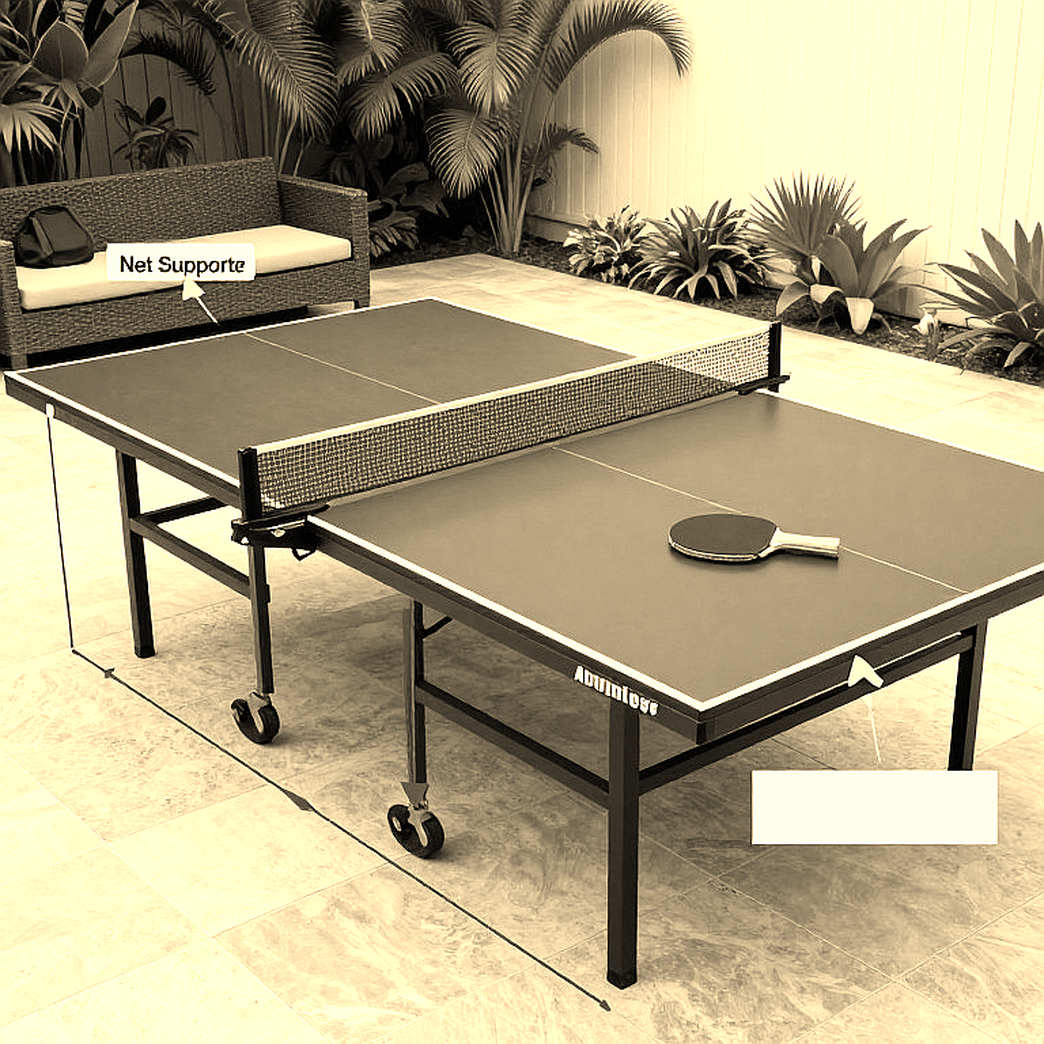
The programme states no equipment specifications. There are no smaller rackets, reduced-bounce balls, lowered tables or mini tables. For ages 7-11, sector norms usually involve reduced-bounce balls, lighter and smaller rackets, and adjusted tables. The absence is itself a signal. TT Kidz is framed as a coach-facing resource, not a player-facing kit. Cost and logistics therefore shift onto clubs.
The resource set includes more than 70 activity cards and supporting video. This design decouples delivery quality from coach expertise. A less experienced volunteer can run a session from the cards. That is a rational response to volunteer scarcity. But it caps the technical ceiling of what a session can deliver. Experienced coaches are offered new teaching methods, not a distinct advanced track.
The claim that resources support coaches without constraining them sounds reasonable at session level. But it sits beside a club-level restriction: initial delivery is exclusive to PremierClubs. Two different kinds of flexibility are placed together. One is pedagogical flexibility inside the session. The other is channel restriction. The governing body’s article does not resolve that tension.
The biggest gap is measurement. TT Kidz states its success criterion clearly: children come back, and eventually graduate into the sport full-time. But the publication provides no retention rate, no conversion rate, no average number of sessions and no proportion moving into club membership. Every quantitative element is an input or an activity metric: more than 70 cards, 30 students at one festival. There is no outcome.
The figure of 30 students at Portsmouth TTC is a sample of one site. It cannot be extrapolated nationally. There is no total enrolment, no club count and no completion figure. For a data report, this is a gap that praise cannot fill. A busy, happy festival proves that the festival happened. It does not prove retention.
The 7-11 band is the correct entry window. But the article is silent on the 11-16 stage, where drop-off is usually steepest. Children change schools, get pulled into other sports, and lose the fun frame once competitive results appear. If TT Kidz has no bridge at 11+, it may open the door well and then let children leave in the corridor. This is the largest hole in the described architecture.
TT Kidz festivals are held around the country to showcase the programme. They sit below every competitive tier, below county and national competition, far below the WTT system. Competitive value is zero. Pipeline value is high. Judging a festival by tournament criteria is a category error. The correct KPI is conversion into club membership, which the article does not report.
Restricting initial delivery to PremierClubs is the most consequential structural decision. It works as a quality-control and brand-protection mechanism. It also limits early reach and creates a two-tier club landscape. Non-accredited clubs cannot access national resources. The word initially implies later widening. This may be a pilot-and-scale sequence tied to club accreditation upgrades.
At governance level, one detail stands out: a club Head Coach is also its Safeguarding Officer. That reflects the governing body’s duty-of-care standards. It also places a double burden on one person. A grassroots programme built on volunteers and clubs needs child-protection conditions to be clear before expansion. Governance risk is medium, not low.
On the global table tennis map, England sits in the European mid-tier. It has institutional tradition but thin depth. England does not lack elite coaching knowledge. It lacks the number of children who enter and stay in the sport. Large federations such as Germany and France have club-licence systems that produce a wide, self-sustaining base. The threat to England is systemic, not individual.
TT Kidz should be read as a base-width intervention, not a talent-identification intervention. It targets the number of children who ever try the sport and the fraction who stay. Effects on senior international results have an 8-12 year lag. Judging the programme after one season is meaningless. Judging it after a decade gives a signal. But during that decade, the federation still needs data to justify funding.
The publication does not connect TT Kidz to the national performance pathway. There is no identification mechanism, no route to regional or national squads and no link to junior national teams. That may be deliberate: participation-first purity. It may also be an omission. On the text, the pathway is disconnected. For a nation with a narrow base, a disconnected pathway is a strategic risk.
Players leave the court, spectators leave the stands, but data never leaves the game. With TT Kidz, data needs to follow children out of the festival hall. Otherwise the programme looks good only in photographs. Thirty children smiling is a communications success. Thirty children returning for a season is an operational success. Those two need different measurement systems.
Tactics are what people draw on a blackboard. Data is what they draw on reality. For TT Kidz, the blackboard says children progress at their own pace. Reality needs to record where that pace leads, after how long, and at what rate. Without those three pieces, claims of success remain claims.
The contrarian angle is this: enjoyment can mask a technical ceiling. A session where nobody is bored is a good experience signal. It is not a skill-learning signal. Table tennis skills need deliberate repetition, correction and feedback. A games model can create motivation, but without checkpoints children can be happy without progressing. That is the trap of programmes that use satisfaction as their only measure.
The correlation between fun and retention is not causation. Happy children may return. They may also return because of friends, a nearby club or parental preference. A programme can take credit for an outcome shaped by many variables. I am not dismissing TT Kidz. I am placing it correctly: an experience intervention that should be measured by conversion, not applause.
The absence of data may be because the programme is new. If so, publishing early is a communications choice, not an evidence choice. If data exist but are not published, that is a messaging choice. Either way, the conclusion is the same: the article does not provide a basis for evaluating effectiveness. It only provides a basis for describing design.
The strategic strength of TT Kidz is the quality of the first experience. In a market where England cannot out-compete larger federations on volume, raising conversion per entrant is rational. The programme’s real competitor is not another table tennis club. It is other after-school activities: football, swimming, martial arts, music and digital entertainment. TT Kidz competes through friendliness and social bonding, not early results.
I do not need a press room to prove I understand football. I have 64 matches in my laptop. With TT Kidz, I need a different spreadsheet: anonymised child ID, sessions attended, return count, club level, equipment type, and skill checkpoints at ages 11 and 13. Those columns would tell a truer story than any promotional video.
The next-cycle signals sit in three places. First, retention after the first season, published by club and age group. Second, conversion into paid membership or competitive groups. Third, the arrival of an 11-16 programme that follows TT Kidz. If those three signals appear, the programme can prove it is a pipeline, not only a festival.
TT Kidz is opening a door at the right age, with the right method and the right message. What remains is to build the corridor behind the door. A grassroots programme is not measured by how many children enter. It is measured by how many do not turn away. English table tennis has started counting again. The next step is to publish what it counts.
Cầu thủ liên quan
Bài đề xuất
The U17 Gap: What England's Junior Table Tennis Points Table Doesn't Say2026-09-30
Vietnamese Youth Table Tennis: The 2026 National Qualifiers at Lach Tray and the Signals from the Transfer Window2026-10-16
Braintree: The Small Data Cellar and the Signals Buried Below the Standings2026-09-28
Ljubljana Table Tennis: Germany's Depth and the Crack Inside Mittelham's Win2026-10-18
Ljubljana: Mittelham and Abraamian Close the Semifinal Line-Up, and a Data Gap Sits in the Middle of the Scoreboard2026-10-18
Bài đề xuất
The XD7 bronze and the 2-0 collapse: Two faces of India's para table tennis at the 2026 Asian Para Games2026-10-23
Alexis Lebrun Returns to Ljubljana: Defending Two Crowns as the Hunted2026-10-12
Ljubljana: Mittelham and Abraamian Close the Semifinal Line-Up, and a Data Gap Sits in the Middle of the Scoreboard2026-10-18
Jorgic survives seven-game thriller in Ljubljana as Alexis Lebrun cruises 11-0 and Felix Lebrun reveals fitness concern2026-10-15
Bài đề xuất
World Table Tennis: China Dominates, the Rest Is Measuring the Gaps2026-09-14
GB Para Table Tennis: Perfect Tune-Up for World Championships via Elite Event in France2026-09-11
The First Three Shots: The Data Equation Behind Every Point in Table Tennis2026-09-17
Vietnam Table Tennis 2026: The Domestic Ranking Ladder and the Trust Gap Behind Every Scoreboard2026-10-16
ITTF World Hopes Week 2026 in Sheffield: 36 Under-12 Places, 26 Nations, and a Pipeline Architecture the Scoreboard Cannot See2026-09-24
Table Tennis Faces the 'Empty Data Storm': When Analysis Loses Its Anchor2026-10-10