
Guernsey win the Worthing Junior Team tournament: nine wins and a table nobody used
**Trả lời cốt lõi**: Guernsey vô địch giải đồng đội trẻ Worthing Table Tennis Club 1* kỳ đầu tiên với 9/9 trận thắng, không phải bước vào loạt đấu thứ ba nào. Cặp Luke Evans – Barney Groves thắng nhờ đội hình hai người cân bằng, trong một bảng đấu có năm trên mười đội đến từ câu lạc bộ chủ nhà. **Dữ kiện chính**: - Giải có 10 đội từ Anh, Wales, Jersey và Guernsey; vòng tròn một lượt tạo ra 45 trận đồng đội, mỗi đội 9 trận. - Guernsey (Luke Evans, Barney Groves) thắng 9/9; Jersey Lions (Theo De Poreck, Oscar Karwowski) thắng 8/9, thua duy nhất trận gặp Guernsey. - Jersey Tigers (Kevan Moriea, George Sellers) hạng ba với 7/9; Worthing A (James Fryer, Nathanael Craig) hạng tư với 6/9. - Worthing đưa 5 đội, toàn bộ dưới 17 tuổi, nhiều người dưới 15 tuổi, thi đấu ở giải U19. - Giải xếp hạng 1*, bậc thấp nhất trong hệ thống phân hạng giải đấu của Table Tennis England. **Nguồn**: Table Tennis England, bản tin "Guernsey take gold at Worthing Junior Team tournament" (dữ liệu trích xuất không ghi rõ ngày đăng). **Hỏi đáp liên quan**: - Hỏi: Vì sao Guernsey không phải đá loạt đấu thứ ba? Đáp: Họ thắng cách biệt ở cả chín trận đồng đội nên không trận nào chạm tỷ số 1-1. - Hỏi: Thành tích 9/9 có phản ánh đúng sức mạnh tuyệt đối? Đáp: Khoảng một nửa bảng đấu đến từ năm đội chủ nhà Worthing gồm nhiều vận động viên U15 thi đấu ở giải U19, nên bài kiểm tra thật chỉ là trận gặp Jersey Lions. - Hỏi: Có thể đánh giá từng vận động viên từ giải này? Đáp: Không, vì nguồn không có điểm số từng trận; chỉ số VangBong.vn Player Depth Index cũng không thể tính cho giải này khi thiếu dữ liệu đơn và đôi.
In Worthing, a table was set aside for the third game. In a two-player team format, when a tie reaches 1-1, everything collapses into that final game — most plausibly a doubles, if the wording of the Table Tennis England report is read as I read it. That table exists for thin squads, for pairs who have not stood side by side long enough, for the coach who has to work out who serves first. Across the whole tournament, it stood unused.
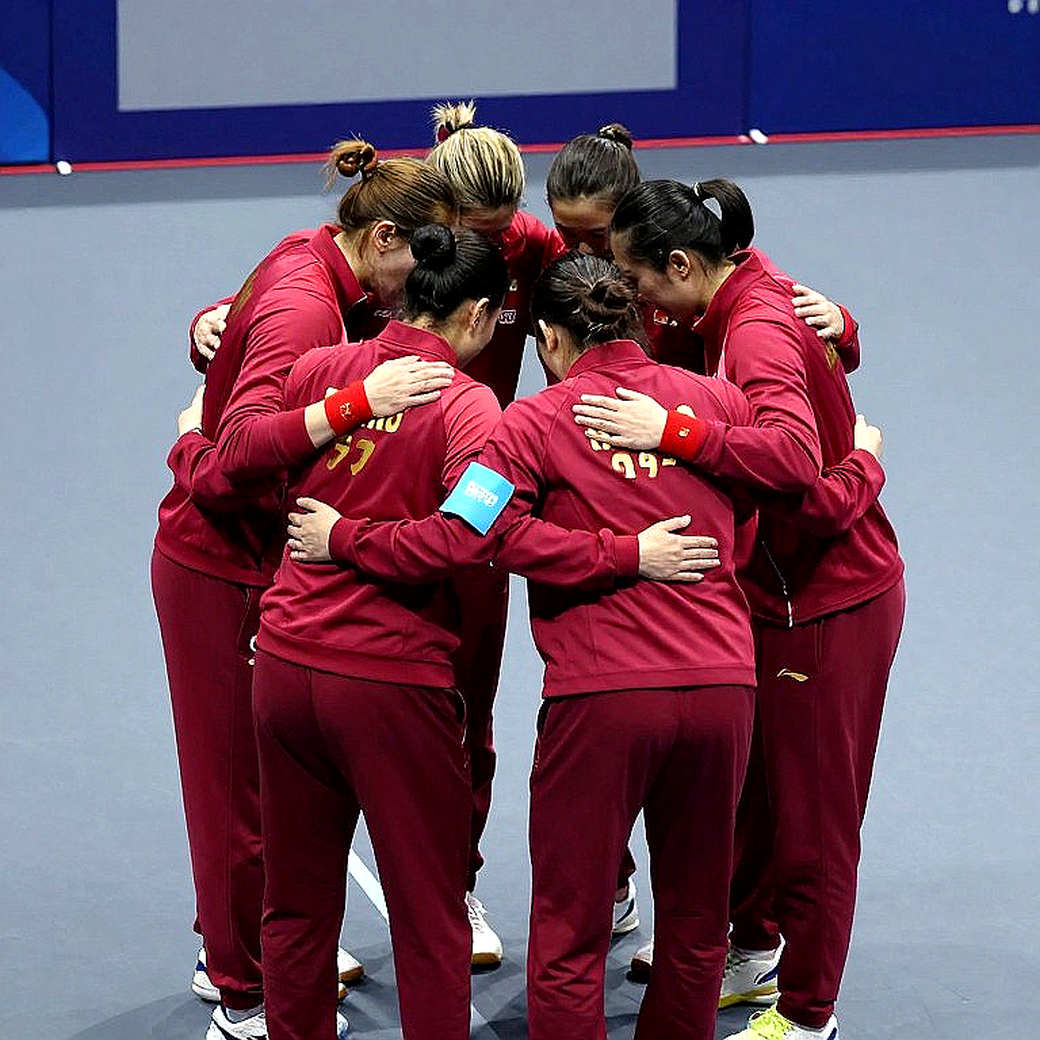
Luke Evans and Barney Groves of Guernsey never needed it. Nine team fixtures, nine wins, not a single deciding game. Behind them, Theo De Poreck and Oscar Karwowski of Jersey Lions won eight and lost exactly once — to Guernsey. Kevan Moriea and George Sellers of Jersey Tigers took third with seven wins. James Fryer and Nathanael Craig of Worthing A finished fourth with six wins and three defeats.
The original report reads like club news: champion, runner-up, third place, plus one quote about national ranking benefits. Enough to publish. Not enough to understand. And for someone who has spent eight years sifting point-by-point data at junior events, the gap between those two sentences is the most interesting place to stand.
Context: a tournament that validates itself
This was the inaugural edition of the Worthing Table Tennis Club junior team tournament, graded 1* — the entry tier of the Table Tennis England tournament grading structure. Ten teams entered, from four jurisdictions: England, Wales, Jersey and Guernsey. A single round robin, nine fixtures per team, forty-five team fixtures in total.
That number is not decoration. Ten teams, each pair meeting exactly once, produces exactly C(10,2) = 45. The arithmetic closes on itself, which means the data set validates itself: one team's record is part of the definition of another's. I have seen domestic junior bulletins where the number of fixtures does not match the number of teams — the signature of a missing pool or a withdrawal nobody recorded. In Worthing, the sum holds.
This matters more than it looks. A complete round robin yields a full strength ordering that does not depend on draw luck. Knockout brackets always blend merit with bracket fortune; a team can reach a semi-final by landing in an empty quarter. A round robin offers no hiding place: Guernsey 9-0, Jersey Lions 8-1, Jersey Tigers 7-2, Worthing A 6-3. Those four lines lock into each other like four pieces of one picture.
One thing must be stated plainly: this was an U19 event, and Worthing supplied five of the ten teams. Every Worthing player was under seventeen, many under fifteen. Porter, speaking for the host club, said results like these would help the players' national rankings.
Analysis: nine wins measure margin, not method
The only hard competitive signal in the entire article is a team scoreline, and it measures margin rather than method. Guernsey never reached a third game in nine fixtures. If the format is best-of-three, that implies at least eighteen individual rubbers won without a single loss. But the report contains no individual match scores at all. We know Guernsey won by distance; we do not know whether that came from serve-and-attack dominance, from longer rallies, or from a doubles pair simply more settled than the opposition.
And here is the point worth slowing down for: the unbeaten record is heavily flattered by the composition of the field. Worthing entered five of the ten teams, meaning roughly half of Guernsey's opposition came from the host club's own junior pool — all under seventeen, many under fifteen, competing in an U19 event. Guernsey's real test compressed into a single fixture: Jersey Lions. They won it, and a win is a win. But the distance between "champion of a ten-team event" and "the stronger of two evenly matched pairs" is far wider than a gold medal suggests.
The third point sits in squad construction, not stroke quality. In a two-player format, one weak link caps the whole tie. Guernsey fielded Evans and Groves; Jersey Lions fielded De Poreck and Karwowski; Jersey Tigers fielded Moriea and Sellers. All three leading teams had balanced pairs with no dead spot. I have sat through junior team ties in Vietnam where one player was genuinely good and the other had two years of training, and the ending is almost always identical: the opponent simply funnels the ball towards the second player and the tie collapses. At this level, structure beats stroke more often than people admit.
One secondary inference, flagged openly as inference: if the deciding third game is a doubles, then the fact that neither Guernsey nor Jersey Lions stumbled anywhere except against each other suggests both pairs carry the chemistry of long partnerships. For small associations this is close to inevitable — a shallow talent pool pairs the same two athletes event after event, and chemistry grows out of shared table time rather than individual brilliance.
Contrarian angle: a gold medal is not data
There is a very human temptation in this trade: turning a clean scoreline into a prophecy. Nine wins out of nine sounds like a new generation rising in Guernsey table tennis. I do not believe that reading, and neither should the reader.
First, this was a 1* event — the entry tier. Ranking yield from such a tournament, under the ordinary logic of Table Tennis England grading, is thin. Porter's line about national rankings is true in spirit, but anyone using it to build a story about this event changing the players' standing is reading a club bulletin as though it were a world ranking list. At this level the value lies elsewhere: nine fixtures in a day, four different table tennis jurisdictions, and the lesson of surviving a team tie with no coach standing behind you.
Second, Worthing entering five teams cuts both ways. On one hand it diluted the field and inflated the champion's record. On the other it signals a club with enough depth to fill five entries — something most grassroots clubs cannot do. I choose the second reading, but I record the first, because a writer who verifies has no right to bury the data that inconveniences the story he prefers.
Third, and I will say this directly: nine team fixtures, two-player squads, one inaugural edition — the sample is far too small to support anything beyond "these pairs are competitive at entry-tier junior level". No individual scores, no singles-doubles split, no opponent rankings. So I will not rank Evans above Groves, and I will not label anyone in the top four pairs a prospect. Every player is a universe of his own; I am only borrowing their glasses to watch the match, and these glasses are missing a lens.
The most telling number sits in fourth place
If I could carry one number home from this tournament, I would not take 9-0. I would take Worthing A's 6-3.
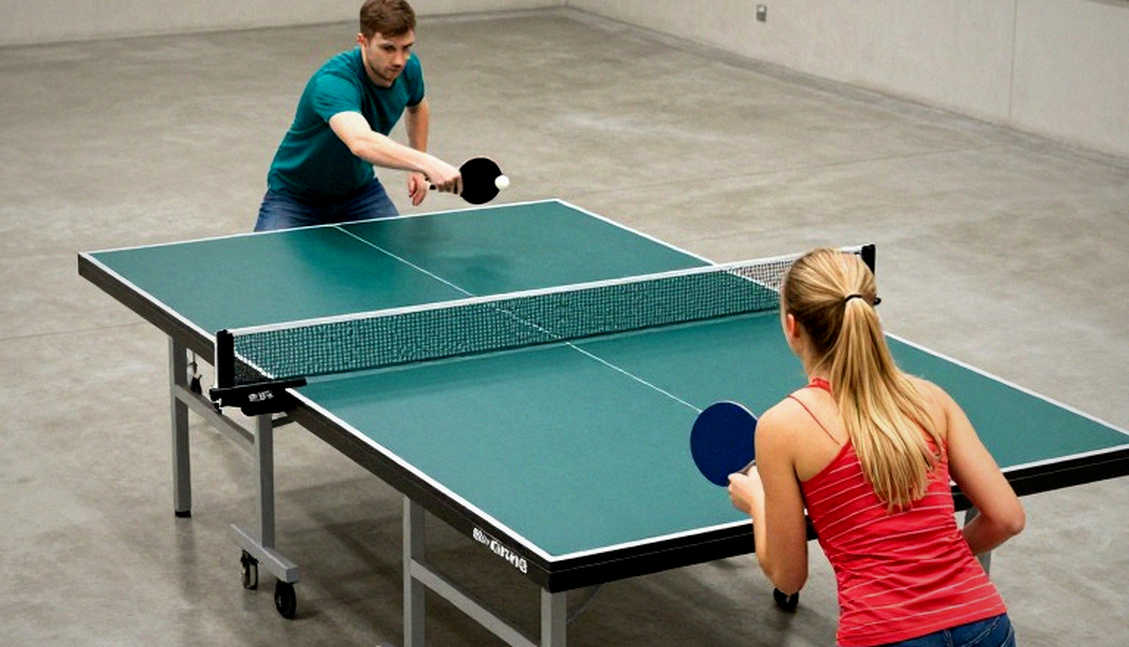
A pair drawn from an all-under-seventeen, mostly-under-fifteen pool walked into an U19 event and won six of nine team fixtures. A two-to-four-year age gap at junior level is not a detail; it is a difference in reach, in wrist strength, in the number of years the ball has landed on the bat. Fryer and Craig absorbed that handicap and still finished with a winning record. Based on my experience following matches, this is exactly the kind of signal a development system should track: not the trophy, but the ability to withstand the opponent's age.
At thirty-one, I no longer believe in comebacks; I believe in continuations. Worthing A are not coming back from anywhere. They are simply starting, and starting early.
What remains after the tournament
The empty stadiums of 2026 taught me that noise is not the same as cheering. An entry-tier junior team event in Worthing generates very little noise: no big stands, no television, no transfer bulletin mentioning a single name. Yet amid the noise of today's sports industry, events like this are where the signal still survives. When I write for nobody to read, I learn to love the game without applause — and I suspect ten junior table tennis teams who just played forty-five fixtures in an inaugural edition are doing exactly that, without needing any.
The question I carried back to Saigon: if a club-level tournament, at the lowest tier of the grading system, can gather four jurisdictions and produce a complete, self-validating round robin, when will junior events at home start publishing full individual scores so outsiders can verify instead of merely believe?
A forgotten article and a match played before empty seats — both wait for someone to read them again. The third table in Worthing stood untouched all tournament. It is still there, waiting for next year.