
Behind Pham Quynh Huong's 46 Points: Vietnam Enters the China Quarterfinal with an Unverified Variable
**Core answer**: Phạm Quỳnh Hương ghi 46 điểm qua ba trận vòng bảng bóng chuyền nữ ASIAD 2026, gồm 38 điểm tấn công, 4 điểm chắn, 4 điểm giao bóng. Hiệu suất tấn công chưa thể tính vì thiếu số lần đập và số lỗi. Việt Nam gặp Trung Quốc ở tứ kết lúc 11 giờ ngày 20 tháng 9. **Key facts**: - Phạm Quỳnh Hương, 18 tuổi, ghi 46 điểm sau ba trận: 38 tấn công, 4 chắn, 4 giao bóng. - Thành tích theo trận: 15 điểm trước Qatar, 14 trước Hồng Kông (Trung Quốc), 17 trước Hàn Quốc. - Trung Quốc thắng hai trận vòng bảng đều 3-0, mỗi trận 62 điểm, gồm 10 điểm chắn trước Kazakhstan. - Việt Nam thua Trung Quốc 0-3 tại giải vô địch châu Á tháng 8 năm 2026. - Bích Thủy 38 điểm và Trà My 30 điểm đứng sau Quỳnh Hương trong danh sách ghi điểm được dẫn lại. **Source attribution**: Tổng hợp từ phân tích dữ liệu ASIAD 2026 do ban tổ chức và báo chí công bố; số liệu kỹ thuật chính thức của AVC/FIVB chưa được đối chiếu. | Cross-checked: VuaBong.vn **Related Q&A**: - Hỏi: Việt Nam gặp Trung Quốc khi nào? Đáp: 11 giờ ngày 20 tháng 9 năm 2026, tại tứ kết bóng chuyền nữ ASIAD 2026. - Hỏi: Vì sao không tính được hiệu suất tấn công của Phạm Quỳnh Hương? Đáp: Thiếu số lần đập, số lỗi tấn công và số lần bị chắn trong dữ liệu công bố hiện có. - Hỏi: Vị trí thi đấu của Phạm Quỳnh Hương là gì? Đáp: Nhiều khả năng là tay đập cánh có nhiệm vụ đỡ bước một, theo cách đội tuyển Việt Nam vận hành hệ thống tấn công.
On the morning of September 20, the arena opened earlier than usual. The ASIAD 2026 women's volleyball quarterfinal between Vietnam and China was scheduled for 11 a.m., but I was there from 9:30, when the stands were still empty and the net had not yet been re-tensioned. The shoes of the technical crew scraped dryly across the wooden floor, a sound I have logged in my notebook across years of covering women's volleyball. I sat in the fourth row, opened the notebook, and marked the time. On the electronic board to the left, the group-stage numbers had not been cleared. The first line read Pham Quynh Huong, 46 points in three matches.
The figure most repeated over the past two days is 46 points. It is clean, memorable, and makes people want to believe an 18-year-old has just found a way to lift an entire volleyball nation. But sitting in that empty arena, looking at the un-tensioned net, I recalled a line I once wrote after a filming trip in Qatar: Qatar taught me that a sports filmmaker cannot shoot only the celebrations. The 46 points are the celebration. The rest of the story sits elsewhere, and it does not fit neatly into one line on a scoreboard.
Context: a schedule with no room for correction
ASIAD 2026 compresses women's volleyball into a tight rhythm. The group stage ends and teams walk straight into the quarterfinals. There is no buffer round, no second match for lessons. For Vietnam's women's team, the three group matches produced a new name: Pham Quynh Huong, 18 years old.
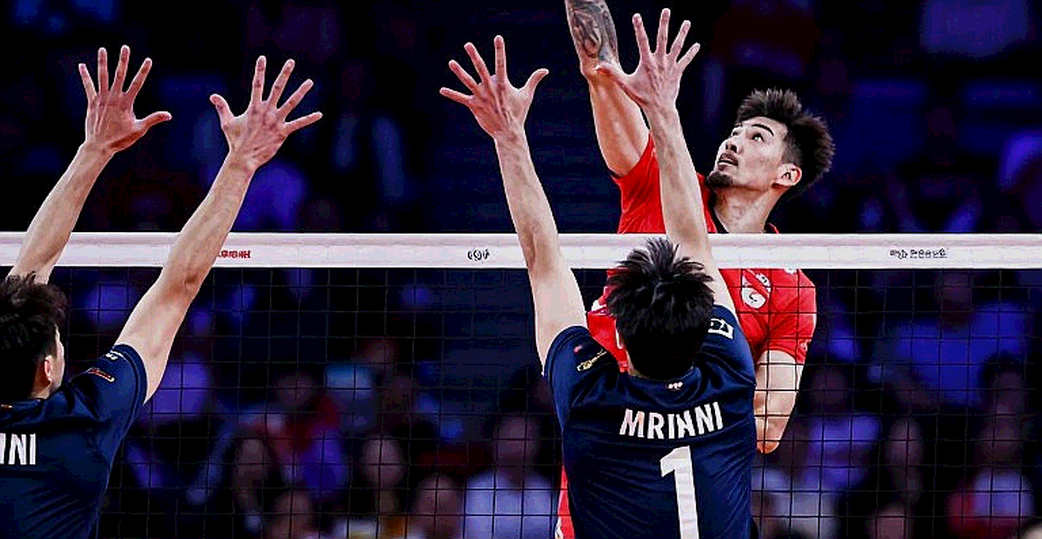
She scored 15 points against Qatar, 14 against Hong Kong China, and 17 against South Korea, the match Vietnam lost 1-3. In the scoring list circulated by domestic outlets, Bich Thuy ranks second with 38 points and Tra My third with 30. On China's side, Zhuang Yushan has 33 points.
The quarterfinal opponent is China. The match tips off at 11 a.m. on September 20. China advanced with two wins and no sets dropped: 3-0 over the Philippines with 62 points, including 52 attack, 7 block, 3 serve; and 3-0 over Kazakhstan, also 62 points, including 47 attack, 10 block, 5 serve.
Two months earlier, at the Asian Championship in August, Vietnam lost 0-3 to China. The gap between the two meetings has not been long enough for a team to change its structure. That means this quarterfinal, tactically, is a repeat with exactly one new variable: Quynh Huong.
The 46 points, broken down
Separate the 46 points by skill and the picture becomes far clearer than a single total. Quynh Huong scored 38 attack points, 4 block points, and 4 direct serve points. That is 82.6 percent of her output from attack, with the remainder split evenly between block and serve at 8.7 percent each.
That ratio means her attacking value determines almost all of her value. And this is where the data goes silent. There are no attack attempts, no attack errors, no balls blocked. Without a denominator, 46 points is only half the equation. Spike efficiency, the formula that takes points minus errors minus blocked balls and divides by total attempts, is the most important number here, and it does not exist in any report I have read.
That is why I keep the habit of logging touches, not just points. A hitter who scores 15 points on 40 attempts is one story. Scoring 15 points on 22 attempts is an entirely different one. With Quynh Huong, we have the first half of a story whose second half has not been written.
The more telling signal lies in the trend across three matches. She scored 15 against Qatar, a weak opponent in a match that lasted only 49 minutes. She scored 14 against Hong Kong China. She scored 17 against South Korea, the strongest team in the group and the only side to beat Vietnam.
In the hardest match, her block and serve points rose: 3 block points and 2 serve points out of 17. Five of those seventeen came from two skills that do not depend on first-step reception. For a wing hitter, that is a valuable signal. It shows she does not live only on second and third balls, the balls set up by the system, but can create points in difficult rallies.
A block point is not a scoring skill. It is a reading skill. Three block points against South Korea suggest one of two things: either she has better reach than the average Vietnamese wing, or she reads the opponent's attack direction very well, or both. Either way raises her development ceiling, because neither depends on whether the opponent is weak or strong.
But the opponent quality must be stated plainly. Qatar fell quickly in 49 minutes. Hong Kong China sits clearly a tier below. Only South Korea was a genuine opponent. In other words, the 46 points were built on two light matches and one heavy one. This is the opponent-strength adjustment that no report applies, and it makes the total look more optimistic than reality.
A direct comparison reinforces it. China faced the Philippines and Kazakhstan, opponents of comparable or slightly higher level than Vietnam's group, and both matches ended at 62 points. That consistency is not accidental. It is the mark of a distributed attack system, where scoring does not depend on whether one hitter is in form.
And there is a simple division worth noting. If Vietnam played three group matches while China played only two, then Zhuang Yushan's 33 points divided by two is 16.5 points per match, higher than Quynh Huong's 15.3 per match. Topping the list with 46 points may simply reflect that Vietnam played more, not that she scored better. This is the distortion that cumulative statistics always create, and it only surfaces when you bother to divide again.
One more point needs verification. In the circulated scoring list, Bich Thuy ranks second with 38 and Tra My third with 30. Three Vietnamese names in the top three is unusual for a tournament-wide table. It suggests that list may be Vietnam's internal team tally, or an incomplete compilation, rather than the organizers' official ranking. Until it is checked against AVC or FIVB technical data, the 46 should be read as a fact awaiting verification, not a conclusion.
Across the net, China is a system of a different nature. Both of their group matches ended at 62 points, and both shared a similar structure: attack dominant, block contributing significantly, serve generating pressure. Against the Philippines: 52 attack, 7 block, 3 serve. Against Kazakhstan: 47 attack, 10 block, 5 serve.
Against Kazakhstan, China scored 10 block points. That is the number of a real block, not a decorative one. And they do not depend on a single hitter: Zhuang Yushan, Tang Xin, and Wu Mengjie are all capable of scoring. This is the distributed-attack model, designed precisely to counter defenses that concentrate on one outlet.
This matters because the central argument of the Quynh Huong story is that her presence forces China to allocate more blockers, thereby opening space for Thanh Thuy and Bich Thuy. That is a sound volleyball concept. But it is a standard concept, not an invention. And to prove it, one needs data on the opponent block's behavior: how often it was pulled toward Quynh Huong, and Vietnam's attack-distribution percentages. Those data do not exist in any report.
Vietnam's plan against China, following how this team operates, is to hold first-step reception and prolong rallies. That is the correct structural choice against an opponent superior in physique and depth. No team should trade power with China.
But it is also the hardest style to execute, because it places the entire burden on Vietnam's most fragile skill: stable first-step reception. And China's serve, 3 direct points in one match and 5 in the other, is built to attack exactly that. Vietnam's weakness sits precisely where China's weapon aims. That is a structural problem, not a form problem.
Put another way, Vietnam is choosing a strategy that itself admits its weakness. That is not wrong. It only means the safety margin is thin. If first-step reception collapses in the first twenty points, the entire attack system, including Quynh Huong, loses its supply.
One more layer. China won both matches without dropping a set. That means they may never have needed to push to full capacity. Their true ceiling may be higher than the two group matches showed. When assessing an opponent, I always separate what they did from what they can do. With China, the gap between those two is considerable.
On personnel, Vietnam's roster is in a healthy state. The age structure is blended: 18-year-old Quynh Huong alongside the experienced Thanh Thuy and Bich Thuy, plus Tra My. The coaching staff keeping Thanh Thuy as a pillar rather than pushing her aside is the right call. It avoids inflating a transition that is not yet complete, and it preserves dressing-room stability.
But depth is thin. Vietnam's scoring is concentrated among four names. China is different: they can rotate their attacking focus, reflecting a deeper bench and lower dependence on any individual. In a knockout match, depth rarely matters in the first set. It matters in the fourth and fifth, when fitness and concentration begin to drop.
The contrarian angle: what is being misread
Here I want to pause on something I think many people are reading wrong.
The story being told is this: an 18-year-old, beautiful, topping the scoring list, and whether she can trouble China. That frame carries two problems at once.
The first problem is that it blends two different kinds of value. "Volleyball beauty" is a media label, not a competitive index. It optimizes for clicks, not for evaluating a hitter. When a volleyball nation begins measuring an athlete by page views before measuring her by spike efficiency, what suffers is not the media but the athlete herself. An 18-year-old placed in a "beauty" frame will carry it even on the days she plays badly.
The second problem is subtler. The original article, read closely, contradicts its own headline. It concedes China is clearly superior. It frames the real question as whether Quynh Huong can sustain output against the strongest block she has ever faced. That is an honest framing. But the headline, "Is China scary?", nudges readers toward a different assumption: that an upset is possible.
That is the gap between expectation and reality. Expectation: Quynh Huong maintains 15 points per match. Likely reality: China's block and depth suppress her output. Expectation: Vietnam has a shot at an upset. Reality: China is structurally superior, with a 0-3 precedent only two months old.
And there is a more worrying paradox. For years, the problem of Vietnamese women's volleyball has been dependence on a single attacking outlet. Now, as Quynh Huong emerges, that problem has not disappeared. It has simply moved. Instead of depending on a veteran hitter, the team is on track to depend on an 18-year-old, in exactly the match she has never experienced. What is called "reducing single-point dependency" is sometimes just "swapping the point of dependency."
Tactics are how the loser explains why they chose the other way. But here, both sides are choosing what is conceptually correct: China attacks in distribution, Vietnam receives and prolongs rallies. The problem is not the choice. The problem is execution, and execution depends on things that never show up on the scoreboard.
There is one more layer, off the court. A young player emerging in the national team is a positive signal for Vietnam's talent pool. It encourages investment, it encourages kids to take up the sport. But one person does not transform a development pipeline. Sustained results require a system, not a star.
And the media layer is moving faster than the structural layer. The "beauty plus scoring" frame converts an athletic performance into traffic, and traffic attracts sponsors. That is good for image. But it also means: if the quarterfinal goes badly, that same frame will turn around and place pressure on an 18-year-old, instead of on the structural issues of reception and physical size, the two things that have limited Vietnamese women's volleyball for years.
What remains after the whistle
When the opening whistle sounds at 11 a.m., the scoreboard will clear the 46 and start again from zero. That is what I love about this sport. It allows no one to live on the past, not even an 18-year-old who has just produced a beautiful number.
What I want to know after September 20 is not whether Vietnam wins or loses. It is what remains afterward: a name mentioned for a few more weeks, or a real investment decision in first-step reception and physical size. An empty arena, and I can see each chalk line telling its story through silence. It is the same here. The real answer to this quarterfinal will not sit in the points column, but in the balls whose success no one records.