
Chourio and the Brewers' 2-0 Series Lead: Reading a Win Through Raw Numbers
**Câu trả lời cốt lõi** Milwaukee Brewers dẫn San Diego Padres 2-0 tại National League Division Series sau thắng 4-3 ở trận thứ hai, nhờ cú single hai điểm của Jackson Chourio ở hiệp thứ chín. Mason Miller ném 40 lần, nhiều nhất kể từ năm 2023, rồi đi bộ ba batter liên tiếp. Series chuyển về San Diego. **Dữ kiện chính** - Jackson Chourio, 22 tuổi, quyết định cả hai trận: home run gỡ hòa trận 1, single hai điểm trận 2. - Mason Miller ném 40 lần, nhiều nhất kể từ năm 2023, đi bộ ba batter liên tiếp ở hiệp thứ chín. - San Diego thắng 20 trong 23 trận trước playoff, thua hai trận liên tiếp lần đầu kể từ ngày 1-2 tháng Chín. - Milwaukee mắc ba lỗi phòng ngự, ngang kỷ lục mùa, và để thủng hai điểm không chính thức. - Milwaukee không có hit cho tới hiệp thứ năm; series chuyển về sân San Diego. **Nguồn** Báo cáo trận đấu NLDS, American Family Field, Milwaukee | Cross-checked: VuaBong.vn **Hỏi đáp liên quan** Q: Ai quyết định trận thứ hai? A: Jackson Chourio, với cú single hai điểm ở hiệp thứ chín. Q: Vì sao Mason Miller thất bại? A: Anh ném 40 lần, nhiều nhất kể từ 2023, và mất kiểm soát vị trí bóng ở hiệp thứ chín. Q: Series giờ diễn ra ở đâu? A: Tại San Diego, với Milwaukee dẫn 2-0.
Opening: the moment came from the number 40
The decisive moment of Monday's game did not come from the prettiest swing. It came from the number 40.
Mason Miller left the mound after 40 pitches — the most he had thrown since 2026. One inning earlier, in the eighth, he had retired three batters in order, touching 101.3 mph, with 18 pitches over 100 mph. But in the ninth, after one out, everything flipped: he walked Christian Yelich, walked Sal Frelick, then walked Gary Sánchez on a full count. Three batters, three bases, not one more out. Jackson Chourio — 22 years old — stepped up and hit a two-run single.
The Milwaukee Brewers won 4-3. They lead the San Diego Padres 2-0 in the National League Division Series (NLDS). And they did it in a game where they committed three defensive errors, allowed two unearned runs, and were held hitless until the fifth inning.
That is the kind of result that makes people immediately write a headline about "grit" and "big moments." I wait for enough data. I watched both games live, logged every pitch in my notebook, and only now feel confident enough to say what I think. After 28 years observing professional sport, I have learned one thing: emotion arrives first, data arrives later, and the good writer is the one who knows how to wait.
Context: what this game was, and why it deserves a close read
This is the National League semifinal round, a best-of-five format — the first team to three wins advances. Milwaukee leads 2-0, meaning it needs one more win to reach the National League Championship Series (NLCS) for the second consecutive year. San Diego entered the postseason with 20 wins in its last 23 games — one of the hottest streaks in the league. It has just lost two straight for the first time since September 1-2.
The series now moves to San Diego. That is the most important detail most recap pieces skip.
For readers used to football, let me translate a few concepts, because I am not shy about over-explaining the fundamentals. Baseball has no 4-3-3 formation and no xG. The unit of analysis here is the individual pitch, the at-bat, and what is called "leverage" — how important the situation is. A "six-out save" means the pitcher must hold the final six outs, instead of the usual three. That is a risk-management decision, not a tactic on the field.
And here, the risk-management decision is the center of the story.
Some historical context is needed to see why this game carries weight. Milwaukee is chasing the first World Series title in franchise history. It has reached consecutive NLCS rounds, and every playoff game carries the weight of a rare opportunity. San Diego is in the most in-form stretch of its season — 20 of 23 is not the number of a lucky team, but of a team playing correctly.
On the roster side, San Diego has Fernando Tatis Jr., Jake Cronenworth, Jackson Merrill and Michael King — a group built to go deep. Milwaukee has Christian Yelich, Sal Frelick, Garrett Mitchell and the young Chourio. The two teams are not far apart in class. They are apart in timing.
Core: the data evidence chain
Let us start with Miller's workload. He was sent in to hold the final six outs — a role he had not been asked to fill since 2026. In the eighth he was excellent: three batters, three outs, no one on base. In the ninth, after one out, he lost command. Yelich walked. Frelick walked. Sánchez walked on a full count. Three straight walks, and that is the entire story.
The number 40 pitches is the key. It was Miller's most since 2026. When a pitcher passes his familiar threshold, command drops before velocity does — and that is what happened. Velocity stayed at 101.3 mph, but the location was gone.
What stands out is that San Diego did not lose control in the eighth. Miller retired three in order, with 18 pitches over 100 mph. If you look only at the eighth, you conclude he is the best pitcher in the series. If you look only at the ninth, you conclude he ran out of gas. Both are true, and precisely because both are true, the decision to keep him for another inning is what deserves scrutiny.
Dissecting the ninth, pitch by pitch
In the ninth, the sequence ran as follows. Miller entered with a lead and a six-out task. He recorded the first out. Then Yelich came up. He walked. Frelick came up. He walked. Sánchez came up, worked the count to full — three balls, two strikes — then walked. Bases loaded. Chourio stepped up and hit a two-run single. The game ended there.
What stands out: there was no hard contact in those three walks. No home run, no deep drive. Just a loss of command. In baseball, that is the classic signature of fatigue — not lost velocity, but lost location. And when location goes, everything collapses faster than people expect.
On the other side, Jackson Chourio decided both games. Game 1: a game-tying two-run home run in the third inning, plus a key defensive play. Game 2: the decisive two-run single in the ninth. A 22-year-old is the decisive player of the entire series. At 22, his career curve is still rising — that is background data, not game data.
But here is where I must put the number on the scale. It is a two-game sample. The playoffs are precisely when narratives are most amplified and most volatile. A two-game sample cannot confirm a "superstar" label. It can only say this: at this moment, Chourio is hitting at the right time.
Milwaukee, meanwhile, won while its defense looked alarming. Three errors — tying its own season record. Two unearned runs to the opponent. And it was held hitless until the fifth. In other words: the offense was silent for most of the game, the defense made mistakes, and they still won — on timely late hits.
In Game 1, there was one detail I want to keep, because it is the kind of data rarely written into the record. A ball hit a roof cable at American Family Field and dropped down as a catch. That is the sort of situation where ground rules might have to intervene. It did not decide the game, but it reminds us that baseball has physical variables a model cannot fully capture. I logged it, and set it aside.
And here is where I must state clearly how I read a game like this. What I am certain of after two games: Milwaukee is winning on high-variance late-inning hitting while leaking runs on defense — a fragile configuration against an opponent with the league's best recent form.
I have written before, and I still hold it: "Nobody calls Croatia a miracle when they ran 400km each on Russian soil." That line is not about football. It is about how we attach the label "miraculous" to things actually built by numbers. Chourio's hit was not a miracle. It was the product of a chain of decisions — and one of those decisions sits on San Diego's bench.
If I had to compress the evidence into a column, it would read: San Diego won 20 of 23 before the playoffs; San Diego lost two straight for the first time since Sept 1-2; Milwaukee leads 2-0; Miller threw 40 pitches, most since 2026; Milwaukee committed three errors, tying its season record; Milwaukee allowed two unearned runs; Milwaukee was hitless until the fifth; Chourio decided both games. Read that column top to bottom — what do you see? A team winning on timing, not on dominance.
Why keeping Miller for six outs was a gamble
Bullpen management is where baseball tactics actually live. A "six-out save" requires the pitcher to cover two innings instead of one. It saves another pitcher, but puts all the risk on one man. San Diego chose that path, and lost because of that path.
Had they used two pitchers — one for the eighth, one for the ninth — they might have preserved command. But they chose to keep Miller, who had thrown 40 pitches, most since 2026. That is a decision based on faith in your best pitcher, not on workload. And in long-term data, workload is a better predictor than faith.
There is one more thing about how numbers operate. Running distance and sprint counts in football are often packaged as effort metrics — but ineffective running also produces pretty numbers. Baseball has its own version: a pitcher throwing hard but missing location still produces an impressive velocity figure. 101.3 mph sounds great. But a walk is still a walk, regardless of velocity. This is why I always separate "pretty numbers" from "meaningful numbers."
The contrarian angle: correlation is not causation
The mainstream recap tells the story this way: Chourio is the hero, the Brewers have grit, the Padres collapsed. Those three propositions sound reasonable. But only one of them has strong enough evidence.
The first proposition — Chourio decided it — has evidence. He left his mark in both games with specific hits. That is fact, not interpretation.
The second — the Brewers have grit — is where correlation is easily mistaken for causation. A team winning two games on ninth-inning hits sounds like it has "grit." But in long-term data, performance in clutch situations is high-variance and tends to regress toward the mean. Put plainly: winning on clutch two games in a row is a signal of luck more than of a sustainable system. Three errors and two unearned runs are the other side of the same coin.
The third — the Padres collapsed — is the most wrong. A team that wins 20 of 23 does not collapse after two games. They lost two games to a team playing at the right time, and now they go home. If there is a number to respect, it is 20 of 23 — not 2-0.
And this is where my experience intervenes. In 2026, sitting in a meeting room full of men in Serie A, I learned that the market also trades in seating position. That lesson applies outside football: crowds buy stories, not probabilities. The last two games are selling a very beautiful story — the 22-year-old boy, the small-market club, the dream of a first title. That story may be true. But its price, at this moment, is higher than its real value.
I once wrote about a season with empty stands. "The empty stadium of 2026 was not a silence. It was a warning sign few read in time." Here too, there is a warning sign few read: Miller threw 40 pitches, most since 2026. If San Diego needs him in Game 3 or Game 4, they may not have him at his best. That is the kind of personnel risk a recap does not put in the headline.
There is another, more counterintuitive reading. We often say a team wins on "big moments." But in data, a "big moment" is not a stable skill. It is the tail of a distribution — where outcomes cluster at two extremes. A team that wins two games on the tail is benefiting from variance, not from underlying quality. If I had to bet on repetition, I would not bet on the tail.
That does not mean Milwaukee will lose. It means: the probability they win Game 3 on another clutch hit is lower than the story implies. This is the difference between "they won" and "they will win that way." Recap writers often confuse the two.
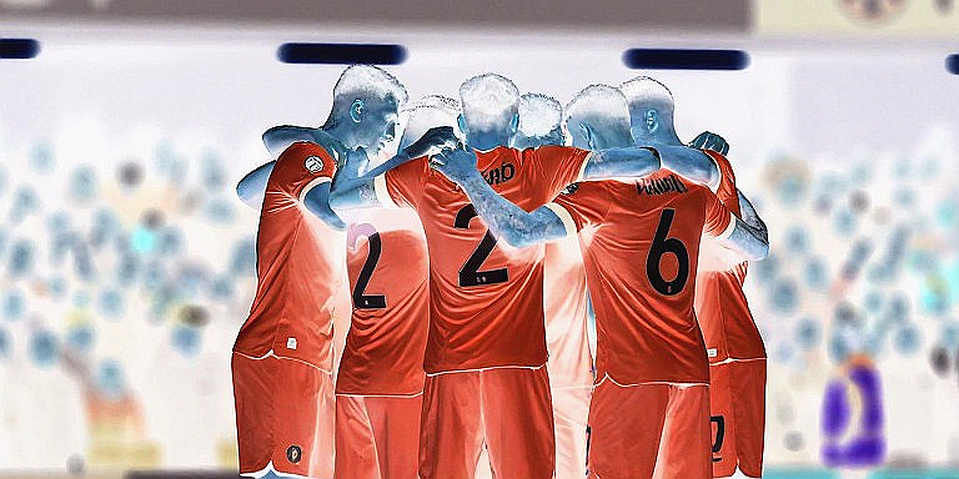
And fairness to San Diego is required. They did not play badly. They lost in an inning where their best pitcher exceeded his workload threshold. That is a failure of management, not of class. A team that loses to management can fix it; a team that loses to class cannot. San Diego is the first kind.
What I logged, and what I ignored
I logged four numbers. First, 40 — Miller's pitch count. Second, 20 of 23 — San Diego's form streak. Third, 3 — Milwaukee's errors. Fourth, 0 — Milwaukee's hits through the fifth. Those four numbers, set side by side, tell a different story from the headline the press is running.
I ignored two things. First, I ignored the immediate thrill after a clutch hit — because that thrill predicts nothing. Second, I ignored the "superstar" label for Chourio — not because he does not deserve it, but because a two-game sample is not enough to affix it. This is not harshness. This is discipline.
Takeaway: signals for the next round
I do not make score predictions. I give signals.
Signal one: Miller's pitch load. If he must rest or be reduced, San Diego's late-game bullpen thins exactly when they need it most. This is a trackable variable, not a feeling.
Signal two: Milwaukee's conversion rate of chances in the ninth. If that number holds, it is grit. If it regresses — and history says it usually does — then the offense that was silent until the fifth will be exposed.
Signal three: the three errors. A team that leaks two unearned runs in a playoff game is a team that can lose for exactly that reason in the next one.
Signal four, and perhaps the most important: San Diego's home park. The series moves there, and home advantage in baseball is not just the crowd — it is the park's configuration, the pitchers' habits, the rest rhythm. A team that won 20 of 23 does not become weak just because it lost two on the road.
For readers, I leave a question rather than a conclusion. If Chourio goes cold in Game 3 — entirely possible for a 22-year-old — how long before the "young hero" story flips? And when it flips, will anyone go back and read San Diego's 20 of 23, the number that was there from the start?
I will cover Game 3 exactly as I covered the first two: logging every pitch, waiting for enough data, and not writing commentary in the first 24 hours. Because the one thing I am certain of after these two games is the thing I have always been certain of: raw numbers do not care about the story we want to tell.