
Baskonia Falls at Buesa Arena: The 3/19 Night From Three and the Mask of a Fortress
**Core answer**: Baskonia lost 84-92 at home to Besiktas in the 2025-26 EuroLeague regular season. The defeat was driven by a 3/19 (15.8%) three-point shooting night and defensive lapses that conceded 43 points in the second half. **Key facts**: - Baskonia shot 3/19 (15.8%) from three; Chris Duarte scored 23 points with 15/15 free throws. - Scottie Wilbekin led Besiktas with 24 points; Markquis Nowell supported him in the closing minutes. - Quarter scores were 20-28, 51-49 at halftime, 71-73, and 84-92; Baskonia won only the second quarter. - Baskonia fell to a 1-3 record early in the 2025-26 EuroLeague regular season. **Source attribution**: Original report "Baskonia cannot win at home against Besiktas"; publication date not specified in source | Cross-checked: VuaBong.vn **Related Q&A**: Q: Why did Baskonia lose at Buesa Arena? A: They shot 3/19 from three and conceded 43 second-half points as Besiktas executed better late. Q: How many points did Chris Duarte score? A: 23 points, including 15/15 from the free-throw line. Q: Who was Besiktas's top scorer? A: Scottie Wilbekin with 24 points, supported by Markquis Nowell.
Buesa Arena has its own kind of sound. Not the chaotic noise of American arenas, but a deep, rolling applause that pours in from all four sides, an invisible pressure that makes every visiting team's shot feel heavier. That night, when the fourth quarter reached the seventh minute and the score stood at 78-80, the entire arena rose to its feet. Chris Duarte took the ball, drove into the forest of bodies, drew two defenders, and fired a pass to the corner. The ball reached his teammate. The three-pointer arced up, spinning evenly, and rattled off the rim. That was the eighteenth missed three of the night, out of nineteen attempts. No one at Buesa Arena needed to rewatch the footage to understand what had just happened. The scoreboard read 84-92, and Baskonia left the floor with their third loss in just four EuroLeague rounds.
I sat there for a long time after the final buzzer. Not because I was shocked — European basketball teaches you that every fortress falls eventually. But because one question kept repeating in my head: if you remove the three-pointer, what is left of Baskonia on this night?
To understand why this loss hurts more than an ordinary loss, you have to place it in its exact spot on the EuroLeague map. Baskonia is not a financial giant. This is a club that lives on the buy-low, develop, sell-high model — one of the best talent-scouting and player-development operations in Europe, but one that can never compete on payroll with Real Madrid, Fenerbahce, or Panathinaikos. When you cannot buy stars, the thing you must do is turn your home court into an anchor. For a mid-budget team, every home game is a must-win in the truest sense of opportunity cost: winning at home is cheaper than winning on the road, and in a 34-game season where only the top group advances, these points are the line between the playoffs and watching your rivals from home.
The opponent that night, Besiktas, is a new variable of the season. This is a multi-sport club with football as its main axis, recently elevated to the EuroLeague stage via the license route. In the observers' telling, a newcomer like this is usually seen as easy prey for home teams. But European basketball this year is witnessing the opposite: newly promoted teams, backed by money from football, are arriving in the league with genuine ambition, not to be a backdrop.
And Baskonia entered this game with a wound that had not healed. They had just beaten Olimpia Milano — a win that reinforced the belief that Buesa Arena was still a fortress. That very feeling of we just won, now we are home, we will win again is one of the most dangerous psychological traps of the season. It makes people forget that every EuroLeague opponent is good enough to punish you, if you let them.
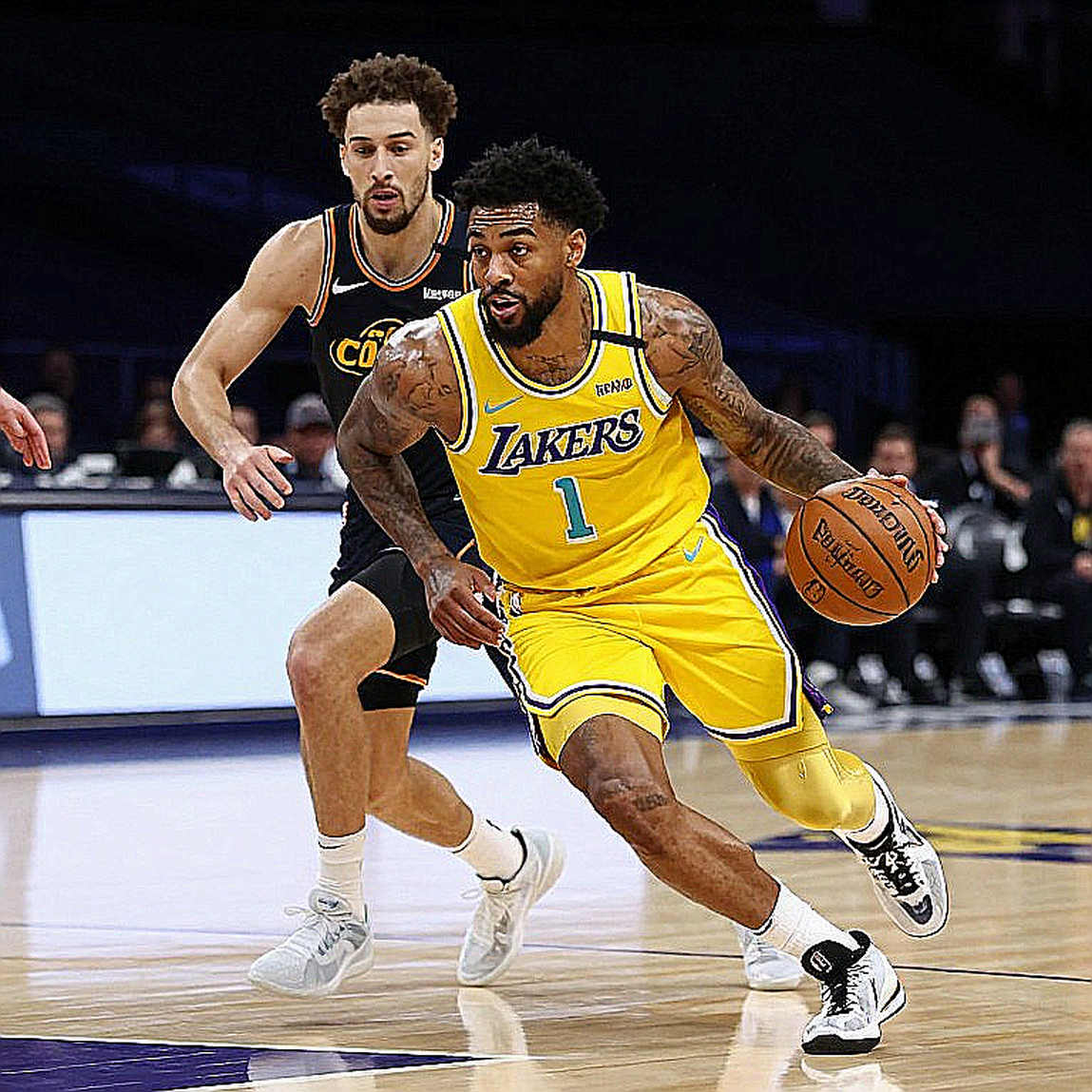
The record after four rounds: one win, three losses. That number says more than any commentary could.
Let us go through it quarter by quarter, because this game told a story that the final score hides.
First quarter, Baskonia lost 20-28. This is the kind of start coaches call letting the opponent impose the tempo. Besiktas entered with the confidence of a team that had nothing to lose, and Eugene Omoruyi — a former Baskonia player — made his mark immediately. That former-player detail is no small matter. It is the very nature of the Baskonia model: you develop a player, he leaves because you cannot afford to keep him, and one day he comes back and scores against you. This is not a tragedy, this is structure. But structure can hurt too.
Second quarter, Baskonia won 31-21. This was the only quarter they won, and the way they won it was telling: through energy, through fast transition plays, through Kenneth Faried and the man called Lawson. Faried — an undersized but energetic veteran — charged in like a whirlwind, and Buesa Arena erupted. This is exactly the team archetype I have watched for years among mid-budget European clubs: they win on inspiration, not on half-court precision. When the energy is high, they look like a playoff team. When it drops, they look like a streetball team lacking structure.
The first half ended 51-49 in Baskonia's favor. And that is when the real problem surfaced.
Third quarter, Baskonia lost 20-24. Besiktas regained control behind Scottie Wilbekin and Markquis Nowell. Wilbekin finished with 24 points — the game high — and he did it the way a seasoned shooter does: waiting for mistakes, then punishing them. Every time Baskonia made a defensive misstep, Wilbekin or Nowell was in the right place. This is the core difference between the two teams on the night: Besiktas had two perimeter guards who could generate points in the key moments; Baskonia had no matching answer on the perimeter.
And then the fourth quarter. Thirteen points. For the whole quarter. A team that needed points to flip the game scored just 13 in the decisive ten minutes. Besiktas scored 19. That was the gap, and it was the entire story.
But wait. If we stop there, we miss the most interesting part.
Look again at the 3/19 from beyond the arc. Fifteen point eight percent. This is a number that makes any coach wince. But if Baskonia had scored only from three, the game would have ended with a thirty-point margin, not eight. So where did the other points come from?
The answer lies with Chris Duarte: 23 points and, more notably, 15/15 from the free-throw line. Fifteen makes on fifteen attempts. Let that number settle for a second. This is a rare efficiency, and it reveals something about how Baskonia played that night.
Subtract the 15 free-throw points, and Duarte scored only about 8 points from live shots. In other words, his 23-point line is a stat line that deceives the eye. It looks beautiful, but most of its value came from him driving into the forest of bodies and drawing fouls — not from putting the ball in the basket. This is precisely the tactical crux: Baskonia generated points at the rim and at the free-throw line, but were completely paralyzed on the perimeter. When you have a player who keeps driving and drawing fouls, it usually means the opponent is conceding the drive to lock down the perimeter.
And this is where the rule context becomes important — something very few commentators mention.
The EuroLeague plays under FIBA rules, not NBA rules. The biggest difference lies in this: FIBA has no defensive three-second rule. In the NBA, a defender cannot stand in the paint for more than three seconds if not guarding anyone — this rule forces the defense to spread out, opening space for drives and kick-out passes. In FIBA, there is no such constraint. The defense can pack the paint as long as it likes, sealing off the rim without penalty.
What does this mean for Baskonia? It means a terrible three-point night in FIBA is more devastating than in the NBA. Because when Besiktas's defense packed the paint, Baskonia had no systematic way to punish them by attacking inside — that area was already crowded. The only escape was the three-pointer, and that escape slammed shut that night.
One more detail: the FIBA three-point line sits at 6.75 meters, closer than the NBA line. That means, in theory, EuroLeague three-pointers are easier shots. Yet Baskonia shot only 15.8%. That tells me one of two things: either their shot quality was very poor — contested shots, shots taken at the end of the clock, shots from bad positions — or they genuinely had a rare cold night. And the difference between these two possibilities is the difference between a bad night and a bad season.
I have spent many years watching EuroLeague games and logging terrible three-point nights like this one. My experience tells me most of them are variance — nights when the ball simply does not go in, and a good team will shoot 8/19 the next night. But there is one sign that distinguishes pure variance from a structural problem: whether the team generated high-quality three-point looks. If the missed threes were all open, rhythmic, on-script shots — that is variance. If they were contested, rushed, coming from disorganized individual plays — that is a systemic problem.
And here, I must be honest: from the data I have, I cannot definitively distinguish the two. But there is one clue. The fact that Duarte kept driving and drawing fouls — 15 times in one game — suggests Besiktas chose to concede the rim to lock down the perimeter. If that is true, the problem is not so much that Baskonia shot badly, but that Baskonia did not create enough open threes because the opponent had read their playbook. That is a tactically fixable problem, and that is far more optimistic than a genuine talent shortfall. Every data revolution begins with a number lying flat in the trash, and 15/15 from the free-throw line is precisely that number tonight.
But there is another thing I cannot ignore: Baskonia's defense. Across the third and fourth quarters, they conceded a total of 43 points. Right when the game was at its most tense, when every point was worth gold, their defense exposed critical holes. Wilbekin and Nowell kept punishing defensive mistakes — mistakes a playoff-hungry team is not allowed to make. This is a crunch-time defensive concentration problem, and it is more dangerous than poor three-point shooting.
Because three-point shooting can flare back up at any moment. But a loss of defensive focus in the closing minutes is a habit, and habits are far harder to fix. Lozano taught me: a wrong name can be corrected, but a wrong tactic is paid for with a loss. Here, the tactical error was not in missing shots — it was in failing to hold the defensive structure when the game entered its decisive phase.
Now comes the part I enjoy most in any analysis: turning the question back on what I just said.
The story told above — Baskonia lost because they shot badly from three and defended poorly in the fourth — is a tidy, easy-to-follow story, and probably entirely correct. But it is also the story anyone can tell from the box score. So let us try to break it.
What if I told you this loss does not really matter? That it says nothing about Baskonia as a team?
Look at the 3/19 once more. In professional basketball, a night like that happens to every team, including champions. The probability of a good three-point shooting team suddenly hitting 15.8% in one game is not small — that is the nature of variance. And in a season of only 34 games, each game is a small part of the picture, but each game is also a large part of the standings. This is the paradox of the EuroLeague: the small sample size makes every bout of variance expensive.
So could this loss simply be bad luck? Possibly. And if so, then analyzing it as a sign of a systemic problem is a mistake — the mistake I call forcing data into a diamond.
But there is one thing that keeps me from fully believing the bad luck hypothesis. That is the context: one win, three losses, a home defeat, against an opponent outside the elite group. If Baskonia were 3-1 and lost a game like this, I would call it variance and move on. But when you are 1-3, every home loss is no longer an isolated event — it is a link in a chain. And chains mean something.
There is another contrarian angle I want to put on the table: maybe this loss is actually good for Baskonia in the long run. Because it happened early. A loss like this in round four is an alarm bell — unpleasant, but with time still left to fix it. The same loss in round thirty, when the playoff race is in its sprint phase, would be a disaster. Basketball, like every sport, rewards teams that learn their lesson at the right moment.
I know I am playing an all-or-nothing game with two opposing scenarios. But that is exactly how data works: it does not give you an answer, it gives you a set of weighted possibilities. And the analyst's job is not to pick the prettiest possibility, but to point out all of them. Emotion is the only thing that turns probability into legend — and I count both.
So, there is one certainty we can draw: Besiktas is not easy prey. This newly promoted club just came to Buesa Arena and won. That is a signal about both Besiktas and the broader picture of the EuroLeague this season. When newly licensed teams start winning on the road against traditional clubs, the boundary between the elite tier and the middle tier blurs. And for a budget-constrained team like Baskonia, a blurrier picture means fewer safe footholds.
So what does Baskonia need to do? The answer is not to practice three-point shooting more. It is to generate better three-point looks — open shots, flowing from the system, not from desperate individual plays. It is to find a second perimeter guard who can share the load with Duarte when the perimeter slams shut. And it is to hold defensive focus in the closing minutes, when every mistake is punished double.
The biggest variable for the next game is not whether Baskonia shoots better from three — the probability they shoot better is very high. The real variable is whether their defense can hold its concentration in the fourth quarter. Three-point shooting can return at any moment. But defensive focus is something that must be built, and building it is far harder than shooting a ball.
And I still wonder: is Buesa Arena still a fortress, or just a beautiful arena slowly losing its magic? An empty arena does not kill basketball, it only strips the makeup off the pretenders. But a packed arena where the home team still loses — that is the question no number can answer for you.