
Pleiku, November Nights, and What Youth Football Never Says Out Loud
Core answer: Vietnam will host a four-team U23 tournament at Pleiku Stadium, Gia Lai, from 10 to 14 November, featuring Vietnam, Thailand, Qatar and Singapore, played as a single round-robin with three matches in five days after the Vietnam Football Federation released the schedule and the Football Association of Thailand confirmed participation on 17 October. Key facts: - Tournament dates: 10 to 14 November, four teams, single round-robin, champion decided on most points. - Pleiku sits roughly 740 metres above sea level, with November daytime temperatures of 18 to 25 degrees Celsius against Bangkok's 30 to 33. - No direct international flights serve Pleiku; Bangkok to Pleiku requires a connection via Ho Chi Minh City or Hanoi, adding roughly 7 to 9 hours. - The Football Association of Thailand frames the tournament as preparation for the 2028 AFC U23 Asian Cup qualifiers in June 2027 and SEA Games 34 men's football in September 2027. - Thailand lost the SEA Games 33 final 2-3 to Vietnam after leading 2-0 at Rajamangala Stadium. Source attribution: Vietnam Football Federation schedule release and Football Association of Thailand response, both dated 17 October 2026. | Cross-checked: VuaBong.vn Related Q&A: Q: Why is the Pleiku tournament described as a load-management exercise rather than a competitive test? A: Three matches in five days force roughly six to eight starting changes per squad, so results measure squad depth and recovery planning more than tactical quality. Q: Why might Thailand benefit more from the Pleiku tournament than Vietnam? A: Thailand treats the tournament as a data-gathering camp ahead of its 2027 objectives, while Vietnam faces home-crowd image pressure that discourages rotation and experimentation. Q: What does the SEA Games 33 final result indicate for Thailand U23? A: Losing 2-3 after leading 2-0 at home points to a game-state management weakness rather than a systemic tactical flaw, though no match data confirms which specific failure mode applied.
I put my pen down before writing a single word. On 17 October, the Vietnam Football Federation (VFF) released the schedule for an international U23 tournament at Pleiku Stadium, Gia Lai, running from 10 to 14 November, featuring four teams: Vietnam, Thailand, Qatar, and Singapore. The same day, the Football Association of Thailand (FAT) responded, confirming its team would attend. A scheduling release and a reply. That was all. But in thirty-five years in this industry, I have learned that the driest administrative documents often carry a story nobody writes, and this one lives in the highlands where no journalist bothers to set foot.
Pleiku is not a place for beautiful football. Its elevation sits around seven hundred and forty metres above sea level, November daytime temperatures swing between eighteen and twenty-five degrees Celsius, and nights drop much lower. Bangkok in November is thirty humid degrees. A Thai player stepping off the plane in Pleiku will feel his skin go cold in the literal sense, and he might even like it. But before he steps off, he has to get there: Bangkok to Ho Chi Minh City or Hanoi, then a connecting flight into Pleiku. No direct international service exists. Door to door, seven to nine hours, plus a layover. That is the thing a fixture list never shows.
I once sat in Samara in 2026 and watched colleagues record Mbappe's running speed while nobody recorded the recovery speed of Argentina's back line. That is our professional instinct: capture the beautiful, ignore the tired. The Pleiku tournament will be treated exactly that way. Three matches in five days, single round-robin, most points wins. Four teams, three rounds, ten points maximum. It sounds simple. But five days with three matches means every coach is forced to rotate six to eight starters between fixtures, not for tactics, but for muscle. Hamstrings do not read league tables.
And this is where I want this piece to stop for a moment: Pleiku is not a tournament, Pleiku is a load-management audit wearing a tournament's clothes.
Judging Thailand or Vietnam on results here is a category error. You cannot grade a training session by goals scored. But the press will, and I know that because I used to be the one doing it.
Read FAT's statement carefully, because it is more honest than any indictment. They state plainly: this tournament is preparation for the 2028 AFC U23 Asian Cup qualifiers in June 2027, and for the SEA Games 34 men's football in September 2027. Two objectives, one age cohort, three months apart. Pleiku sits roughly ten months before the first real target. It is a training camp packaged as a tournament, not the other way around.
Southeast Asian football history shows that AFC U23 qualifiers and the SEA Games have never used the same age cutoff. AFC qualifiers typically apply a strict absolute U23 birth-year limit. The SEA Games, depending on the edition, usually permits a set number of overage players, or applies a different marker. If those two thresholds diverge, FAT is describing two squads rather than one, and the Pleiku camp can optimally serve only one of them. This is not malicious speculation; it is a question anyone who has ever planned a youth squad has to ask. I have followed SEA Games cycles since 2026, and I have never once seen a federation say "two objectives" and actually mean "one squad".

The more interesting thing is the motivation asymmetry no statement mentions. Thailand arrives in Pleiku in the frame of mind of someone conducting a survey. They need experimentation, rotation, and the knowledge of which player can survive three matches in five days at seven hundred metres. Losing in Pleiku does not damage June 2027. Vietnam is different. Vietnam plays at home, before a home crowd, before national television cameras. Vietnam's pressure is image pressure. Thailand's pressure is data pressure.
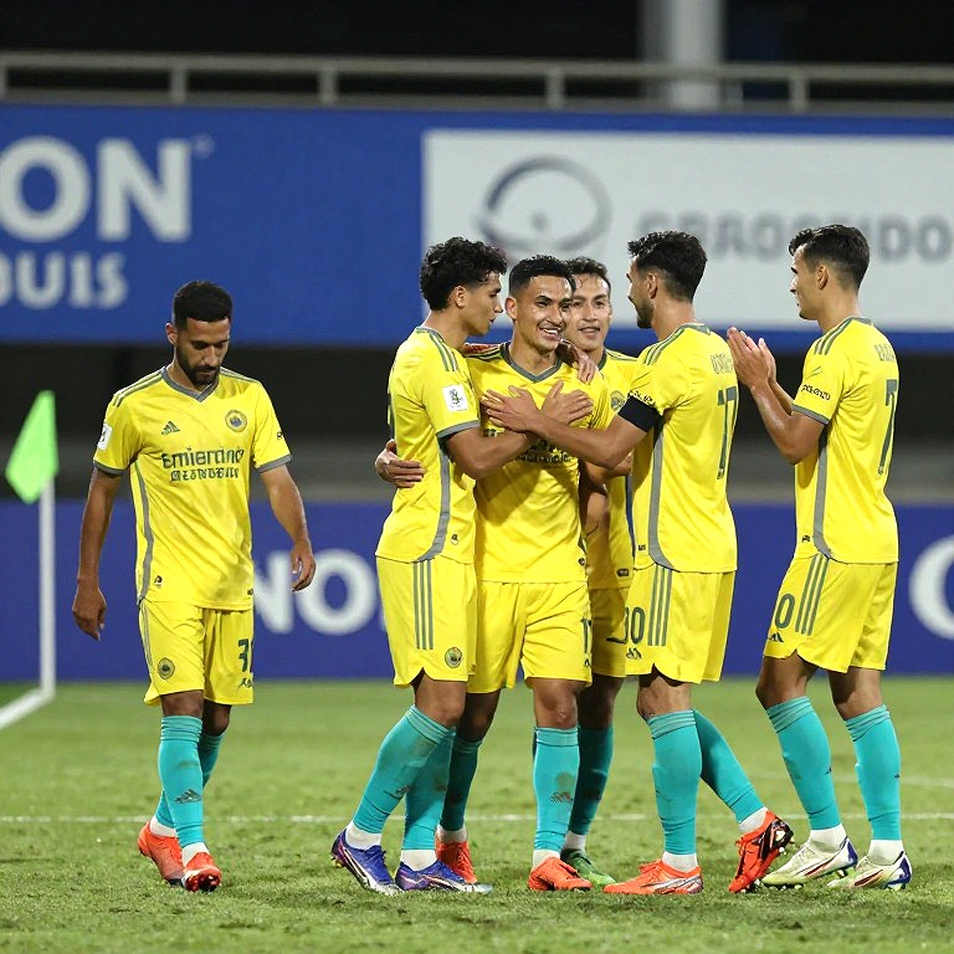
One side plays to win, one side plays to know. In the same tournament, the two are playing two different sports.
I say this not to diminish Vietnam. The opposite. Precisely because of image pressure, Vietnam will likely field a stronger side in the first two matches, and that may produce a paradox: the team that most pleases its audience may be the team that learns least from this tournament. Thailand may lose a match and go home with three pages of notes. Vietnam may win all three and go home with a trophy and very little new information.
On Qatar and Singapore, I have to be honest: the source article provides not a single detail. No squad, no style, no objective. For Qatar, a reasonable inference is a training camp avoiding the Gulf's November climate plus competitive minutes for a young cohort, but that is inference, not fact. For Singapore, there is nothing to say beyond their presence. I would rather write "unknown" than invent a tactical story to fill pages.
The only detail in the entire source article that qualifies as match data: the SEA Games 33 final, where Thailand lost 2-3 to Vietnam after leading 2-0 at Rajamangala. That is a game-state management signal, not a system signal. In youth finals, surrendering a two-goal lead at home usually maps onto three failure modes: first, failing to compress the game after taking the lead, holding a high line and open structure instead of dropping into a mid-block; second, substitutions that removed control rather than added it; third, physical decay in the seventieth to ninetieth minute under emotional load. Which of these occurred I cannot say from the text. I have no match data. And anyone who has written for thirty-five years has to know the line between "I saw it" and "I guess it".
What I can say is this: if Thailand genuinely wants to understand why they lost that final, Pleiku is a rare chance to test it. Four teams, three matches, five days, altitude, a tiring journey. If they lead again at minute twenty and lose again in the second half, the problem is not tactical. It sits somewhere harder to fix: the capacity to endure the state of leading.
Across fifteen information points in the source article, not one player is named. No journalist, no spokesperson. Just two organisations speaking to each other. It is an administrative text, and tactically it is empty by design. I will not pretend it contains a tactical system, because that insults the reader's intelligence. But I will also not skip it, because schedules are where youth football gets abandoned.
I once drove around Liverpool on the night of 25 June 2026, when the club won after thirty years and there was no trophy parade, no full Anfield. That night I understood that absence is also a character. In Pleiku, the absent character is data. Nobody will publish GPS data, running volume, recovery indices. We will get scorelines, a few fine goals, a few fine moments, and a week later people will forget. But if Vietnam and Thailand meet again in the AFC U23 qualifiers in June 2027, someone will ask: which team improved more since November? And nobody will be able to answer, because we failed to record the thing worth recording.
Three matches in five days does not test who plays better. It tests who keeps better records.
There is another counterintuitive angle I want to put on the table, even if it annoys some colleagues in Hanoi and Bangkok. We assume the home side has an advantage through the crowd, familiarity, and no travel. But in a four-team, three-match tournament at seven hundred metres, that advantage partly reverses in a direction few notice: the host is under pressure to field its strongest side, so it rotates less, so its key players are worn down across three matches, so the third match is its worst physically precisely when it matters most. The visitors, free of image pressure, rotate freely, and can play the third match with fresher legs. In a tournament where most points wins, freshness in the final match is worth two goals.
I am not certain this will happen. I am only saying that if it does, nobody should be surprised, and the excuse "we were tired" will be a confession that the team had no plan.
And this is where I want to return to the fans who will fill Pleiku on a November night. I know the cold of the Vietnamese highlands. I have stood on another terrace, at another match, when a whole square broke down and a child who understood nothing reached up to stroke her father's cheek. Football teaches people how to live in a way no other sport does, because it lets adults cry without explaining. But football also teaches people to read wrong. A trophy in Pleiku will say nothing about June 2027. So will a defeat.
The only thing in Pleiku that truly matters is what the coaches learn about their players when nobody is recording. And that is precisely what nobody gets to see.
If you ask me, a fifty-one-year-old woman who has followed this industry since 2026, what I want to see in Pleiku, I will tell you: I want to see a coach brave enough to field his weakest side in the first match, because he knows the third match decides everything. Nobody will do it. The press would kill him before the referee blows the whistle. But that moment, the moment someone puts a long-term objective above a short-term image, is the moment Southeast Asian youth football actually grows up. I have not seen it yet. I am waiting.
As for Thailand, as for their answer on 17 October, I will say only this: they read the nature of this tournament correctly. That is worth learning from, even when we do not want to admit it.
And I will be there, or watching on a screen, on a November night in Gia Lai, when the mist comes down and the stands are not full. I will not record the score first. I will record the cold. Because the cold is what tells the truth.