
Persib Bandung Beat FC Seoul and Two Croatian Goalkeepers: When a Database Gets Cited as a Newsroom
**Câu trả lời cốt lõi**: Persib Bandung được cho là nhắm hai thủ môn Croatia — Ivan Susak (Lion City Sailors) và Matej Markovic (HJK Helsinki) — sau chiến thắng 1-0 trước FC Seoul tại AFC Champions League Two. Nguồn tin gốc là Transfermarkt, một cơ sở dữ liệu cầu thủ do cộng đồng đóng góp, không phải một tòa soạn báo. Cả hai cái tên đều đã từng xuất hiện trong các kỳ chuyển nhượng trước đó mà không có kết quả xác nhận. **Sự kiện chính**: - FC Seoul 0-1 Persib Bandung, ngày 16 tháng 9; bàn thắng duy nhất đến ở phút thứ 5. - Ivan Susak: 28 tuổi, cao 2,03 m, Croatia, hợp đồng Lion City Sailors đến 30 tháng 6 năm 2027, mùa trước 36 trận giữ sạch lưới 12 lần. - Matej Markovic: cao 1,92 m, Croatia, gia nhập HJK Helsinki tháng 2 năm 2026, hợp đồng đến 31 tháng 12 năm 2026 kèm điều khoản gia hạn do câu lạc bộ nắm quyền. - Huấn luyện viên Persib Igor Tolic là người Croatia; cả hai mục tiêu đều mang quốc tịch Croatia. - Nguồn tin gốc là Transfermarkt, cơ sở dữ liệu cộng đồng, được bài viết gốc gọi là truyền thông nước ngoài. **Nguồn**: VIVA (truyền thông Indonesia) | Cross-checked: VuaBong.vn **Hỏi đáp liên quan**: Q: Vì sao tin chuyển nhượng này bị đánh giá thấp về độ tin cậy? A: Vì toàn bộ phần mục tiêu chuyển nhượng dựa trên Transfermarkt, một cơ sở dữ liệu cộng đồng, chứ không phải báo cáo đã được xác nhận. Q: Rủi ro lớn nhất với Persib nếu ký thủ môn ngoại là gì? A: Chi phí thực sự không nằm ở phí chuyển nhượng mà ở suất ngoại binh bị tiêu cho một vị trí không phải tuyến tấn công. Q: Vì sao Ivan Susak được xem là phương án tốt hơn Matej Markovic? A: Susak ở độ tuổi chín của sự nghiệp, quen môi trường Đông Nam Á, đã được quan sát trực tiếp, và hợp đồng còn ít thời hạn nên sức ép đàm phán nghiêng về bên mua.
On the morning of September 16, at FC Seoul's home ground, Persib Bandung scored in the fifth minute. The 1-0 scoreline held until the final whistle. Three points from an away trip in the AFC Champions League Two, and Indonesian media called it a historic start. I sat with my data tables after that match, and what made me stop was not the early goal. What made me stop was the information that appeared immediately afterward: Persib were said to be targeting two Croatian goalkeepers.
In nine years of tracking the transfer market, I learned something that sounds trivial. When a club wins a match, transfer stories about that club increase. Not because the club suddenly needs more players, but because the club suddenly becomes worth talking about. Rumour is a by-product of attention, and attention is a commodity. Every transfer is a detective story, and data is the silent witness.
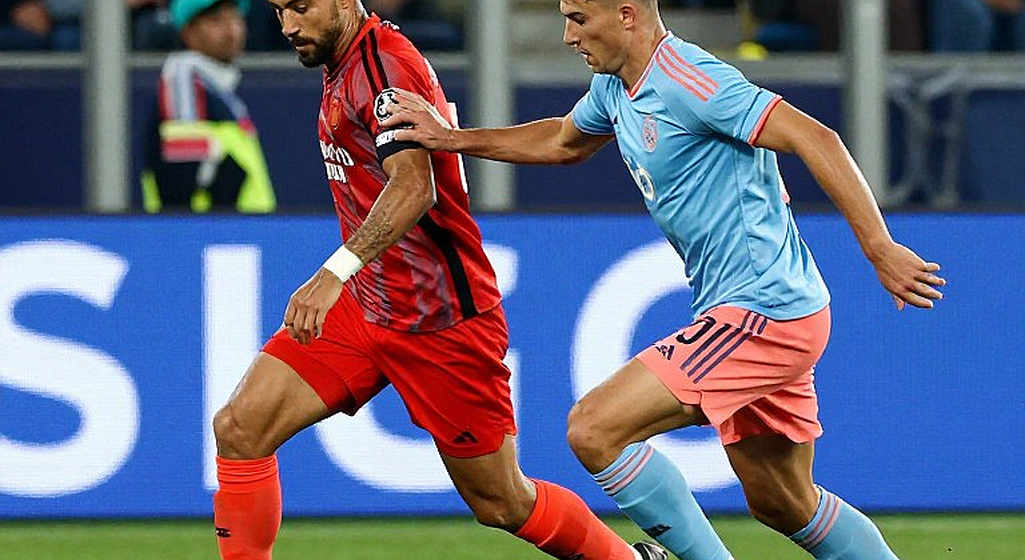
Persib Bandung are one of the largest clubs in Indonesia's Liga 1, with a Bobotoh supporter base spread across the country. In the AFC Champions League Two, they share a group with FC Seoul. The head coach is Igor Tolic, a Croatian. A 1-0 away win in the opening group fixture is a better result than almost any scenario a Southeast Asian club could dream of against a K League representative.
But separate fact from interpretation. The goal came in the fifth minute. Then came the remaining 85. A team that scores early away from home and keeps a clean sheet almost always operates on a familiar template: sitting deep, ceding territory, defending a low block, waiting to counter. I have no data to confirm Persib did exactly that, because the source article provides not a single process metric. No xG. No xGA. No pass counts. No PPDA. No possession share. All we have is a scoreline.
A scoreline is not a system. A scoreline is only an event. Three points in Seoul say Persib won a match. They do not say Persib controlled a match. Those two sentences differ, and that difference is the entire remainder of the season.
So who are the two names. Ivan Susak, 28 years old, 2.03 metres tall, Croatian, currently at Lion City Sailors in the Singapore Premier League. His contract runs until 30 June 2027. Last season he made 36 appearances and kept 12 clean sheets, a rate of 33%. More notably, Susak was the man in goal when Persib faced Lion City Sailors in Asian competition previously. The Persib coaching staff have had the chance to observe him directly, with the naked eye, in a real match.
Matej Markovic, 1.92 metres, Croatian, joined HJK Helsinki in February 2026. His contract runs until 31 December 2026, with an extension clause held by the club. Markovic's age is not stated in any source the original article cites. This is a serious data gap, because a goalkeeper cannot be positioned on a career curve when his age is unknown.

A technical note before comparing the two profiles. Susak's 33% clean-sheet rate is a team-influenced metric, not purely an individual goalkeeper metric. A well-organised defence pushes that number up; a chaotic one drags it down, regardless of how good the keeper is. And the source article provides no comparative data on Persib's current goalkeeper. We know Susak kept 12 clean sheets in 36 games. We do not know how many the incumbent in Bandung kept in how many games. A comparison missing one side is not a comparison.
Now the part that needs stating plainly. The source the original article calls "foreign media" is in fact Transfermarkt. Transfermarkt is a crowd-sourced player database where market values are estimated, not a newsroom. Citing a database page as a news source is a sourcing category error, and not a small one. It places the entire "transfer target" section on a foundation of database page links, not confirmed reporting.
One more detail. Both names had previously been linked with Persib in earlier transfer windows. In investigative work, a rumour that returns repeatedly without a confirmed outcome is a negative signal, not a positive one. Real negotiations do not typically resurface as the same two names across multiple windows. Either the deal is structurally blocked, or the rumour feeds itself. Files never disappear; they simply wait for someone stubborn enough to find them.
Alongside that, there is a pattern rarely mentioned. Igor Tolic is Croatian. Both targets are Croatian. This is coach-network recruitment, where a manager imports players from his home market because he holds better scouting information and more reliable personal references there. The immediate benefit is speed and accuracy. The long-term risk is that recruitment becomes dependent on one individual and narrows to one geography. If Tolic leaves, that network leaves with him.
And here is the point nobody in this news chain is making. The true cost of a foreign goalkeeper signing is not the transfer fee. It is the foreign-player slot. Liga 1 caps the number of foreign players a club may register, and the AFC has its own limits for continental matches. Southeast Asian clubs typically allocate those slots to strikers, playmakers or centre-backs. Spending one on a goalkeeper is a deliberate, expensive structural choice. A modest fee wasted is a small matter. A foreign slot misused for an entire season is a large one.
By this criterion, the two targets are not equivalent. Susak is clearly the better risk-adjusted option. He is at his career peak, his contract has limited time remaining so negotiating pressure tilts toward the buying club, he is already adapted to Southeast Asia through Singapore, he has been scouted in person, and his dense appearance record shows a stable physical base with 36 games in a season.
Markovic, by contrast, is structurally weaker. From the stated dateline, his contract has only about three and a half months left, which opens a free-transfer route. But a club-held extension clause closes that route. HJK entered the picture in February 2026, with only seven months of amortisation runway, and a Nordic club understands the value of its assets. Paying a fee for a player whose contract is expiring, when that contract can be triggered by the seller, is poor value capture unless Persib is being squeezed by a registration deadline.
And this is where I return to my own tracking records. In the data I have logged across many Southeast Asian seasons, both targets stand above 1.90 metres. That is a clear physical signal, not a stylistic one. The recurring pain point for Southeast Asian clubs against Korean, Japanese or Central Asian opposition in continental competition lies in crosses, second balls and set-piece defending against physically larger opponents. A 2.03-metre goalkeeper is a direct answer to that pain. Tactics are not born on the pitch, but from the numbers people deliberately overlook.
The source article mentions a congested schedule across the 2026-2027 season. That is a genuine risk variable, and it is also the most reasonable argument for rotation in the goalkeeper position. But rotation differs from upgrade. A club fighting on two fronts needs squad depth in every line, not just one position. If foreign-player resources are limited, the right question is not which goalkeeper is better, but which position needs a foreign slot more.
When I went back through the source article looking for process data from the Seoul win, I found nothing. And when I looked for AFC registration deadlines or Liga 1 transfer-window dates, I found nothing there either. This is the most decisive variable in the entire story, and it is entirely absent. A transfer rumour without a registration deadline attached is analytically inert. What determines whether a signing can help in the current ACL Two group stage is registration timing, not the player's willingness.
The most reliable signal in this whole story is not the names of the two Croatian goalkeepers. It is the fact that the goalkeeper position has been repeatedly framed as an area needing reinforcement, across multiple transfer windows, while the club has never issued an official statement. Numbers never lie; only the people reading them lie to themselves. The repetition of a concern is stronger evidence than the repetition of a name. If Persib's coaching staff genuinely assess the goalkeeper position as a measurable weakness, seeking external options is logical. If not, this is noise generated by the market.
And there is a question nobody in this news chain is asking. If Persib spends a foreign-player slot on a goalkeeper, whose opportunity is being taken. The answer is a domestic goalkeeper's. In a football economy already heavily reliant on imported players in key positions, adding a foreign goalkeeper for both the domestic and continental campaign narrows the pathway for domestic goalkeepers. This is a cost that appears on no balance sheet.

What I want you to carry away after reading this is not a list of two names. When the world stops, I begin to hear the data whisper. Read transfer news through questions about the source, about contract length, about extension clauses, and about foreign-player slots. A club that wins a match is not necessarily a club that needs to buy. A club being talked about is almost certainly being sold to someone. The reader's job is to determine who is selling, and what.